Autor Cointelegraph By Arijit Sarkar

FBI warns against rising crypto romance scams during Valentine's week

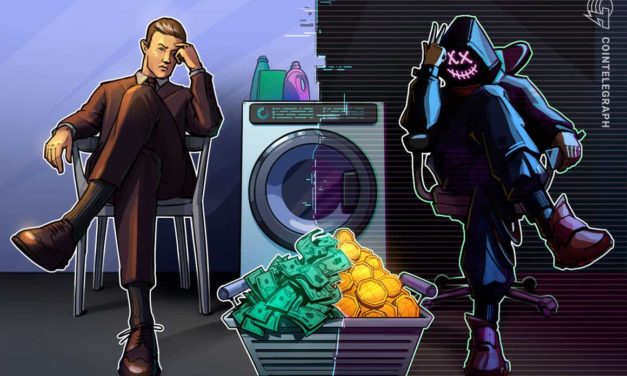
The United States Federal Bureau of Investigation (FBI) has issued a warning against the rise in romance scams in the San Francisco Bay Area, with the latest trend involving cryptocurrencies. Just a few days ahead of Valentine’s day, the FBI San Francisco field office alerted the public about the rise in romance scams based on the complaints filed with the FBI’s Internet Crime Complaint Center (IC3). A romance scam involves creating fake accounts and convincing unwary investors — both men and women — to transfer funds under the pretext of getting romantic. According to the information shared by the FBI:“Victims within the FBI San Francisco division’s territory lost more than $64 million to romance scams compared to just over $35 million in 2020.”In 2021 alone, the intelligence and security service logged 742 complaints within the Northern District of California, overshadowing the 720 and 526 complaints lodged back in 2020 and 2019 respectively. Moreover, the IC3 received more than 23,000 complaints about confidence/romance scams in 2020 — with reported losses of more than $600 million. The FBI warning read:“The FBI San Francisco has seen a rising trend in which romance scammers are persuading individuals to send money to invest or trade cryptocurrency.”A typical romance scam starts off with gaining the trust of the victims who are then redirected to fraudulent platforms citing investment opportunities. While the scammers allow the investors to withdraw some profits from the initial trade as a way to prove credibility, the victims are coerced into investing more money or cryptocurrencies:“When the victim is ready to withdraw funds again, the scammers create reasons why this cannot happen. The victim is informed additional taxes or fees need to be paid, or the minimum account balance has not been met to allow a withdrawal.”However, the scammers typically stop responding after the victims refuse to add more funds. The FBI recommends victims of romance scams report the activities and contact their banks.Some of the tips recommended by the FBI to avoid romance scams include not taking investment advice from purely online interactions, not disclosing financial information, staying away from promises of unrealistic profits and being “cautious of individuals who claim to have exclusive investment opportunities and urge you to act fast.”Related: Scam alert! Binance CEO warns users of massive SMS phishing scamChangpeng Zhao, the CEO of Binance recently alerted the crypto community against a “massive” SMS phishing scam targeting Binance customers.There is a massive Phishing scam via SMS with a link to cancel withdrawals. It leads to a phishing website to harvest your credential as in the screenshot below.NEVER click on links from SMS! Always go to https://t.co/9rMMAmtCxH via a bookmark or type it in.Stay #SAFU pic.twitter.com/erNwe90FN1— CZ Binance (@cz_binance) February 4, 2022As Cointelegraph reported, the scam involves sending users a text message with a link to cancel withdrawals, leading users to a fake website designed to harvest their login credentials. Zhao recommends manually typing the crypto exchange’s URL as a measure to counter the ongoing scams.

Čítaj viac

Upcoming Apple iPhone feature to give merchants a way to accept crypto payments

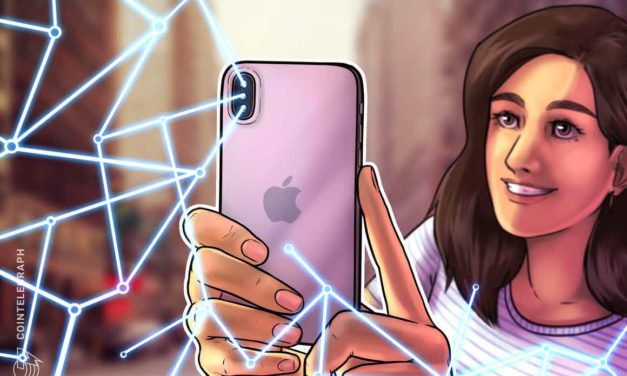
Apple announced plans to launch Tap to Pay for iPhone, a new feature that effectively turns the smartphone into a point of sale (POS) device for businesses and merchants. So, what’s in it for crypto?The announcement explains that with Tap to Pay, iPhone-owning merchants receive contactless payments by using their mobile devices as a POS machine thanks to the NFC technology.According to Apple, the soon-to-be-launched Tap to Pay feature will extend support to “Apple Pay, contactless credit and debit cards and other digital wallets.” It basically means that, unless Apple places a direct barrier for it, customers who are using Coinbase Card, Crypto.com Visa Card or a similar payment card would be able to use their cryptocurrency holdings to make payments via Tap to Pay.We just introduced Tap to Pay on iPhone, a great way for millions of small businesses to accept contactless payments right from their iPhone. It’s easy, secure, and will be coming out later this year. https://t.co/w6P6oS7grm— Tim Cook (@tim_cook) February 9, 2022While Apple has announced Stripe, an Irish-American fintech, as the first platform to offer the Tap to Pay feature on iPhone, the company clarified that “additional payment platforms and apps will follow later this year.”Back in Aug. 2021, major crypto exchange Coinbase integrated with Apple Pay and Google Pay, allowing users to purchase crypto assets on its platform. As Cointelegraph reported, the move allowed the United States-based customers to purchase crypto using bank-issued debit and credit cards via a mainstream payments platform, Apple Pay. In June 2021, Coinbase launched Coinbase Card, enabling users to spend cryptocurrencies across mainstream avenues:“Coinbase will automatically convert all cryptocurrency to US Dollars and transfer the funds to your Coinbase Card (less conversion fees) for use in purchases and ATM withdrawals.”Following suit, crypto exchange Crypto.com launched a similar offering named Crypto.com Visa Card, which can be added to Apple Pay and other major digital wallets. Apple said in the announcement:“Tap to Pay on iPhone will work with contactless credit and debit cards from leading payment networks, including American Express, Discover, Mastercard and Visa.”Considering Coinbase’s capability to convert a user’s crypto holdings to fiat in real-time for payments, Apple Pay users will be able to use iPhone’s Tap to Pay feature to make crypto payments across mainstream merchants and businesses. While Apple Pay will, most probably, not allow direct purchase of goods and services via Bitcoin (BTC), it will convert the user’s crypto holdings to match the dollar amount requested by the merchant’s POS machine to make the purchase.Let’s also not forget that in Nov. 2021, Apple CEO Tim Cook revealed the personal purchase of cryptocurrencies as “part of a diversified portfolio” while highlighting no immediate plans to accept crypto as a means of payment for Apple products.Apple intends to roll out the Tap to Pay feature on Apple Stores, iPhone XS and later devices. Related: Bitcoin Lightning Network goes live on Cash AppCash App, a mobile payment service developed and owned by Twitter co-founder Jack Dorsey’s Block, announced compatibility with the Bitcoin Lightning Network for BTC transfers.Lightning Network is now available on Cash App. It’s the fastest, free way to pay anyone in bitcoin.Buy tacos, tip your favorite Twitter comedian, or send a friend money abroad—anywhere that accepts lightning. pic.twitter.com/65TXSJ6yL6— Cash App (@CashApp) February 7, 2022

With the launch of the new feature, Cash App users can make faster BTC transactions across mainstream businesses. As Cointelegraph reported, the company has made the feature available everywhere in the United States apart from New York.

Čítaj viac

Alchemy joins Web3 decacorns club following $200M funding

Web3 development platform Alchemy announced a fresh round of $200 million funding, bringing up the company’s valuation to $10.2 billion, just above the decacorn threshold.The latest funding round was led by venture capital firm Lightspeed along with Silver Lake, an American global private equity firm. Alchemy’s funding also saw participation from previous major investors as well. As Cointelegraph previously reported in Oct 2021, Alchemy attained a $3.5 billion valuation following a $250 million Series C fundraising round led by Andreessen Horowitz. Since October, Alchemy reported a three-fold growth in the number of Web3 initiatives being built on their platform. Another reason for Alchemy’s explosive growth is the increase in the annualized on-chain transaction value. It currently stands at $105 billion compared to a modest $45 billion back before the Horowitz-led funding. Alchemy co-founder and CEO Nikil Viswanathan added:“In 2022, we’ll be doubling down on our commitment to meeting developer needs in more places, making it easier than ever to unlock the potential of Web3.”According to the announcement, Alchemy also reported a 6,000% increase in the daily number of API calls from Web3 applications connected to the platform. The company intends to redirect the funding to spread Web3 adoption. Some of the initiatives in this regard include the launch of Web3 University — an open educational resource for learning Web3, Alchemy Ventures and a nonfungible token (NFT) API for website developers.Related: RSS3 aims to be the decentralized information processor of Web3In a recently released white paper, information distribution protocol Really Simple Syndication (RSS) published plans for taking its popular internet feed update to Web3. As Cointelegraph reported, RSS3 chalked out intent to release an RSS3 source file for aggregating cyber activities. The data can then be used for building Web3-focused social media, content networks, games and other data-driven applications.

Čítaj viac

US Treasury targets NFTs for potential high-value art money laundering

The U.S. Department of the Treasury released a study on the high-value art market, highlighting the potential in the nonfungible tokens (NFT) space to conduct illicit money laundering or terror financing operations.The treasury’s “Study of the facilitation of money laundering and terror finance through the trade in works of art” suggested that the increasing use of art as an investment or financial asset could make the high-value art trades vulnerable to money laundering:“The emerging online art market may present new risks, depending on the structure and incentives of certain activity in this sector of the market (i.e., the purchase of NFTs, digital units on an underlying blockchain that can represent ownership of a digital work of art).”The study underlines the importance of NFTs in representing ownership of the digital and physical property that is managed and controlled via smart contracts and digital wallets. The treasury also points out that the price of NFTs is determined by the buyer and seller and not the market:“According to U.S. authorities, in the first three months of 2021, the market for NFTs generated a record $1.5 billion in trading and grew 2,627 percent over the previous quarter.”However, the NFT market in 2020 alone was valued at more than $20 billion. The U.S. treasury suggested a possibility where criminals can purchase NFTs with illicit funds and resold to an unwary collector “who would compensate the criminal with clean funds not tied to a prior crime.”NFTs can also be sold via peer-to-peer (P2P) sales, which bypasses the need for an intermediary or recording the transaction over the public ledger. While underscoring the various money laundering vulnerabilities made possible by the NFT ecosystem, the treasury concluded:“Moreover, traditional industry participants, such as art auction houses or galleries, may not have the technical understanding of distributed ledger technology required to practice effective customer identification and verification in this space.”Related: NFTs and DeFi overturn a banker‘s generational curse of poverty in 2 yearsBrenda Gentry, a USAA mortgage underwriter turned crypto entrepreneur, recently shared how the cryptocurrency ecosystem offered her a fighting chance to overcome the generational curses of poverty.Gentry, a.k.a. MsCryptoMom, left her decade-long job as a banker to pursue a full-time crypto career as her initial investments from early 2020 confirmed the “unprecedented opportunities offered by crypto.”My biggest flex this year was walking away from my banking career of 16yrs to go into crypto full time!Retired my parents and now my goal is to retire my siblings and get them working for themselves!NFTs and DeFi are breaking down generational curses of poverty.— Cryptomom (@MsCryptomom1) October 9, 2021Acknowledging the big learning curve into crypto, Gentry provides educational content through her website:“I’m also hosting seminars to educate the general public about navigating in this space and things to look out for when searching for good NFT projects or DeFi tokens, and also how to quickly detect scams or rug pulls.”

Čítaj viac

Indian couple celebrates blockchain wedding with NFT vows, digital priest

A young couple from India used nonfungible tokens (NFTs) to digitize their love for each other till eternity over the Ethereum (ETH) blockchain. The recently married couple from Pune, India, Shruti Nair and Anil Narasipuram decided to take their court marriage to the next level by hosting a blockchain wedding. According to Anil, the husband:“I read some articles on how people in other countries were doing blockchain marriages and it motivated me.”Other prominent crypto entrepreneurs to follow the trend include Rebecca Kacherginsky, Coinbase’s staff product designer.Most people get married in a place of religious worship, on a beach, or in the mountains. Peter (@_iphelix) and I are NOT most people. We got married on the #blockchain. 1/7 pic.twitter.com/2ExexrlLbZ— Rebecca Kacherginsky (@rgoldilox) April 2, 2021As a part of the Indian blockchain wedding, the couple was accompanied online by Anoop Pakki, who was responsible for minting the NFT — a.k.a. the digital priest. “We read out the vows and after receiving the blessings of our digital priest, I confirmed the transaction to transfer the NFT to my wife’s digital wallet,” said Anil explaining the “The transaction took a few minutes (and about $35 in ETH gas fees) after which we were pronounced husband and wife by our digital priest!”Indian couple Anil and Shruti. Source: LinkedInThe couple unanimously read the vow, “We won’t make any big promises, but we will do everything we can to make this work. Through all our disagreement and conflict, we hope to grow our understanding of each other and ourselves. We don’t expect to be the whole village for each other, but we will be by each other’s side, hand in hand, walking through this adventure, together.”Wedding vow NFT. Source: OpenSeaThe wedding vow, which was in the form of a digital image was then minted as an NFT by the digital priest on the OpenSea platform. The description of the NFT read:“This contract is between Shruti Sathian Nair, born March 17, 1988, and Anil Mohan Narasipuram, born October 11, 1986. The parties to this agreement are hereby declared husband and wife, on Nov 15 2021 and to have to hold, in sickness and in health, for now and in perpetuity.”Related: India to introduce 30% crypto tax, digital rupee CBDC by 2022–23Indian finance minister Nirmala Sitharaman announced the launch of a central bank digital currency (CBDC) along with a 30% crypto tax by 2022–23 during the Union Budget 2022.As Cointelegraph reported, Sitharaman said that the CBDC launch will provide a “big boost” to the digital economy along with the possibility of a more efficient and cheaper currency management system. Her proposal suggested:“Any income from transfer of any virtual digital asset shall be taxed at the rate of 30%. No deductions in respect of any expenditure or allowance shall be allowed while computing such income, except the cost of acquisition.”

Čítaj viac

Získaj BONUS 8 € v Bitcoinoch

nakup bitcoin z karty

Registrácia Binance

Burza Binance

Aktuálne kurzy