Autor Cointelegraph By Arijit Sarkar

BTC helped us unseat a 20+ year incumbent: Aarika Rhodes on Bitcoin Day

Aarika Rhodes, an elementary school teacher-turned congressional candidate, recently featured in the Bitcoin Day Sacramento 2022 event to discuss the impact of Bitcoin (BTC) in local politics. Speaking to Cointelegraph, Rhodes highlighted the difficulty for grassroots candidates like herself to compete against established members of the US Congress.Our campaign has officially adopted Lighting for campaign contributions.⚡️This revolutionary technology creates accessibility and looks towards the future. I am excited to provide this option to our supporters across all 50 states. #Bitcoin— Aarika for CA-32 (@AarikaRhodes) November 30, 2021“If it wasn’t for Bitcoin and the Lightning Network, a grassroots campaign like ours wouldn’t have made it this far with the amount of cash on hand at this stage in the race, especially as a full-time elementary school teacher,” she explained. Speaking about her campaign specifically, Rhodes added:“It [BTC] has made us viable in our effort to unseat at 20+ year incumbent.”It was such a honor to speak at #Bitcoin Day to discuss campaign finance reform and the need for financial literacy to be taught in our schools. We also discussed the importance of reminding lawmakers that they’re public servants first.to @ck_SNARKs for being a great host! pic.twitter.com/PhmYmCqNQj— Aarika for CA-32 (@AarikaRhodes) February 19, 2022

Rhodes also believes that the role of local businesses in expediting BTC’s mainstream adoption is “a simple matter of economics.” By allowing small and medium businesses to accept BTC payments, the community refrains from making Bitcoin purchases elsewhere, and according to the congressional candidate, is a means to revitalize the local economies.It’s ok to hold elected officials accountable. They should lead by example. If we’re really serious about making things better, integrity and accountability are important.— Aarika for CA-32 (@AarikaRhodes) February 20, 2022

As a full-time elementary school teacher, Rhodes is a front-row witness to the financial and societal struggles faced by students, families and educators:“As a teacher who lives paycheck to paycheck with no family money, I’m risking everything to unseat an incumbent who currently has a little less than $4 million cash on hand. We don’t need millions of dollars to win.”Rhodes also highlighted a lack of understanding among politicians who currently oppose and fear Bitcoin adoption. “Those who are taking the time to learn, are starting to understand that it’s the future,” she added. Moreover, Rhodes believes that an integrated Bitcoin Lightning network could mitigate the cashflow shortage and market saturation faced at the peak of the coronavirus pandemic. “Politicians who oppose Bitcoin are of the same brand as those who opposed the Internet. It’s also an indicator of where they’re getting their money.”Rhodes further reiterated that the traditional system, coupled with the out-of-touch mindset of American politicians, is designed to keep people impoverished, concluding:“I want us to remember who we work for: the American people. I’m committed to putting all good ideas on the table and risking everything to make a difference. I’m excited to see others doing the same.”Related: Fed senior officials will soon not be allowed to trade crypto, stocks and bondsJust two days back, the Federal Open Market Committee (FOMC) approved a ruling that bans senior officials at the Federal Reserve from purchasing and holding cryptocurrencies and other investments.FOMC formally adopts comprehensive new rules for investment and trading activity: https://t.co/NOPJbWwCdn— Federal Reserve (@federalreserve) February 18, 2022

As Cointelegraph reported, FOMC announced that, starting May 1, senior Federal Reserve officials above the age of 18 are “prohibited from purchasing individual stocks or sector funds; holding investments in individual bonds, agency securities, cryptocurrencies, commodities, or foreign currencies; entering into derivatives contracts; and engaging in short sales or purchasing securities on margin.”

Čítaj viac

OpenSea planned upgrade stalls as phishing attack targets NFT migration

Just yesterday, OpenSea announced a smart contract upgrade, which requires users to migrate their listed NFTs from Ethereum (ETH) blockchain to a new smart contract. As a direct result of the upgrade, users that don’t migrate over from Ethereum risk losing their old, inactive listings — which currently require no gas fees for migration. Major nonfungible token (NFT) marketplace OpenSea has reportedly fallen victim to an ongoing phishing attack within hours after announcing a week-long planned upgrade to delist inactive NFTs on the platform. However, the urgency and short deadline opened up a small window of opportunity for hackers. Within hours after OpenSea’s upgrade announcement, reports across multiple sources emerged about an ongoing attack that targets the soon-to-be-delisted NFTs.OPENSEA EXPLOITED Everyone tag @opensea to get them to pause their new contract while everyone figures out whats going on with the exploit! #NFT #NFTs #NFTTheft #NFTScam #NFTSecurity #NFTAlert— gt_dog (@gt_dog84) February 20, 2022Further investigations revealed that attackers used phishing emails to steal the NFTs before they get migrated over OpenSea’s new smart contract. Once a user authorizes the NFT migration from the fraudulent email, the attackers gain access to the NFTs.Though unconfirmed, the @opensea hack is most likely phishing. Users authorize the “migration” as instructed in the phishing email and the authorization unfortunately allows the hacker to steal the valuable NFTs… pic.twitter.com/Fj5d9ImC2r— PeckShield Inc. (@peckshield) February 20, 2022

Users are now advised to be wary of all communications from OpenSea in addition to revoking all permissions about the migration to the new smart contract.We are actively investigating rumors of an exploit associated with OpenSea related smart contracts. This appears to be a phishing attack originating outside of OpenSea’s website. Do not click links outside of https://t.co/3qvMZjxmDB.— OpenSea (@opensea) February 20, 2022

OpenSea co-founder and CEO Devin Finzer acknowledged the phishing attack while confirming that 32 users have lost NFTs so far. While the NFT marketplace is yet to decipher the ongoing attack, blockchain investigator Peckshield suspects a possible leak of user information (including email ids) that fuels the ongoing phishing attack.However, Finzer has asked affected users to reach out to the company as he concluded: “If you are concerned and want to protect yourself, you can un-approve access to your NFT collection.”Related: UK tax authority makes first NFT seizure in VAT fraud caseHer Majesty’s Revenue and Customs (HMRC), the chief tax authority in the United Kingdom, seized three NFTs associated with a suspected tax evasion fraud.As Cointelegraph reported, the suspects used fake identities and created 250 fake “shell” companies to evade 1.4 million British pounds (roughly $1.8 million) in value-added taxes.

Čítaj viac

Multichain recovers $2.6M stolen funds, to reimburse losses on condition

After a month-long fight against an ongoing exploit, cross-chain router protocol Multichain announced the recovery of nearly 50% of the total stolen funds, worth nearly $2.6 million of cryptocurrencies. The team has also released a compensation plan to reimburse the users’ losses.On Jan. 10, blockchain security expert Dedaub alerted Multichain about two vulnerabilities in its liquidity pool and router contracts — affecting eight cryptocurrencies including wrapped ETH (WETH), wrapped BNB (WBNB), Polygon (MATIC) and Avalanche (AVAX).1/3 We recently identified the “phantom functions” code pattern, which would have led to likely the largest crypto hack ever.Your code may be vulnerable! You need to check for the pattern in your Solidity/EVM code! https://t.co/pxRqCQFbnS— Dedaub (@dedaub) January 27, 2022A week later on Jan. 18, the Multichain team advised users to revoke approvals for the vulnerable smart contracts as a means of immediate damage control. However, as Cointelegraph reported, the warning announcement encouraged more hackers to try the exploit, resulting in losses exceeding $3 million.The @MultichainOrg hack is far from being over.Over the last hours more than additional $1M stolen, rising the total stolen amount to $3M.One victim lost $960K!https://t.co/fYhYxUojB8 pic.twitter.com/Gvh5hB6t6s— Tal Be’ery (@TalBeerySec) January 19, 2022

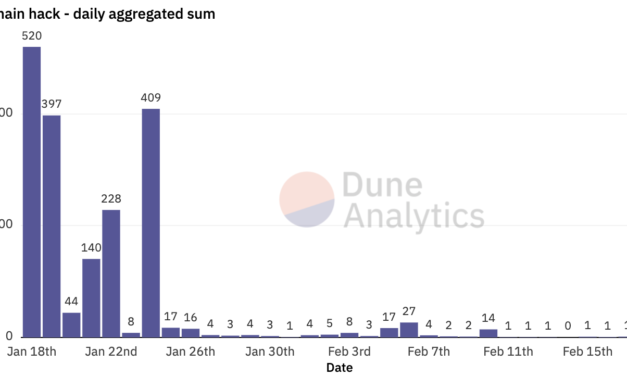
According to Multichain, the vulnerability of the liquidity pool was fixed by upgrading the affected tokens’ liquidity to new contracts, adding:“However, the risk remains for the users who have yet to revoke approvals for the affected router contracts. Importantly, users themselves have to be the ones to revoke the approvals.”Daily attack sum. Source @Dune AnalyticsAs of Feb. 18, Multichain reported that 4,861 out of the 7,962 affected users have revoked approvals while advising the remaining 3,101 addresses to take action as soon as possible. Out of the 1,889.6612 WETH and 833.4191 AVAX stolen funds, the team was able to recover 912.7984 WETH and 125 AVAX (worth nearly $2.55 million and $10,000 respectively).“However, in spite of our best efforts, a total of 976.8628 WETH has been stolen,” confirmed Multichain. To be eligible for compensation through reimbursement of losses, Multichain has asked users to revoked their approval and submit a ticket on the website. “As such, we will no longer reimburse any losses that happen after February 18 24:00 UTC.” Related: Netflix announces new series on Bitfinex hack involving 120,000 BitcoinNetflix will soon produce and launch a documentary series circled around a New York-based couple and their involvement in laundering Bitcoin (BTC) linked to the Bitfinex hack. As Cointelegraph reported, the documentary will be directed by American filmmaker Chris Smith with Nick Bilton as the co-executive producer. The announcement read:“Netflix has ordered a documentary series about a married couple’s alleged scheme to launder billions of dollars worth of stolen cryptocurrency in the biggest criminal financial crime case in history.”

Čítaj viac

OpenSea smart contract upgrade to delist inactive NFTs on Ethereum

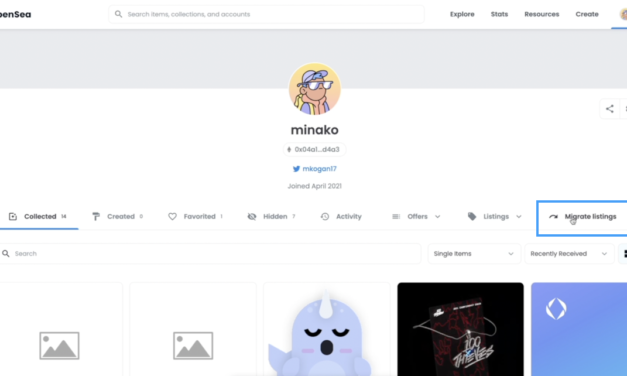
OpenSea, one of the most popular nonfungible token (NFT) marketplace, has rolled out an upgrade to its smart contract, a proactive measure to weed out inactive listings on the platform.As a part of the planned upgrade, all OpenSea users will need to migrate their NFT listings — currently hosted over the Ethereum (ETH) blockchain — to the new smart contract. The new contract is live! Start migrating your listings now: https://t.co/W1w9ciCK2D— OpenSea (@opensea) February 18, 2022According to the OpenSea announcement, the NFT listings created before Feb. 18 will automatically expire within a week by Feb. 25 by 2 PM ET:“This new upgrade will ensure old, inactive listings on Ethereum securely expire and allow us to offer new safety features in the future.”Upon successful migration, the NFT listing will show the original date of posting. However, once the deadline is crossed, users will be allowed to relist the delisted NFTs over the new smart contract.During this phase, OpenSea will not charge gas fees for NFT migration but will invalidate the old Ethereum-based smart contract, effectively expiring the old offers:“During this migration period, old offers on items will expire, and offers made on the old smart contract will become invalid.”Migrating the NFT listing is a two-step process. First, the user needs to navigate to OpenSea and click on the ‘Migrate listings’ option.OpenSea main profile page. Source: OpenSeaFor the next step, the user will need to click on the ‘Confirm’ button made available next to each listing, as shown below.Navigating to OpenSea’s NFT migration. Source: OpenSeaA notification will confirm the migration and users will be able to view the listing with a new expiration date.OpenSea updated listing. Source: OpenSeaRelated: An Indonesian 22-year-old makes $1M by selling NFT selfies on OpenSeaOpenSea made most of the early-bird advantage in the NFT space to become the largest marketplace for NFT trades. Reaffirming the technology’s disruptive financial potential, an Indonesian college student named Sultan Gustaf Al Ghozali became a millionaire by selling NFT versions of his selfies on OpenSea.Uploading my photo into nft lolhttps://t.co/E3Q4sBmN26#NFT #opensea pic.twitter.com/rD51rdcpzp— Ghozali (@Ghozali_Ghozalu) January 10, 2022

As Cointelegraph previously reported, Ghozali took selfies, either sitting or standing in front of his computer, which was later converted into NFTs and uploaded to OpenSea in December 2021. Ghozali’s collection subsequently reached a total trade volume of 317 ETH, equivalent to more than $1 million.

Čítaj viac

Consumer-merchant mismatch slows down mainstream crypto adoption: Survey

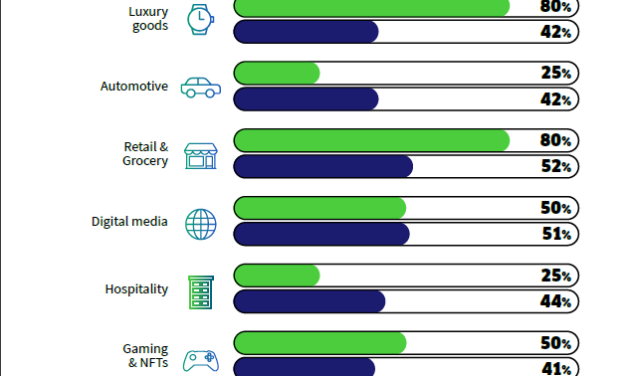
The secret to fast-track cryptocurrency’s mainstream adoption lies within addressing a contradicted consumer demand for crypto payments across business verticals, reveals a new survey. In a study participated by crypto exchange Crypto.com’s 110,000 customers and over 1.5 million Worldpay merchants, roughly 60% of both merchants and customers shared their interest in crypto payments. However, the consumer demand does not reciprocate the business verticals that accept cryptocurrencies. Industry appetite for crypto payments. Source: Crypto.comAs evidenced above, the consumer demand for crypto payments exceeds merchant availability across four major industries — travel, automotive, digital media and hospitality. The gap in merchant availability poses a massive opportunity to capitalize on market demand for crypto payments.On the other hand, industries with calmer markets such as luxury goods, retail and grocery and gaming display a bigger appetite for crypto acceptance. For example, luxury brands and retailers have started exploring nonfungible tokens (NFT) to authenticate their products while being exposed to a new customer base.As a direct result of customer demand outweighing merchants for crypto payments, the survey reads:“Because of this, 64% of Crypto.com’s customers are using a prepaid card in order to spend their holdings at businesses that do not support a direct wallet transfer.”Both consumers and merchants trust and prefer to use cryptocurrencies with the highest market capitalization — Bitcoin (BTC), Ether (ETH), Litecoin (LTC) and USD Coin (USDC).Preference of crypto tokens for payments. Source: Crypto.comAnother consumer-merchant mismatch involves the preference in payment mediums. While roughly 70% of surveyed customers showed interest in in-store and online crypto payment, most crypto-accepting businesses chose to accept crypto through e-commerce websites only.Considering the gaps despite the rising demand from both merchants and consumers, the Crypto.com survey highlights the need for crypto education and the evolving regulatory landscape to expedite merchant acceptance across the impeding business verticals.Related: Upcoming Apple iPhone feature to give merchants a way to accept crypto paymentsApple recently announced plans to launch a new Tap to Pay feature for its iPhone, which effectively turns the smartphone into a point-of-sale device for businesses and merchants.A Cointelegraph report on the matter discloses the possibility of using the upcoming feature for making crypto payments across businesses accepting Apple Pay.We just introduced Tap to Pay on iPhone, a great way for millions of small businesses to accept contactless payments right from their iPhone. It’s easy, secure, and will be coming out later this year. https://t.co/w6P6oS7grm— Tim Cook (@tim_cook) February 9, 2022According to Apple, the soon-to-be-launched Tap to Pay feature will extend support to “Apple Pay, contactless credit and debit cards and other digital wallets.”

Čítaj viac

Získaj BONUS 8 € v Bitcoinoch

nakup bitcoin z karty

Registrácia Binance

Burza Binance

Aktuálne kurzy