Autor Cointelegraph By Arijit Sarkar

Canada to host Bitfury's new 28MW crypto mining facility

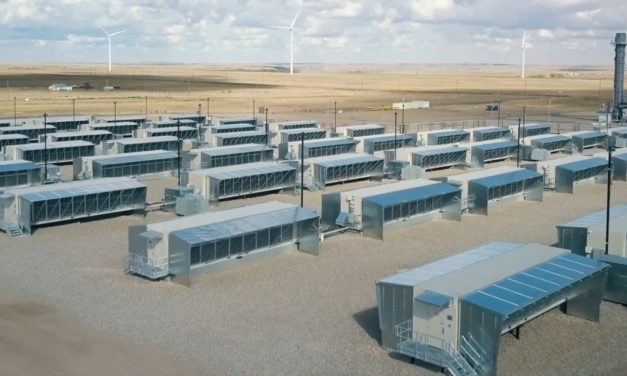
Blockchain company Bitfury announced the launch of a new crypto-mining data center in Ontario, Canada. The new crypto mining center adds to the list of existing Canadian sites currently operating in Drumheller, Alberta and Medicine Hat.Bitfury partnered with Hut 8 Mining, a Toronto Stock Exchange-listed Bitcoin (BTC) mining company, to set up mining operations across North America. The new crypto mining facility in Ontario is expected to operate at 16 megawatts (MW) by the end of this month.Bitfury mining facility in Medicine Hat. Source: Hut 8According to the announcement, Bitfury has plans to add 12MW capacity in the coming months, which will bring up the total capacity of the mining facility to 28MW by May end. However, the company highlighted that the facility could be potentially upgraded to operate at 200MW, over seven times the current capacity.Located in the city of Sarnia, the site is equipped with Bitfury’s in-house ASIC mining chips and other proprietary hardware and software. All of Bitfury’s Canadian crypto mining facilities heavily rely on Canada’s cold climate for sustainable and efficient operations.Sustainability increased by 1% in Q4 https://t.co/gGrgE4C4Zl— Hut 8 Mining (@Hut8Mining) January 18, 2022Citing the commencement of operations, Oleg Blinkov, Bitfury’s Head of Data Center Development and Operation said:“North America continues to represent an attractive, strategic market for Bitfury and digital asset mining at large, and we are excited to deepen our presence here and around the world.”Back in October, Bitfury co-founder and CEO Valery Vavilov told Cointelegraph about his plans for considering an initial public offering to fast-track the company’s global growth:“As Bitfury and its portfolio of companies continue their global expansion in the digital assets space, Bitfury will be considering an IPO as part of its broader expansion and growth plans.”Related: Canadian MP introduces bill aimed at encouraging growth in crypto sectorEarlier this month, Michelle Rempel Garner, a member of the House of Commons of Canada, introduced a bill recommending a framework to encourage growth in crypto.Canada should be attracting billions of dollars in investment in the fast growing cryptoasset industry.Today I introduced a bill, the first of its kind in Canada, to make sure this become a reality.Learn more about my bill at https://t.co/htCy7rrZD6 pic.twitter.com/krmmTIOTt6— Michelle Rempel Garner (@MichelleRempel) February 9, 2022

“The framework must, among other things, focus on lowering barriers to entry into the cryptoasset sector while protecting those working in the sector and minimizing the administrative burden,” Garner said in the proposal. 

Čítaj viac
Coinbase Wallet extends support to Ledger hardware wallet

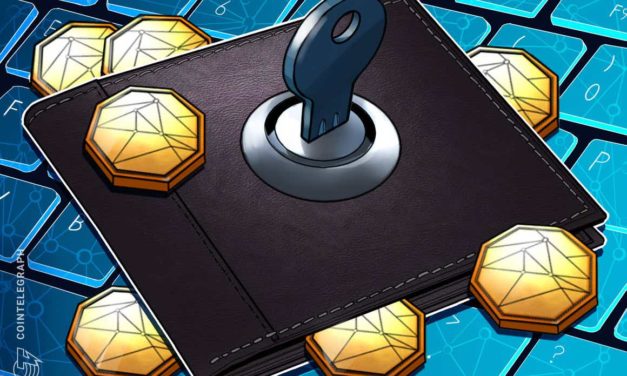
Coinbase Wallet, an in-house wallet service offered by prominent crypto exchange Coinbase, has rolled out browser extension support for Ledger hardware wallets.The Coinbase Wallet extension, available in the Chrome Web Store, is a noncustodial wallet that allows users to store and transact cryptocurrencies and nonfungible tokens (NFT). By adding support for Ledger, Coinbase users can opt to use a physical Ledger device to store the private keys to their wallets offline.Coinbase senior product manager Adam Zadikoff highlighted the development as being a means to providing an additional layer of security and greater peace of mind for users. He said:“We want to empower everyone to use DApps and access Web3, and that requires building the easiest-to-use and most accessible self-custody wallet in the ecosystem. Today’s release solves [..] the ability to use a hardware wallet for enhanced security.”As a part of the launch, Coinbase has partnered with Ledger to release a limited-edition Coinbase-branded Nano X hardware wallet on Ledger’s official website. As Cointelegraph previously reported, Coinbase reportedly stores about 12% of all crypto across more than 150 asset types, with the company’s chief financial officer, Alesia Haas, stating at the time:“Nearly 50% of our transacting customers are doing something other than buying and selling crypto, which indicates to us that crypto is moving beyond its initial investment phase into the long-expected utility phase.”Related: Hodlers beware! New malware targets MetaMask and 40 other crypto walletsCointelegraph recently highlighted the rising vulnerabilities for crypto wallets built as browser extensions — such as MetaMask, Binance Chain Wallet and Coinbase Wallet — owing to the launch of a new malware called Mars Stealer.The malware targets over 40 browser-based crypto wallets by exploiting two-factor authenticators via a grabber function that steals users’ private keys. According to security researcher 3xp0rt, the new malware is a powerful upgrade to the information-stealing Oski trojan. The researcher also noted that the malware can target all Chromium-based browsers, including Google Chrome, Microsoft Edge and Brave.

Čítaj viac

Japan Exchange Group alerts against imposter crypto trading platforms

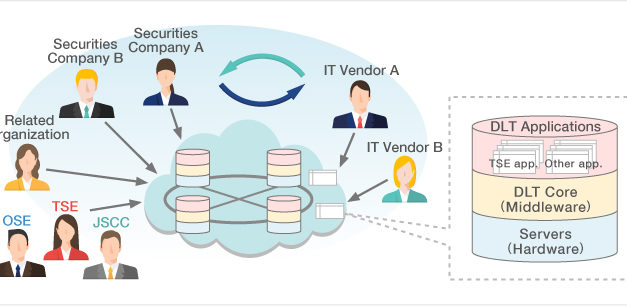
Japan Exchange Group (JPX), the Tokyo Stock Exchange and Osaka Exchange owner, warned the public against companies that are misleading Japanese investors by selling crypto assets under the JPX brand. JPX issued the alert after receiving reports about an ongoing attempt to dupe unwary investors into trading Bitcoin (BTC) and cryptocurrencies on platforms misrepresented as JPX or one of its subsidiaries.Alert on trading in crypto assets using similar names to JPXhttps://t.co/CVrvpA0dNE— Japan Exchange Group EN (@JPX_official_EN) February 8, 2022The company highlighted that the fraudulent companies in question are replicating JPX names, logos and URLs in various forms — including iterations of JPEX, jpex and Japan Exchange — on their platforms and marketing initiatives. JPX’s alert noted:“Be aware that the above companies and trades have no association whatsoever with Japan Exchange Group, Inc. (JPX) or any other companies affiliated with JPX Group.”While JPX has not yet opened up crypto trading for Japanese investors, the company is currently spearheading numerous initiatives to test blockchain and distributed ledger technology (DLT) within traditional finance.According to JPX, the above initiative aims to improve the transparency of data and the efficiency of data collection via blockchain technology. Moreover, the company, along with 33 Japanese financial institutions, has begun testing and research to discuss the possibility of applying blockchain or DLT to its existing capital market infrastructure.JPX’s proposed DLT framework. Source: JPXReiterating JPX’s latest alert, a recent Cointelegraph report from Feb. 17 highlights the rise of new crypto projects that pose as prominent brands to lure investors.%100scam because mgass=minitesla telegram page— niyazi kabakçı (@KabakciNiyazi) January 24, 2022

By mimicking popular brands such as Tesla, Jurassic Park, Meta and Animoca Brands, bad actors try to earn credibility for their projects despite having no affiliation with the brands themselves.Related: Japanese government considers relaxing strict coin listing rulesJapan’s plan for crypto adoption is reciprocated by the sudden rise in the efforts to scam new investors. Earlier this month, the Japanese government reportedly planned out a proposal to make it easier for registered crypto exchanges to list digital assets in the local retail trading market.As Cointelegraph reported, if the proposal passes, exchanges registered with the Financial Services Agency (FSA) will have the permission to list certain assets without performing a lengthy screening process.

Čítaj viac

Intel unveils 2nd-gen Bonanza Mine chip for efficient Bitcoin mining

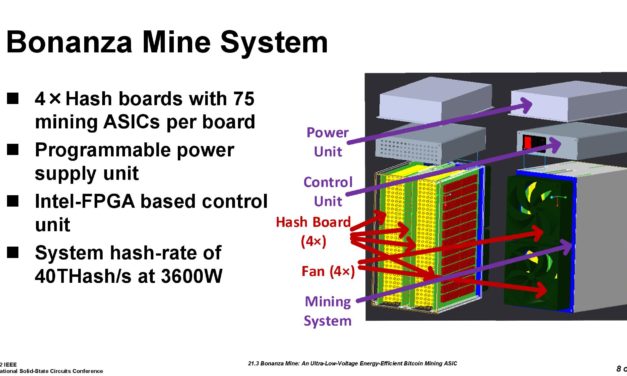
Computer chip manufacturing giant Intel Corporation shared details of a new mining chip that will be coupled with a high-performance 3,600 Watt miner with the ultimate goal of improving Bitcoin (BTC) mining efficiency. Intel revealed its second-generation BTC mining setup during the IEEE International Solid-State Circuits Conference (ISSCC) 2022, a conference dedicated to the electronics and chip manufacturing industry. According to the company, Bonanza mine (BMZ2) is an ultra-low-voltage energy-efficient Bitcoin mining ASIC that can deliver 40 Terahashes per second (40 TH/s) performance.Intel’s Bonanza setup. Source: 2022 IEEEAs Cointelegraph previously reported, Intel’s patent related to “high-performance Bitcoin Mining” dates back to November 2018, which had proposed to reduce overall power consumption by approximately 15%. Intel representatives at the time showed confidence in competing against established players including Bitmain, MicroBT and Nvidia:“Intel has done design work around SHA 256 optimized ASICs for several years beginning with pathfinding work done in Intel Labs.”The BMZ2 chips are expected to follow an architecture similar to its 1st-gen mining chip BMZ1, wherein over 300 chips, powered by a 3600W miner, work together to deliver up to 40TH/s in a balanced environment.Intel’s next-generation BTC miner will be able to deliver a balanced performance of 40.4 TH/s by drawing 2,293W of power — recording a low energy consumption of 56.97 joules per terahash (J/Th). When compared to Bitmain’s hardware, Antminer S19j ASIC Bitcoin miner consumes 3,100 Watts for delivering up to 90 TH/s at room temperature, resulting in an efficiency of 34.5 J/Th.In addition, the hardware will also have the option to operate in high-performance and power-saving modes to optimize the energy-cost ratio across various degrees of mining efficiencies.Intel is yet to announce a date for its official launch along with the technical requirements of the 2nd-generation mining setup.Related: Bitcoin difficulty reaches all-time high, hash rate up 45% in 6 monthsThe Bitcoin network mining difficulty maintains an upward trend, showcasing a strong indication of growing resilience against network attacks. At its peak, Bitcoin recorded a hash rate of 248.11 EH/s on Feb. 13 after jumping 31.69% from 188.40 EH/s in just one day.Bitcoin hash rate over the past year. Source: YChartsWith the increase in the hash rate, BTC mining equipment needs to evolve for delivering higher performance while consuming comparatively energy.

Čítaj viac

SafeMoon pump and dump lawsuit targets Jake Paul, Soulja Boy, and others

A new class-action lawsuit demands a jury trial against A-list celebrities and social influencers for their alleged participation in a classic pump and dump scheme relating to SafeMoon tokens.SafeMoon, a Binance Smart Chain-native cryptocurrency, allegedly recruited a number of celebrities to lure investors in with misleading promotions. Some of the prominent names roped in by the class action include musicians such as Nick Carter, Soulja Boy, Lil Yachty and YouTubers Jake Paul and Ben Phillips.According to the lawsuit, SafeMoon and its subsidiaries mimicked real-life Ponzi schemes by misleading investors to purchase SafeMoon tokens under the pretext of unrealistic profits. Citing the ecosystem’s ‘burn’ and ‘tokenomics’ as a key driver for SafeMoon’s price potential, the recruited celebrities allegedly convinced their followers to invest in the token.Furthermore, the lawsuit points out numerous instances where the recruited celebrities successfully hyped the token enough to artificially increase the trading volume and price. While SafeMoon witnessed multifold growth over several months, the sudden departure of the company’s C-suite executives was when the token prices started plummeting, as evidenced by the graph below (marked in yellow):The lawsuit alleges a ‘slow rug pull’ attempt from the involved celebrities, implying a slow sell-off of holdings as the trading volume from retail investors remains inflated:“The Promoter Defendants’ improper promotional activities generated the trading volume needed for all the Defendants to offload their SAFEMOON Tokens onto unsuspecting investors.”The lawsuit looks to represent and compensate all individuals who bought SafeMoon tokens since March 8, 2021 and were victims of the alleged rug pull attempt. Related: Stop listening to celebrities for financial advice, says Binance Super Bowl campaignOne of the biggest highlights of Super Bowl 2022 was the crypto commercials. Amid the craze around the advertisements, crypto exchange Binance launched a marketing campaign to warn investors against the incoming crypto hype fueled by mainstream celebrities.Superstars ≠ crypto experts.Music artist @JBALVIN says “do your own research”.On 2.13 when big names try to give you crypto advice — sound #CryptoCelebAlert and grab 1/2222 NFTs of basketball star @JimmyButler!Learn more ⬇️https://t.co/3rC7r0uJ8M pic.twitter.com/Hml8AN2aEs— Binance (@binance) February 7, 2022As Cointelegraph reported, Binance’s ultimate aim with this campaign was to direct new users to its own platform, as well as to the educational crypto primer tools on its website.

Čítaj viac

Získaj BONUS 8 € v Bitcoinoch

nakup bitcoin z karty

Registrácia Binance

Burza Binance

Aktuálne kurzy