Autor Cointelegraph By Arijit Sarkar

Belgian financial regulator FSMA to regulate crypto exchange services

A new rule imposed by Belgium’s financial regulatory agency, the Financial Services and Markets Authority (FSMA), will now require crypto exchanges and custodial wallet services in the region to register within a sharp deadline.Starting tomorrow, May 1, legal individuals and entities that wish to provide crypto exchange services or custodial wallets in Belgium will have to register in advance, according to the information released by the FSMA.As from 1 May 2022, providers of exchange services between #virtual #currencies and legal currencies, or custody #wallet services will have to register with the #FSMA. Please consult the FAQs. https://t.co/P44mkovn5L pic.twitter.com/aAdtQ9Dqwx— FSMA (@FSMA_info) April 29, 2022Crypto businesses in Belgium that have been already operating before this official announcement are required by law to notify the FSMA of the “exercise of their activity” within the next two months, before July 1.In addition to disclosing operations, existing businesses have been given four months, i.e., before Sept. 1, to register as a regulated business with the financial regulator. To maintain active registration with the FSMA, crypto service providers are required to fulfill seven conditions that include being constituted in the form of a company with a minimum capital of roughly $52,725 (EUR 50,000).The FSMA expects to process registration applications within three months, considering all required information has been provided. Upon successful registration, crypto service providers will receive a unique registration number, a.k.a. the company number, that must be used in all further interactions with the FSMA.Related: Belgian MP becomes first European politician to accept salary in BitcoinBelgium’s pro-crypto stance became evident at the start of 2022 when Brussels member of parliament Christophe De Beukelaer became the first European politician to convert his salary to Bitcoin (BTC).As Cointelegraph previously reported in January, Beukelaer announced using the Bit4You crypto trading platform to convert his monthly salary of roughly $6,140 (EUR 5,500) to BTC.During the revelation, Beukelaer shared his intent to inspire other politicians in the region to support the growing crypto economy.

Čítaj viac
Singaporean investors’ appetite for crypto is key to mainstream adoption — Survey

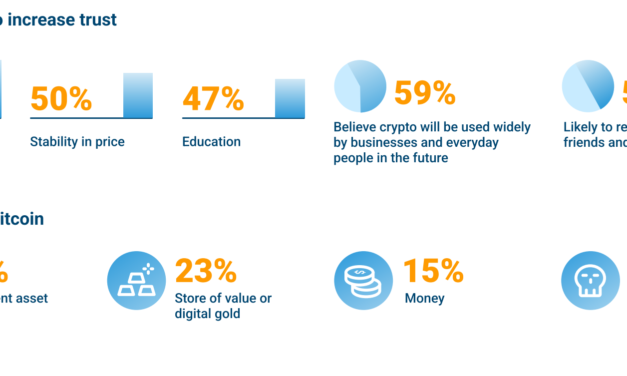
As Singapore continues to play an active role in boosting crypto adoption across the Asia-Pacific region, the country’s first licensed crypto exchange Independent Reserve conducted a retail-focused survey to better understand the underlying potential of the regulated market.Independent Reserve’s survey — conducted across all age groups and genders of the Singapore population — revealed a strong affinity for various financial opportunities brought forward by decentralized finance (DeFi) and other investment opportunities.As explained by Raks Sondhi, managing director of Independent Reserve Singapore, the country’s rapid crypto adoption is driven by high level of trust and confidence in the future of crypto:“58% [Singaporeans surveyed] perceive Bitcoin as an investment asset or a store of value.”Supporting the above trend, more than half of the surveyed individuals showed a likeliness to recommend cryptocurrency investments to their friends and family. In 2021, nearly 60% of investors in Singapore believed in crypto’s potential to reach mass-scale adoption. This year, however, 15% of the respondents have started considering Bitcoin (BTC) as a real form of money.Factors for increasing trust among Singaporean investors. Source: Independent ReserveAccording to Independent Reserve, increasing investors’ trust in the Singapore market boils down to tackling seven key factors: clarity around government regulations, education about how it works, businesses using it, stability in price, an option to ensure crypto, ease of access and use and not being monitored.Based on the survey, clarity around government regulations will result in the highest participation from Singaporean investors. It was also found that investors coming from high-income households were more likely to invest in cryptocurrencies. The price stability of cryptocurrencies and education were also revealed to be the top factors impacting the participation of crypto investors. Despite the concerns, interest in crypto continues to be on an uptrend in Singapore, with continued interest to purchase:“47% plan to increase investment into their current crypto portfolio in the next 12 months.”Concluding the survey, Independent Reserve highlighted that younger adults between 18 and 25 years were most willing to diversify into DeFi or nonfungible token (NFT) projects.Related: Singapore aims to streamline financial watchdog’s authority over crypto firmsThe Singaporean government approved legislation, giving the Monetary Authority of Singapore (MAS) additional power to respond to crypto firms doing business outside the country.As Cointelegraph reported, MAS revealed that the latest legislation will require crypto businesses working off-shore to be licensed and subject to Anti-Money Laundering (AML) and Combating the Financing of Terrorism (CFT) requirements. Speaking on behalf of the new ruling, MAS board member Alvin Tan stated:“Digital token service providers could easily structure their businesses to evade regulation in any one jurisdiction, as they operate mainly online.”

Čítaj viac

Chinese court rules marketplace guilty of minting NFTs from stolen artwork

A court in the Chinese city of Hangzhou issued a one-of-a-kind judgment against a nonfungible token (NFT) marketplace for allowing a user to create (or mint) NFTs of stolen artwork.As reported by South China Morning Post, the court verdict toward the NFT marketplace was made after Shenzhen-based company Qice filed a lawsuit against NFTCN’s parent company, BigVerse.The lawsuit claimed that an NFTCN user stole a copyrighted artwork of Ma Qianli, a Chinese artist specializing in drawing and printing. The user of the NFT platform allegedly poached one of Ma’s cartoons.Based on the evidence collected, the court found the NFTCN platform guilty of not checking for forgery or intellectual property (IP) theft prior to allowing users to mint NFTs. As a result, NFTCN was charged for facilitating the infringement of the owner’s “right to disseminate works through information networks.”The artwork in question was a cartoon tiger receiving a vaccine shot, which was sold for 900 Chinese yuan (approximately $137) to an unknown user on the NFTCN platform. However, BigVerse was ordered to pay a fine of 4,000 yuan (or $611) to Qice in addition to stopping the circulation of the stolen artwork NFT by sending it to an “eater address.”Eater addresses stop the transfers of NFTs as they are void of inherently private addresses — fundamentally working similar to a burning mechanism in cryptocurrencies. Despite China’s aggressive stance against the crypto ecosystem, the country has been apprehensive about banning NFTs. Related: China-based regulatory and trade associations target NFTs in latest risk noticeWhile China has refrained from imposing a blanket ban on NFTs despite going strong against crypto, three Chinese authorities jointly issued a public warning about the “hidden risks” of investing in nonfungible tokens or NFTs.The departments — the China Banking Association, the China Internet Finance Association and the Securities Association of China — launched initiatives to encourage innovation in the crypto and blockchain space focused on NFTs as well as “resolutely curb[ing] the tendency of NFT financialization and securitization” to reduce the risks around illicit activities. The government has also warned citizens against using Bitcoin (BTC) and other cryptocurrencies like Ether (ETH) or Tether (USDT) for the sale or purchase of NFTs.

Čítaj viac

Kraken awarded crypto trading license in the United Arab Emirates

Californian crypto exchange Kraken becomes the second virtual asset platform after Binance to receive regulatory approval to operate in the Abu Dhabi international financial center and free zone, Abu Dhabi Global Market (ADGM).In a CNBC interview, Kraken’s managing director Curtis Ting explains the importance of diversifying trading pairs to local currencies instead using the traditionally available U.S. dollar or British pounds in global markets. With the new operational license in Abu Dhabi, Kraken aims to better integrate with local banks and payment service providers. According to Ting, this will help the crypto exchange bring global-level liquidity to the United Arab Emirates region. Citing Dubai’s existing massive trading volumes i.e. upwards of $25 billion worth of cryptocurrency annually, Ting added that “the region is ready and they’ve been waiting for a regulated offering like ours.” While operating as a fully licensed crypto exchange, Kraken will offer United Arab Emirates dirham (AED) pairs for local investors:“For us, it’s really important to facilitate access to global markets and global liquidity by making sure that investors and traders in the region have access to local currencies [trading pair].”In addition to Abu Dhabi, competing crypto exchange Binance has already bagged regulatory approvals from two more regions in the Middle East — Bahrain and Dubai. Related: Dubai school will welcome tuition payments in Bitcoin and EthereumIn addition to the influx of regulated businesses in the Middle East, local businesses, too, have started stepping in to the world of cryptocurrencies.Citizens School in Dubai started accepting tuition payments (between 45,000 AED to 65,000 AED) in Bitcoin (BTC) and Ethereum (ETH). As Cointelegraph reported, the crypto payments will be automatically converted into dirhams. Dr Adil Alzarooni, the school’s founder, commented: “We look forward to enhancing the role of young generations in achieving the UAE’s digital economy. As more people embrace the era of digitalization, today’s children will become the entrepreneurs and investors of tomorrow.”The school is currently available to students aged between 3 to 11 and is set to open in September 2022.

Čítaj viac

NY Sen. Thomas proposes to criminalize rug pulls and other crypto frauds

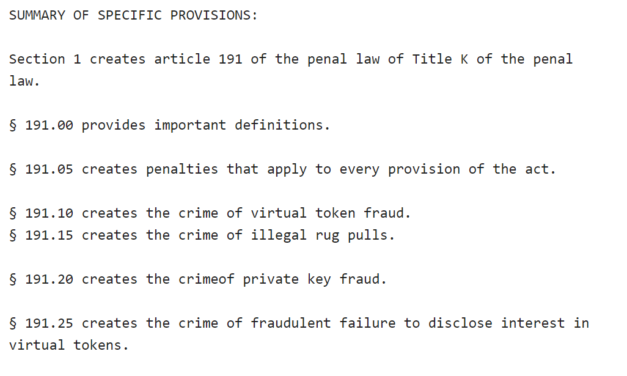
New York State Senator Kevin Thomas introduced a new bill amendment request to establish certain offenses related to rug pulls and other frauds related to virtual token distribution, misuse of private keys and hidden interests in crypto projects.The bill drafted by Sen. Thomas, Senate Bill S8839, calls for defining, penalizing and criminalizing frauds specifically targeted at developers and projects that intend to dupe crypto investors.A snippet of Senate Bill S8839. Source: nysenate.govThrough the bill, Thomas seeks to provide prosecutors with a clear legal framework against crypto crimes that align with the spirit of the blockchain while combatting fraud. It calls for a law amendment that will imply rug pull charges on developers that sell “more than 10% of such tokens within five years from the date of last sale of such tokens.”Private key fraud involves disclosing or misusing another person’s private keys without prior affirmative consent. The bill also seeks to charge developers with fraudulent failure to disclose interest in virtual tokens that don’t publicly disclose personal crypto holdings on the landing page of the primary website. The bill wa under committee review to determine its eligibility for floor consideration at the time of writing.Related: US lawmakers introduce companion bill to ‘mitigate risks’ from El Salvador’s Bitcoin LawTwo members of the House of Representatives — California Representative Norma Torres and Arkansas Representative Rick Crawford — recently introduced legislation to mitigate financial risks tied to El Salvador adopting Bitcoin (BTC) as legal tender.Today, I introduced the Accountability for Cryptocurrency in El Salvador Act with @RepRickCrawford. El Salvador’s adoption of #Bitcoin is not a thoughtful embrace of innovation, but a careless gamble that is destabilizing the country. https://t.co/Ag9K8fyHMb pic.twitter.com/4N8DN7895w— Rep. Norma Torres (@NormaJTorres) April 5, 2022As Cointelegraph reported, the proposed legislation seeks to analyze the risks to El Salvador’s “cybersecurity, economic stability and democratic governance.” According to Torres:“El Salvador is an independent democracy and we respect its right to self-govern, but the United States must have a plan in place to protect our financial systems from the risks of this decision.”

Čítaj viac

Získaj BONUS 8 € v Bitcoinoch

nakup bitcoin z karty

Registrácia Binance

Burza Binance

Aktuálne kurzy