Autor Cointelegraph By Arijit Sarkar

Google seeks fresh talent to lead global Web3 team

Following the establishment of a Web3 team under Google Cloud on May 6, tech giant Alphabet’s Google is now on the lookout for a full-time candidate to lead its Global Web3 marketing strategies.As seen on the job listing, the Google Cloud division opened up a ‘Head of Product Marketing’ role who will be tasked with raising awareness about Google Cloud’s Web3 initiatives in addition to eventually building customer demand for the related offerings.new: Google Cloud is forming a Web3 product and engineering organization that will build services for developers. new job postings have appeared on Google’s internal Grow tool, Amit Zavery is telling employees in an email today https://t.co/sLC8VlqgBf— Jordan Novet (@jordannovet) May 6, 2022In an email shared with employees right before the commencement of the Web3 team, Vice president at Google Cloud, Amit Zavery, reportedly shared his vision to make Google Cloud the first choice for developers in Web3:“While the world is still early in its embrace of Web3, it is a market that is already demonstrating tremendous potential with many customers asking us to increase our support for Web3 and crypto-related technologies.”Some of the key responsibilities for the role in question in addition to leading marketing initiatives include creating annual plans for Web3 and driving awareness across different segments of the Web3 audience. The job location is limited to New York, San Francisco, Seattle, and Sunnyvale. Google has been known to create and discard numerous in-house initiatives, however, this is Google’s first attempt at delving into the Web3.Related: WEF 2022: Web3 no longer just about crypto and DeFi, says Polkadot founder Gavin WoodIn a conversation with Cointelegraph during the World Economic Forum (WEF) Annual Meeting 2022, Polkadot (DOT) founder Gavin Wood spoke about the evolution of Web3. According to Wood, Web3 applications don’t have the need to evolve past their current usage:“I don’t think Web3 needs to evolve, really, from its origins too much yet but maybe in the future, it will.”Furthermore, Wood explained how Web3 pushed the conversation beyond Bitcoin (BTC), smart contracts and decentralized finance (DeFi) into the underlying technology that powers the world of crypto.

Čítaj viac
ADDX bags $58M to reduce min. private investment by 10x via smart contracts

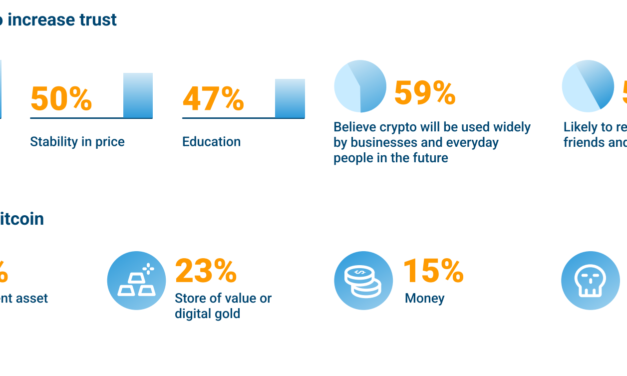
ADDX, a blockchain and smart contract-based digital securities platform from Singapore raised $58 million from mainstream financial institutions to fund its goal of reducing minimum private investment sizes via tokenization and fractionalization.The Monetary Authority of Singapore regulates ADDX as a digital securities exchange that aims to democratize private markets. The Pre-Series B funding round saw participation from the Stock Exchange of Thailand (SET), UOB, Nasdaq-listed Hamilton Lane and Thailand’s Krungsri Bank, which has brought total funds raised by ADDX to around $120 million. As explained in the announcement, ADDX uses blockchain technology and smart contracts to tokenize and fractionalize private markets, including pre-IPO equity, private equity, and hedge funds and bonds. ADDX can reduce the minimum investment sizes for such private investments through tokenization.According to ADDX, the platform effectively brings down private markets’ minimum investment threshold from $1 million to $10,000. In addition, as part of the investment, SET becomes entitled to appoint a board member for ADDX. Moreover, ADDX intends to redirect some of the latest funding to other strategic initiatives, such as expanding the partnerships with issuers and supporting the launch of ADDX Advantage, a private market service for wealth managers.Existing shareholders of ADDX include SGX, Heliconia Capital, Development Bank of Japan, Japan Investment Corporation, Tokai Tokyo, Kiatnakin Phatra and Hanwha Asset Management.Related: Singaporean investors’ appetite for crypto is key to mainstream adoption — SurveyA survey conducted by Singapore’s first licensed crypto exchange Independent Reserve revealed tremendous investors’ support in the region, which might be key to mainstream adoption in the region.Factors for increasing trust among Singaporean investors. Source: Independent ReserveAccording to Raks Sondhi, managing director of Independent Reserve Singapore:“58% [Singaporeans surveyed] perceive Bitcoin as an investment asset or a store of value.”While nearly 60% of Singaporean investors envisioned mass-scale adoption of cryptocurrencies in 2021, 15% of the respondents from this year’s survey have started considering Bitcoin (BTC) as a real form of money.

Čítaj viac

Do Kwon shares LUNA burn address but warns 'LUNAtics' against using it

The recent Terra revival plan announced by Do Kwon, the co-founder and CEO of Terraform Labs, received mixed reactions as many questioned the effectiveness of a hard fork in reviving the fallen prices of LUNA and UST tokens. Instead, the part of the community recommended burning LUNA tokens as the most plausible way to achieve a comeback.Kwon’s proposal to preserve the Terra ecosystem involves hard forking the existing Terra blockchain without the algorithmic stablecoin and redistributing a new version of the LUNA tokens to investors based on a historical snapshot before the death spiral. However, several crypto entrepreneurs, including Changpeng “CZ” Zhao, opined that:“Reducing supply should be done via burn, not fork at an old date, and abandon everyone who tried to rescue the coin.”Upon a persistent request from the crypto community, Kwon went against his initial plan and publicly shared a burn address for LUNA on May 21. Every LUNA token sent to this address will be burned immediately, effectively reducing the circulating supply of LUNA tokens.To clarify, as I’ve noted multiple times i dont think sending tokens to this address to burn tokens is a good idea – nothing happens except that you lose your tokensWant there to be no confusion whatsoever https://t.co/GrzG9cclAr— Do Kwon (@stablekwon) May 23, 2022Two days after sharing the LUNA burn address, Kwon reiterated his point of view that reducing the circulating supply of LUNA tokens will have no impact on the market price, stating, “nothing happens except that you lose your tokens.”The Terra co-founder clarified that the burn address was shared with users only for information purposes and warned against using it:“Happy to provide for information purposes but want to clarify that you should not burn tokens unless you know what you are doing – I for one cannot understand.”However, the revelation resulted in more confusion among investors. As Cointelegraph previously reported, LUNA’s insane volatility serves as a lucrative opportunity for investors as many try to recoup their losses and others eye profitable trades.Kwon has previously confirmed that Terra is no longer minting new LUNA tokens, which is one of the main reasons why investors believe a burning mechanism will improve LUNA price owing to scarcity. Amid an unclear roadmap for a resolution, investors are advised to refrain from making abrupt financial decisions as the master plan for Terra revival continues to be under public scrutiny.Related: Near Protocol picks up slack, onboards Tracer following Terra’s downfallAs a direct consequence of Terra’s collapse, numerous projects sought to migrate to different blockchain ecosystems fighting for survival. Near Foundation, too, played its part by recently onboarding Tracer, a Web3 fitness and lifestyle app.Speaking to Cointelegraph, Near Foundation’s (NEAR) Nicky Chalabi highlighted that projects like Tracer seek alignment with the ecosystem’s core values and that:“Projects must watch the interests of their community and users because, in the end, that’s the most valuable thing you have.”Chalabi further advised Terra projects to migrate only after considering the interests of their users and communities, stating “That can actually define your success.”

Čítaj viac

Near Protocol picks up slack, onboards Tracer following Terra's downfall

For many Level 1 crypto projects, returning to normalcy from Terra’s death spiral meant a complete migration to a different ecosystem. But how does one make the right move, especially after knowing the unfortunate fate of their initial platform of choice?In the case of Tracer, a Web3 fitness and lifestyle app, moving away from the Terra (LUNA) ecosystem for survival was just one piece of the puzzle. Choosing a new host to build on requires more than checking the technical compatibility with the blockchain ecosystems. As explained by Near Foundation’s (NEAR) Nicky Chalabi, projects like Tracer seek alignment with the ecosystem’s core values that can support the company’s roadmap in time to come. Tracer’s decision to completely migrate over to Near Protocol complements the various other crypto projects that have recently shifted over to Binance’s BNB Chain (BNB) and Polygon Studios. Speaking to Cointelegraph about the decision-making process behind a total migration, Chalabi suggested:“Projects must watch the interests of their community and users because, in the end, that’s the most valuable thing you have.”Coincidently, Tracer and Near used the same programming language for building smart contracts, which further eased the migrating process. However, Chalabi echoed the sentiments of the crypto community by stressing the fact that Terra’s downfall was a loss for the entire community:“We’re really trying to help. It’s not our goal to take advantage of this situation. You’ve [projects] have lost your [their] home.”The sudden collapse of major ecosystems negatively impacts the trust and credibility of projects as investors tend to make unrecoverable losses in the process. As damage control, Near allocates resources to understand the project’s needs, work with the projects, and immediately address any issues. Other ecosystems, too, have taken a similar approach in easing the transition for the recently displaced projects. As Cointelegraph reported, BNB Chain is also committed to investing and supporting projects that intend to migrate away from the Terra ecosystem.In concluding the discussion, Chalabi advised the recently displaced projects to migrate to blockchains based on the interests of their users and communities instead of choosing platforms for short-term monetary gains, stating “That can actually define your success.”Related: Aurora launches $90M fund to finance DeFi apps on Near ProtocolAurora, an Ethereum Virtual Machine (EVM) designed to scale decentralized applications (DApps) built on the Near protocol, recently launched a token fund worth $90 million. As Cointelegraph reported, Aurora Labs allocated 25 million AURORA tokens, valued at roughly $90 million, from the DAO treasury to fund the initiative.

Čítaj viac

Web3, NFTs, Metaverse: The tools for a truly decentralized future

Attendees to the BlockDown Croatia 2022 festival were witness to Cointelegraph’s discussions around sociopolitics of the Web3 ecosystem, non-fungible tokens (NFT) and the Metaverse. It turns out that ongoing innovations across the crypto ecosystem are well-positioned to dictate the future of media and entertainment.While crypto continues to blur the lines between the virtual and physical worlds, Cointelegraph’s editor-in-chief, Kristina Cornèr, agreed that “It’s been a crazy year” when talking about the rising impact of crypto innovations within media companies during the BlockDown festival.Cornèr highlighted use cases within the NFT space that gives independent artists and journalists a platform to raise funds and counter real-world challenges such as climate change. In a separate discussion with Dylan Dewdney, the founder of NFT3, a unified identity network, Cornèr raised questions related to the merging of virtual and physical worlds in the Metaverse.According to Dewdney, real-world problems have a good chance of seeping into the Metaverse despite the merger of the two worlds. However, he suggested developing a psuodenomous system wherein users are verified but can choose not to disclose their identities to other members of the Metaverse. As the world slowly shifts into its new home, the Metaverse, Dewdney believes that “the real world will become better.” However, it will require the people to inculcate some of the ethos of crypto — especially in relation to equitability and personal responsibility: “I think its time for the world to evolve and we are starting to lay the technical foundations for a lot of that. You have to be careful about how this plays out and really take individual responsibility about spreading that message.”Showcasing an in-house attempt to create the biggest truly community-owned Web3 festival, Cornèr too revealed the relaunch of BlockShow — Cointelegraph’s flagship event — as a decentralized autonomous organization (DAO) that allows attendees to own a stake in the show and participate in organizing events. According to BlockShow CEO Addy Crezee, the goal at BlockShow DAO is “to bring more people to Web3 and help people feel the benefits of the ownership economy.”Getting further into discussing the sociopolitics involved with living in the Metaverse, Dewdney told Cornèr:“We’re still going to have all the same problems because we’re still the same old boring humans who do the same old petty things, and also great things.”If the crypto community can successfully decentralize the internet, “it’s a future really worth getting excited about” — at an individual as well as other social levels. With NFT3, Dewdney aims to provide a decentralized identity service for the Metaverse ecosystem. The service can associate various information with a pseudonymous but real-life identity. On an end note, Dewdney believed that the crypto ecosystem needs to evolve beyond the financial use case into the “human use case” of blockchain.Related: $3B flows to metaverse and Web3 gaming this month as a16z tips in $600MVenture capital firm Andreessen Horowitz (a16z) recently launched a $600 million Games Fund One dedicated to gaming startups with a focus on Web3. The fund aims to support game studios, consumer applications and gaming infrastructure providers. As Cointelegraph previously reported, Metaverse projects are too attracting investments from gaming industry titans. In April, Epic Games, creator of the popular Fortnite title, raised $2 billion to create a metaverse with funding from Sony and Lego.

Čítaj viac

Získaj BONUS 8 € v Bitcoinoch

nakup bitcoin z karty

Registrácia Binance

Burza Binance

Aktuálne kurzy