Autor Cointelegraph By Arijit Sarkar

Bitcoin ATM installations record low in May, biggest drop since 2019

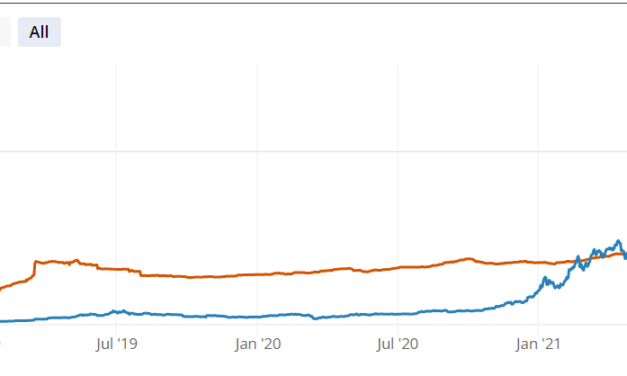
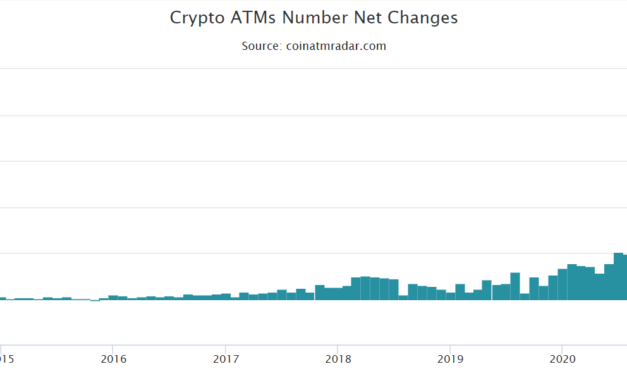
Bitcoin (BTC) ATM installations across the globe have seen a steep decline throughout the year 2022, with May recording just 202 new BTC ATMs, a range last seen three ago in 2019.Over the past five months since January, Bitcoin ATM installations saw a gradual slowdown, eventually falling down 89.75% from December 2021’s 1971 new installations. However, data from Coin ATM Radar reveal an evident comeback in the installation numbers as the world saw 817 Bitcoin ATMs getting installed in June — in just the first five days.Net change of cryptocurrency machines number installed and removed monthly. Source: Coin ATM RadarSome of the key factors contributing to the slowdown of crypto ATM installations include geopolitical tensions across the world, unclear or anti-crypto regulations, market saturation and business impact due to the ongoing coronavirus pandemic. Coin ATM Radar’s data confirms that the United States is home to 87.9% of the total 37,826 crypto ATMs worldwide. Europe, as a continent, houses a network of 1,419 ATMs — representing 3.8% of the global ATM installations.Number of cryptocurrency machines installed by manufacturer over time. Source: Coin ATM RadarCrypto ATM manufacturer Genesis Coin maintains its position as the leader in terms of the market share, representing 41% of the total operational crypto ATMs across the globe. Other manufacturers with prominent market share include General Bytes (21.6%), BitAccess (16%), Coinsource (5.4%) and Bitstop (4.7%).Related: Bitcoin Lightning Network capacity crosses 3900 BTC marking a new ATHWhile real-world challenges may have a momentary impact on Bitcoin’s physical expansion via ATMs, at its core, the Bitcoin network continues to outperform its previous records in securing, decentralizing and speeding up the impenetrable peer-to-peer (P2P) network. Cumulative Bitcoin capacity across all channels. Source: BitcoinVisuals nodeAs Cointelegraph reported based on data from Bitcoin Visuals, the Bitcoin Lightning Network (LN) capacity attained an all-time high of 3915.776 BTC — further improving BTC transaction speeds and reducing fees over the layer-2 protocol. The Bitcoin LN was first implemented into the Bitcoin mainnet in 2018 to address Bitcoin’s infamous scalability issues.

Čítaj viac

Yuga Labs’ BAYC, OtherSide Discord groups breached, over 145 ETH stolen

Yuga Labs, the creator of two of the most popular ape-themed nonfungible token (NFT) offerings — Bored Ape Yacht Club (BAYC) and OtherSide — witnessed yet another orchestrated phishing attack with investors losing over 145 Ether (ETH) or nearly $260,000 at the time of writing.OKHotshot, a blockchain detective and a member of the Crypto Twitter community, alerted crypto investors about the compromise of two official Discord groups linked to BAYC and OtherSide NFTs.BAYC & OtherSide discords got compromised‼️Seems because Community Manager @BorisVagner got his account breached, which let the scammers execute their phishing attack. Over 145E in was stolen Proper permissions could prevent this pic.twitter.com/lCl2DfZQ0W— OKHotshot (@NFTherder) June 4, 2022According to OKHotshot’s investigations, the attack was conducted by hacking into the Discord account of Boris Vagner, community and social manager for Yuga Labs. After gaining unrestricted access to the employee’s account, scammers shared various phishing links from Vagner’s Discord account into the official BAYC, Mutant Ape Yacht Club (MAYC) and Otherside groups. Discord message from hackers with phishing link. Source: OkHotshotMany users in the Discord groups, unwary about the ongoing scam, fell for the phishing messages that promised limited-quantity giveaways made available for existing NFT holders — as evidenced by the above screenshot.Concluding the investigation, OKHotshot revealed the wallets that held and transferred the recently compromised NFTs, making the second time BAYC fell victim to an attack in two weeks.Yuga Labs has not yet responded to Cointelegraph’s request for comment. Related: NFT owners reminded to be vigilant after 29 Moonbirds were stolen by clicking a bad linkOn May 25, a Proof Collective member lost 29 high-valued Ethereum-based Moonbirds NFTs worth $1.5 million amid an ongoing scam.29 Moonbirds were just stolen in a hack. ~750e (~$1,500,000) in value lost by clicking on a bad link.Sickening seeing stuff like this. Let this be a reminder to never ever click on links and to bookmark the marketplaces/trading sites that you use. pic.twitter.com/7iWO5LMovL— Cirrus (@CirrusNFT) May 25, 2022

While the total damage around this hack remains unclear, the recent crypto scams are a harsh wake-up call for NFT owners to exercise caution when dealing with third-party platforms, and to double-check anything shared by others, even if they appear trustworthy.

Čítaj viac

CBDCs can “kill” private crypto: India's RBI deputy governor to IMF

In discussion with the International Monetary Fund (IMF), T Rabi Sankar, the deputy governor of the Reserve Bank of India (RBI), reflected an anti-crypto stance as he spoke about India’s potential to disrupt the crypto and blockchain ecosystem. Rabi Sankar started the conversation by highlighting the success of the Unified Payments Interface (UPI), India’s in-house fiat-based peer-to-peer payments system — which has seen an average adoption and transaction growth of 160% per anum over the last five years. “One of the reasons it is so successful is because it’s simple,” he added while comparing UPI’s growth with blockchain technology. According to Rabi Sankar:“Blockchain, which was introduced six-eight years before UPI started, even today is being referred to as a potentially revolutionary technology. [Blockchain] use cases haven’t really been established that much at the speed it initially was hoped for.”However, the RBI official confirmed that a large population in India still lacks access to UPI-based banking due to the unavailability of smartphones. To counter this, the Indian government is working on offline payment platforms, some of which have started rolling out to the masses.June 2 at 7:00am ET // At the Frontier: India’s Digital Payment System and Beyond will explore the latest developments in digital payments with a focus on lessons from India as well as future with a significant role for Central Bank Digital Currencies. https://t.co/ZSj7i15fBG pic.twitter.com/X6cVyHewEs— IMF (@IMFNews) May 31, 2022Rabi Sankar also stated that banks will remain crucial for providing liquidity services to the general public in India, warning that technology is merely a tool and cannot be used to create currencies:“A currency needs an issuer or it needs intrinsic value. Many cryptocurrencies which are neither are still being accepted at face value. Not just by gullible investors but also the experts, policymakers or academicians.”He further stated that RBI does not believe that stablecoins, like Tether (USDT), should be accepted blindly as 1-to-1 fiat pegged currencies. Speaking about the advantages of a digital rupee, Rabi Sankar said:“We believe that central bank digital currencies (CBDCs) could actually be able to kill whatever little case that could be for private cryptocurrencies.”Related: India to roll out CBDC using a graded approach: RBI Annual ReportOn May 28, India’s central bank, RBI, proposed a three-step graded approach for rolling out CBDC “with little or no disruption” to the traditional financial system.As Cointelegraph reported, finance minister Nirmala Sitharaman first revealed the plan to launch a CBDC in 2022-23 with an aim to provide a “big boost” to the digital economy. RBI’s report revealed that the central bank is currently experimenting to develop a CBDC that addresses a wide range of issues within the traditional system.

Čítaj viac

Binance Labs’ $500M fund to catalyze crypto, Web3, blockchain adoption

Binance Labs, the investment arm of crypto giant Binance, launched a $500 million fund in partnership with global investors including DST Global Partners and Breyer Capital to drive innovation across the crypto, Web3 and blockchain landscape.Binance Labs plans to allocate the latest $500 million fund to projects across various stages — incubation, early-stage and late-stage growth. Sharing his take on accelerating the adoption of the crypto ecosystem, Changpeng “CZ” Zhao, CEO of Binance, revealed the importance of a connection between values, people and economies:“The goal of the newly closed investment fund is to discover and support projects and founders with the potential to build and to lead Web3 across DeFi, NFTs, gaming, metaverse, social, and more.”Binance Labs was established in 2018 and has since invested in and incubated more than 100 projects globally. Some of the prominent companies in its portfolio include 1inch, Axie Infinity, Dune Analytics, Elrond, Polygon and The Sandbox. Fun fact, Binance Labs had also invested $3 million in Terra’s layer-0 blockchain back in 2018.Related: Binance gets approval to operate in Italy, will open office in MilanSeveral former Binance executives led funding rounds in helping multi-strategy blockchain investment fund Old Fashion Research (OFR) invest in over 50 blockchain projects in just one year.As Cointelegraph recently eported, the fund was founded by Ling Zhang, the former vice president of mergers and acquisitions and investments at Binance and Wayne Fu, former Binace head of corporate development.

Čítaj viac

Bitcoin Lightning Network capacity crosses 3900 BTC marking a new ATH

Unwithered by the ongoing bear market, Bitcoin’s (BTC) underlying architecture continues to outperform itself — further securing, decentralizing and speeding up the impenetrable peer-to-peer network. The same holds true for the Bitcoin Lightning Network (LN).The Bitcoin Lightning Network capacity attained an all-time high of 3915.776 BTC as evidenced by data from Bitcoin Visuals, displaying a commitment to the cause of improving BTC transaction speeds and reducing fees over the layer-2 protocol.Cumulative Bitcoin capacity across all channels. Source: BitcoinVisuals nodeThe Bitcoin LN was first implemented into the Bitcoin mainnet in 2018 to address Bitcoin’s infamous scalability issues and has ever since been able to maintain an upward trajectory in terms of expanding its capacity. The climb, however, saw a temporary disruption on April 18, when the LN capacity dropped by 7.7% — from 3687.051 to 3402.273 BTC in a matter of a week. Showcasing network resilience, the drop was accompanied by a quick recovery back to 3718.351 BTC by May 2.Bitcoin Lightning Network statistics. Source: 1mlMoreover, statistics data from 1ml shows that all other aspects of the Bitcoin Lightning Network continue to grow parallel to Bitcoin’s global adoption drive.Related: Layer-2 adoption could spur the next crypto turning pointA Redditor’s data-driven prediction hints at a major disruption that will see the crypto industry move away from bridging between L1 blockchains toward L2s. As explained by the OP:“L2 adoption is happening now, even if it is slow and in bursts. Behind the scenes, L2’s are improving reliability, decreasing fees, and increasing accessibility. L2’s are still building and improving, and that’s fantastic.”As Cointelegraph previously reported, L2 scaling solutions take advantage of L1’s security and process multiple transactions into a single package.

Čítaj viac

Získaj BONUS 8 € v Bitcoinoch

nakup bitcoin z karty

Registrácia Binance

Burza Binance

Aktuálne kurzy