Autor Cointelegraph By Arijit Sarkar

Bitcoin ecosystem makes a U-turn recovery in global ATM installations

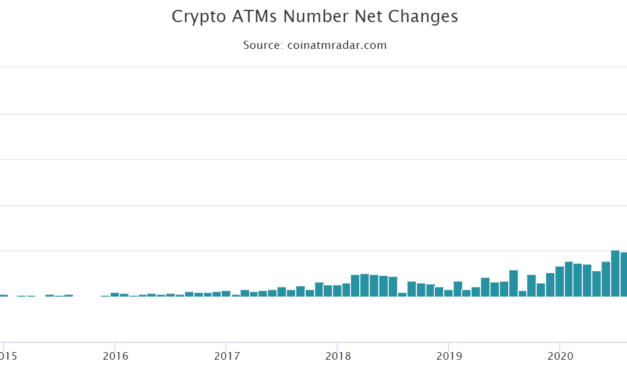
Bitcoin (BTC) ATM installations have marked a new comeback as June 2022 saw the reversal of the five-month-long downward trajectory for the first time this year. The global ATM installations worldwide fell consistently throughout the year, with May reporting the lowest number of 205 ATM installations. However, June saw the installation of over 882 ATM installations in just the first ten days.Chart showing the net change of cryptocurrency machines number installed and removed monthly. Source: Coin ATM RadarAs evidenced by the above graph, May 2022’s drop reached a range that was last seen three years ago in 2019. Over the last two years, in 2020 and 2021, Bitcoin ATM installations grew consistently owing to friendlier regulatory landscapes amid a rewarding market when numerous cryptocurrencies attained their all-time highs momentarily.In addition, the use of Bitcoin as legal tender in El Salvador contributed to the spike in crypto ATM installations in the last year. China imposing a blanket on crypto trading and mining, too, contributed to the temporary slowdown in the global ATM installation numbers. Surprisingly, despite the regulatory hurdles, China came out as the 2nd top Bitcoin mining hub despite the crypto ban.Crypto ATM installations peaked in 2021, with December witnessing 1971 ATMs installed in a month. However, up until June 2022, the numbers dropped 89.75% by May, which was followed by a swift recovery in the following month. According to Coin ATM Radar’s gauge scale, which is based on the data collected over the last two months, nearly 23 crypto ATMs are being installed per day on an average globally.A chart showing the speed of crypto machines installed over time. Source: Coin ATM RadarData also confirms that there are currently 38,000 operational ATMs installed across the world at the time of writing. Crypto ATMs serve a crucial purpose for the Bitcoin and crypto economy, allowing users and investors to exchange their fiat currencies against Bitcoin and vice versa. Out of the lot, the United States represents 87.9% of the total crypto ATM network, i.e., 33,403 ATMs. Prominent manufacturers that lead this space in terms of market share are Genesis Coin (40.9%), General Bytes (21.6%), BitAccess (16.1%), Coinsource (5.4%), and Bitstop (4.8%). While ATM transactions do not contribute to the overall liquidity of the Bitcoin network, it helps investors procure crypto assets against fiat currencies. As a result, having local crypto ATMs drive the adoption of cryptocurrencies into the mainstream.Along similar lines, El Salvador, after accepting Bitcoin as legal tender, witnessed a spike in tourism. According to reports, El Salvador’s tourism has grown by 30% since the Bitcoin Law was implemented.Related: Falling Bitcoin price doesn’t affect El Salvador: ‘Now it’s time to buy more,’ reveals Deputy Dania GonzalezIn a recent discussion with Cointelegraph, Dania Gonzalez, Deputy of the Republic of El Salvador, recently revealed the country’s plan to buy more Bitcoin amid falling prices.”What Nayib Bukele did was buy Bitcoins and make a profit at a certain strategic moment,” Gonzalez said. Gonzalez also indicated that El Salvador President Nayib Bukele’s strategy has already proven to be successful in terms of socioeconomic impact by citing two ventures — a veterinary hospital and a public school — that were made possible thanks to calculated BTC investments.

Čítaj viac

IMF recommends eco-friendly CBDCs and non-PoW mechanisms for payments

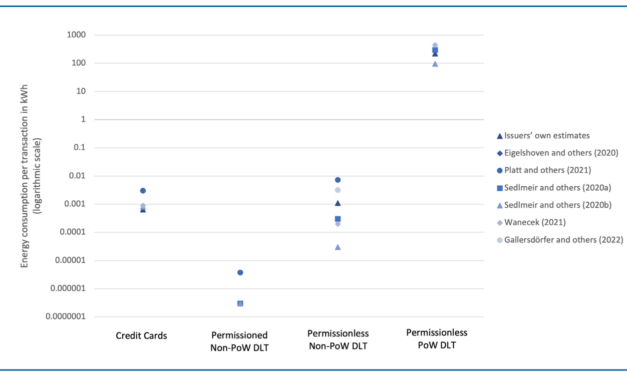
An International Monetary Fund (IMF) study on energy consumption revealed the importance of design choices within the crypto ecosystem to build an environmentally friendly mainstream payment system.In the study entitled “Digital Currencies and Energy Consumption,” the IMF examined the energy consumption of crypto assets based on their distinct design elements to evaluate the ideal mechanism for developing central bank digital currencies (CBDCs). Estimates of energy use (in kWh) per transaction for the core processing of different payment systems. Source: IMFSharing the groundwork for policy discussions around the environmental impacts of digital currencies, the IMF recommended moving away from proof-of-work (PoW)-based distributed ledger (DLT) applications, adding:“In particular, Bitcoin (BTC), the best-known application of this type, is estimated to consume much energy (about 144 terawatt-hours (TWh)) per year. Although scalability solutions reduce the energy cost per transaction, they do not reduce the overall energy spending.”However, the international organization acknowledged the high energy efficiency brought about by non-PoW, permissioned crypto assets when compared to the traditional financial system:“The potential of non-PoW permissioned crypto assets to reduce energy consumption relative to the existing payment system comes about from energy savings on both core processing architectures and user payment means.”Drawing a conclusion from the study, the IMF’s recommendation to the central banks is to “design CBDCs with the explicit goal to be environmentally friendly.” This means selecting platforms, hardware and design options with “a lower carbon footprint than the central banks’ legacy systems” right from the experimentation phase.In addition to eco-friendly components, central banks were recommended to include other features in the CBDCs, such as compliance, higher resilience and offline capabilities.The IMF also pointed out that the policymakers will consider the mainstreaming of crypto or CBDCs by weighing the environmental impact of the technology’s underlying design. In the study, IMF estimated that the annual energy consumption by the global payment system stands at 47.3 TWh — roughly matching the yearly consumption of economies like Portugal and Bangladesh. Related: Iota Foundation joins Dell to develop real-time carbon footprint trackingJoining in the cause to address climate change, the Iota Foundation, a nonprofit DLT ecosystem provider, partnered with Dell Technologies to develop a real-time carbon footprint tracking system.We’ve partnered w/ @Iota, BioE, & @ClimateCHECK to develop real-time carbon footprint tracking through a #data confidence fabric! Hear how #ProjectAlvarium accurately tracks carbon footprints w/ #DellTech Edge solutions.https://t.co/u5CxmbMBAL@Intel #IOTA #Sustainability pic.twitter.com/52RENnEW3X— Dell Edge & Telecom (@Dell_Edge) June 6, 2022The initiative will bring about near-real-time tracking of carbon emissions from BioE’s sustainable energy and composting facility. Mathew Yarger, head of sustainability at the Iota Foundation, stated:“We’re now able to track and verify data around climate change and how we’re actively trying to address it at a level that’s never been achieved before.”

Čítaj viac

Crypto.com's Cronos launches $100M accelerator for DeFi and Web3

Cronos, a blockchain ecosystem built by major crypto exchange Crypto.com, announced the launch of an accelerator program to fast-track advancements across the decentralized finance (DeFi), Web3 and Metaverse space among others. Driving the initiative, the Cronos Accelerator Program is backed by $100 million to help crypto projects in seed and pre-seed stages seeking mentorship, funding and growth. According to the announcement, projects shortlisted for the accelerator program will be matched with compatible mentors.Some of the prominent investment partners backing the Cronos Accelerator Program include Mechanism Capital, Spartan Labs, IOSG Ventures, OK Blockchain Capital, AP Capital, Altcoin Buzz and Dorahacks. Cronos plans to onboard other partners in the future. Providing further clarity into the program, Cronos managing director Ken Timsit added:“In the current climate, it is more important than ever to put our heads down and start building aggressively.”Timsit aims to enhance the potential of projects by providing end-to-end support across the project’s operations. As part of this initiative, Cronos’ Web3 startup accelerator arm Cronos Labs conducts weekly workshops that cover various aspects of building crypto projects.Aspiring projects get the opportunity to procure between $100,000–$300,000 seed investment in addition to having the option for additional grant funding. In addition to mentorship and other marketing initiatives, projects will be able to integrate into Crypto.com’s ecosystem including a DeFi wallet, crypto exchange and nonfungible token marketplace.Related: Philippines to explore blockchain use cases, launches training programThe Department of Science and Technology (DOST) in the Philippines recently launched a training program for researchers to check the feasibility of blockchain technology within the healthcare, financial support and emergency aid industries. Enrico Paringit, a DOST official, highlighted the department’s intent to “build non-cryptocurrency applications” and simultaneously produce blockchain development specialists for ramping up the government’s in-house initiatives.

Čítaj viac

Iota Foundation joins Dell to develop real-time carbon footprint tracking

Iota Foundation, a non-profit distributed ledger technology ecosystem provider, partnered with tech giant Dell Technologies to develop a data-driven solution for the real-time tracking of carbon footprints. Edge solutions from Dell Technologies announced the onboarding of Iota, climate-change-focused technology company ClimateCHECK, and BioE, to develop a solution on top of Dell’s in-house initiatives: Data Confidence Fabric (DCF) and Project Alvarium.We’ve partnered w/ @Iota, BioE, & @ClimateCHECK to develop real-time carbon footprint tracking through a #data confidence fabric! Hear how #ProjectAlvarium accurately tracks carbon footprints w/ #DellTech Edge solutions.https://t.co/u5CxmbMBAL@Intel #IOTA #Sustainability pic.twitter.com/52RENnEW3X— Dell Edge & Telecom (@Dell_Edge) June 6, 2022Iota has been an active participant in Project Alvarium, which was first conceptualized by Dell Technologies in 2019 to utilize vetted data from the DFC or “trust fabric” across heterogeneous systems. Matthew Yarger, head of sustainability at the Iota Foundation, stated:“Transparency and trust in data is paramount for addressing the global issues of climate change and transitioning to climate action.”Sharing details about the initiative, Yarger explained that the four companies together developed an integrated digital measurement, reporting and verification (MRV) tool. In conjunction with Project Alvarium, the digital MRV can pick up data from sensors and manual input and process it through Dell PowerEdge servers to ultimately deliver near real-time insights into the carbon footprints of BioE’s sustainable energy and composting facility. Yarger added:“We’re now able to track and verify data around climate change and how we’re actively trying to address it at a level that’s never been achieved before.”Related: Kenyan energy company entices Bitcoin miners with geothermal powerKenGen, an energy company from Kenya recently invited Bitcoin (BTC) miners to run their operations using its renewable power capacity.As Cointelegraph reported, KenGen generates 86% of its energy through renewable geothermal sources. Local reports suggest that KenGen plans to rent out space from its Olkaria facility, situated at a volcanic site. The acting director of geothermal development at KenGen, Peketsa Mwangi, too confirmed the company’s intent to host Bitcoin miners in Kenya:“We’ll have them here because we have the space and the power is near, which helps with stability.”

Čítaj viac

Indonesia-licensed crypto asset platform Pintu raises $113M in Series B

Indonesian crypto asset platform Pintu announced the closure of a $113 million Series B funding round participated by four prominent investors Pantera Capital, Intudo Ventures, Lightspeed and Northstar Group. Licensed by the Commodity Futures Trading Regulatory Agency (Bappebti) under the Ministry of Trade, Pintu caters to Indonesian crypto investors dealing in popular cryptocurrencies, including Bitcoin (BTC) and Ethereum (ETH).Bappepti previously highlighted the doubling in the number of Indonesian crypto investors in 2021-2022, to which Jeth Soetoyo, Founder and CEO of Pintu, said:“We believe that crypto adoption in Indonesia is only in its beginning stages, and educating users on the fundamentals is critical to ensuring this growth continues in a healthy way.”The latest $113 million fund injection will be redirected to scale the platform’s existing offerings, such as introducing new features and support for blockchains. The company also plans to add more tokens and launch new products to solidify its position in Indonesia further. In just two years since its inception, Pintu launched numerous features on its mobile application that allow users to earn and stake their crypto holdings. In addition, a part of the Series B funding will be dedicated to Pintu Academy, an educational program for crypto traders that aims to spread awareness about the opportunities and risks of crypto investing.Related: Celebrity tokens: Signs of rising crypto adoption in IndonesiaA recent Cointelegraph analysis from April 3 pointed out that crypto investments in Indonesia saw considerable growth between 2020-2022, with 4% of the country’s population having invested in crypto. However, celebrity involvement in crypto seemingly fueled the adoption spree among Indonesian investors. In addition to the participation of popular stars such as Joe Taslim, Jessica Iskandar and Shandy Aulia, the Indonesian celebrity crypto scene witnessed numerous nonfungible token (NFT) launches.

Čítaj viac

Získaj BONUS 8 € v Bitcoinoch

nakup bitcoin z karty

Registrácia Binance

Burza Binance

Aktuálne kurzy