Autor Cointelegraph By Arijit Sarkar

The BTC origin story: Who designed the Bitcoin logo?

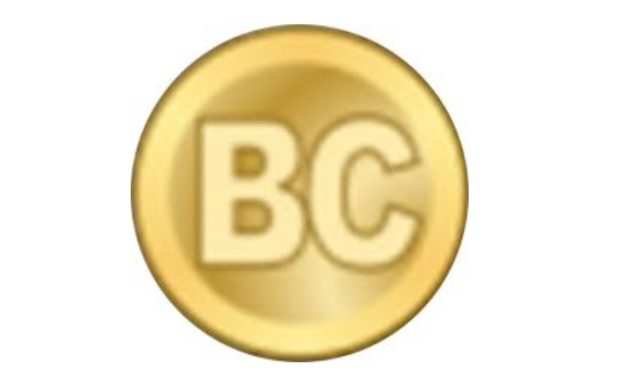
The bright orange Bitcoin (BTC) logo, for over a decade, has become synonymous with financial freedom amid modern-day recession and stringent governmental oversight. However, unlike the mysteries tied to Bitcoin’s origin, the development of the Bitcoin ‘₿’ logo is fairly documented in the depths of the internet. When Bitcoin was introduced 13 years ago by creator Satoshi Nakamoto, the first iteration of the Bitcoin logo represented a gold coin with a “BC” text embedded in the center, as shown below.However, on February 24, 2010, Nakamoto came up with a new Bitcoin logo, which saw the replacement of the “BC” text with “₿” embedded within the gold coin.Satoshi Nakamoto’s second attempt on Bitcoin logo. Source: bitcointalk.orgBased on community feedback, Satoshi then incorporated changes into the new logo and released the copyright-free images into the public domain. The logo then went on to be accepted as the official logo for Bitcoin for a short amount of time.Satoshi Nakamoto incorporates design changes based on community feedback. Source: bitcointalk.orgThe decentralized nature of the Bitcoin ecosystem allows the general public to contribute to the Bitcoin network in various forms based on community consensus, including logo designs. On November 1, 2010, Bitcoin community member bitboy released a new iteration of the Bitcoin logo based on Satoshi’s design. However, this time the designer chose to replace the gold coin with the iconic orange circle and tiled the “₿” logo 14% clockwise.bitboy’s design a.k.a. official Bitcoin logo. Source: bitcointalk.orgAs a result of overwhelming support from the community, bitboy’s design stands as the official logo for Bitcoin over the last 12 years. After releasing the finalized version of the Bitcoin logo, bitboy stated:“Now everyone can make use of the graphics freely even for commercial purposes with this license and not bound by any restriction.”Enthusiasts continue releasing new logos for Bitcoin to date, but the BTC community has yet to come across a symbol that comes close to the beloved orange ₿.Related: Bitcoin ecosystem makes a U-turn recovery in global ATM installationsBitcoin ATM installations made a steep recovery in June after witnessing a consistent decrease throughout 2022.Chart showing the net change of cryptocurrency machines number installed and removed monthly. Source: Coin ATM RadarThe above graph shows that May 2022’s drop reached a range that was last seen in 2019. Over the last two years, in 2020 and 2021, Bitcoin ATM installations grew consistently owing to friendlier regulatory landscapes amid a rewarding market when numerous cryptocurrencies attained their all-time highs momentarily.

Čítaj viac

Third non-EU country, Ukraine, joins the European Blockchain Partnership

After Norway and Liechtenstein, Ukraine became the third country outside the European Union (EU) to join the European Blockchain Partnership (EBP), an initiative derived by 27 member states to deliver cross-border public services.The Ministry of Digital Transformation of Ukraine announced the country’s move to join the EBP as an observer on June 17. With the ultimate goal of integrating its digital economic space with the EU, Ukraine plans to expand its interstate blockchain network partnership with other countries. Ukraine’s intent to join the EBP dates back to July 2021, when Oleksii Zhmerenetskyi, the head of the Parliamentary group, Blockchain4Ukraine, and Konstantin Yarmolenko, the founder and CEO of Virtual Assets of Ukraine, wrote a letter to Ursula von der Leyen, the president of the European Commission. The letter declared Ukraine’s interest in joining the EBP and the European Blockchain Services Infrastructure (EBSI). von der Leyen later confirmed the prospect of Ukraine’s accession to the EBP as an observer.Speaking to Cointelegraph, Yarmolenko stated Ukraine’s interest in running test-node of the EBSI and pilot use cases of the cross-border public services based on the blockchain technology. He highlighted that the cryptocurrency donations during the Russia-Ukraine war “proved as important support,” stating:“Next step is full blockchain integration of Ukraine and EU based on EBP/EBSI initiatives.”After working with the EBP on blockchain pilot use cases as an observer, Ukraine aims to gain full membership. Yarmolenko further revealed that Ukraine is targeting additional blockchain partnerships to provide the citizens of Ukraine with cross-border public services including verification of educational credentials/diplomas and identity credentials and refugee/asylum registration and support.While sharing details about the partnership, Yarmolenko stated that the move to join the EBP is a way to strengthen ties with the EU, adding that “I’d even call it blockchain integration with EU.”Additionally, pointing out one of the advantages of the EU-wide blockchain partnership, Zhmerenetsky stressed that Ukraine’s accession to the EBP would reduce the recognition of Ukrainian documents for higher education and driver’s licenses for Ukrainian refugees in Europe.Related: EU commissioner reiterates need for ‘regulating all crypto-assets’Mairead McGuinness, the Commissioner for Financial Services, Financial Stability and Capital Markets Union at the European Commission, recently highlighted the need for “Regulating all crypto-assets — whether they’re unbacked crypto-assets or so-called stablecoins.”The EU commissioner also disclosed plans to discuss a proposal with the French government via Markets in Crypto Assets (MiCA):“MiCA rules will be the right tool to address the concerns on consumer protection, market integrity and financial stability. This is something that is so urgent given recent developments.”

Čítaj viac

Magic Internet Money token depegs as Terra (LUNA) domino effect persists

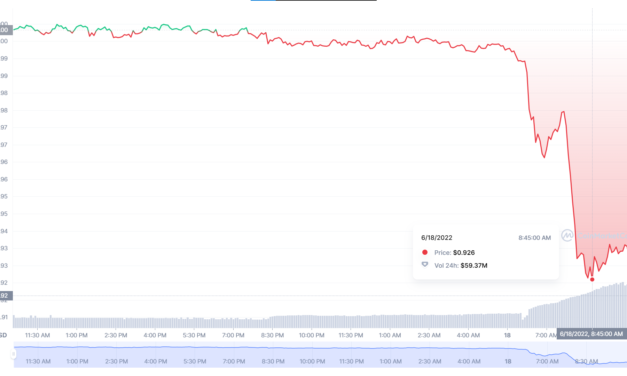
Magic Internet Money (MIM), a US dollar-pegged stablecoin of the Abracadabra ecosystem, joins the growing list of tokens losing their $1 value amid an untimely crypto winter. The sudden de-pegging of the MIM token commenced roughly on June 17, 7:40 pm ET, which saw the token’s price drop to $0.926 in just three hours.Terra’s LUNA and TerraUSD (UST) death spiral not only affected the investors but also had a negative impact on numerous crypto projects, including Abracadabra’s MIM token ecosystem — as alleged by Twitter handle @AutismCapital. Depegging of Magic Internet Money (MIM) token price chart. Source: CoinMarketCapCiting an insider scoop, AutismCapital claimed that Abracadabra accrued $12 million in bad debt as a direct result of Terra’s sudden downfall “because liquidations couldn’t happen fast enough to cover the protocol’s MIM liabilities.”We have a scoop from one of our associate autists: MIM (Magic Internet Money) may be nearly insolvent. MIM is one of the larger stablecoins, with a market cap of ~$300M.We can’t believe that a project called Magic Internet Money has been acting irresponsibly either.Details:— Autism Capital (@AutismCapital) June 17, 2022Daniele Sestagalli, the founder of Abracadabra, however, refuted the claims of insolvency by ensuring to have enough funds to pay back the piling debts — which has been attributed to the falling MIM prices. Sestagalli stated:“[The Abracadabra] Treasury has more money than the debt and $CRV are valuable for the protocol.”Doubling down on his stance, Sestagalli further publicly shared the treasury address holding $12 million in assets while asking concerned investors to verify the same using on-chain data.On the other hand, Autism Capital alleged that Sestagalli’s bad debt was created five days ago and shared the below screenshot showing his conversation about the same on MIM’s Discord group.Sestagalli’s conversation on MIM Discord group. Source: @AutismCapitalWhile the risk of insolvency continues to threaten the Abracadabra protocol, either through the MIM treasury continuing to dump in value or more bad debt created, investors are advised to keep track of market fluctuations and do their own research (DYOR) before making investment decisions. Related: USDD stablecoin falls to $0.97, DAO inserts $700M to defend the pegFive days ago, on June 13, Stablecoin protocol USDD’s price dipped to $0.97 on major crypto exchanges.1/ And it’s starting$USDD is currently just 92% collateralized by the Reserves (even considering $TRX funds) ⚠️If you subtract $TRX, it turns out collateralization ratio is currently 73%Also, the 140M $USDT are not really USDT, but jUSDT pic.twitter.com/fKYaIQEd1D— Res ®️ (@resdegen) June 12, 2022

To help out during the market fluctuations, the Tron DAO Reserve announced that it received 700 million USD Coin (USDC) to defend the USDD peg. As a result of the fund infusion, the team behind the stablecoin explained that the collateralization ratio of USDD is now boosted to 300%.

Čítaj viac

True Global Ventures doubles down on Web3 with $146M ‘follow-on’ fund

Venture capital firm True Global Ventures 4 Plus (TGV4 Plus) has announced the closure of a $146 million funding round earmarked for a wide range of Web3 projects — highlighting investors’ continued interest in crypto despite an ongoing bear market.The latest closure, dubbed the TGV4 Plus Follow On Fund, was led by a group of 15 general partners who committed over $4 million on average (over 40%, or $62 million) into the fund. The majority of the funding will be primarily injected into Web3 companies within TGV’s portfolio, while the remaining will be used to invest in late-stage Web3 opportunities. TGV previously invested in numerous Web3 initiatives using a base fund dedicated to the late-stage Series A, B and C across three business verticals: entertainment and gaming, financial services, and artificial intelligence. Prominent TGV investments include The Sandbox, Animoca Brands and Forge, among others.Dušan Stojanović, one of TGV’s 15 general partners, shared his thoughts on investing during the bear market:“It is much easier to see more clearly who the winners are now. This has created a high level of confidence amongst our investors.”Stojanović also shared that market correction helps to select the strongest players as he advised fellow VCs to continue investing in crypto businesses:”Regardless of the market situation, there are always good teams having great products at the proper time. Crisis is the best time to invest, not the bull market.”Related: Huobi Global launches $1B investment arm focused on DeFi and Web3Last week, on Friday, major crypto exchange Huobi Global launched Ivy Blocks, a new investment arm with a capital of over $1 billion in crypto assets. In addition to the cash injection, Huobi offers other services including an asset management platform, a new blockchain incubator and a dedicated research arm. #Huobi launches 1 BILLION investment arm to #BUIDL defi and #web3! https://t.co/I1XJ1S4y1O— Du Jun (@DujunX) June 11, 2022Moreover, Lily Zhang, Huobi Global’s chief financial officer, confirmed that Houbi’s asset management department will provide “liquidity investments” to help decentralized finance and Web3 projects take off.

Čítaj viac

Seized crypto safe with US Marshals Service? Not so much, new audit reveals

The Office of the Inspector General (OIG) for the United States Department of Justice conducted an extensive audit of the cryptocurrencies seized by the U.S. Marshals Service (USMS) — revealing the dire need for the federal agency to revamp its existing crypto management and policy systems.OIG’s audit on the seized cryptocurrencies found the USMS implementing adequate safeguards over its storage and access. However, the agency was found to be using spreadsheets to maintain track of the inventory owing to the inability of the existing system, Consolidated Asset Tracking System (CATS), for daily management of crypto assets. As of June 2021, the USMS managed nearly 200 DOJ cryptocurrency seizures. We looked at the USMS’s management of seized cryptocurrency, and found that the USMS faced challenges in managing and tracking cryptocurrency.— DOJ Inspector General (@JusticeOIG) June 14, 2022OIG’s audit disclosed the lack of documented policies and practices related to the management of seized crypto assets — especially related to the use of inventory spreadsheets— adding:“Current USMS seized cryptocurrency management policies are inadequate, absent, or in some instances provide conflicting guidance related to asset storage, quantification, valuation, and disposal.”Having the knowledge about USMS’s intent to outsource the management of seized cryptocurrencies, the Justice department’s OIG laid down seven recommendations to help improve the management of the same, starting with implementing a property management system ”that logs edit history to prevent fraudulent alteration of the inventory records.”In addition, the OIG recommended establishing fresh policies related to the proper security and handling of the spreadsheets used for tracking crypto seizures. This includes moving the data from the spreadsheets into the CATS inventory. Other key recommendations include introducing a sufficient number of decimal places to ensure fractional accuracy and implementing policies catering to blockchain forks and physical control over assets seized by the USMS, “including pertinent USMS wallet keys.”The report also revealed that USMS concurred with all the seven recommendations and will be closed upon evidence of its total implementation. Related: SEC boss worries crypto bill undermines financial protectionsCoinShares’ weekly Digital Asset Fund Flows report highlighted the off-loading of digital asset products worth $101.5 million amid anticipation of “hawkish monetary policy,” stating:“What has pushed Bitcoin into a ‘crypto winter’ over the last six months can by and large be explained as a direct result of an increasingly hawkish rhetoric from the US Federal Reserve.”The report also highlighted that the total assets under management for Ether (ETH) funds fell from their peak of $23 billion in November 2021 to $8.7 billion as of June 10, 2022.

Čítaj viac

Získaj BONUS 8 € v Bitcoinoch

nakup bitcoin z karty

Registrácia Binance

Burza Binance

Aktuálne kurzy