Autor Cointelegraph By Arijit Sarkar

KuCoin CEO slams insolvency rumors citing “no plan to halt withdrawal”

Crypto exchange KuCoin found itself at the center of discussion when a sub-community of Crypto Twitter started warning investors about an incoming ban on funds withdrawal. KuCoin CEO, Johnny Lyu, was however quick to dismiss the unvetted rumors before they picked up steam.Prominent crypto figures on Twitter, including trader @KongBTC and blockchain investigator @otteroooo, requested their followers to withdraw all of their funds from the KuCoin while claiming that the exchange may soon stop all users from withdrawing funds.WITHDRAW FROM KUCOIN RIGHT NOWNot a drillno time for threadlike and retweet to spread the messageotter hardly wrong in such matters— otteroooo (@otteroooo) July 2, 2022Rumors linked KuCoin’s intent to stop withdrawals with Terra’s (LUNA) and 3AC collapse, which according to the warnings, led to “immense suffer” for the exchange owing to high exposure to the fallen tokens.Be aware of FUDs! Not sure who’s spreading these sheer rumors, and what their intentions are, but #KuCoin does not have any exposure to LUNA, 3AC, Babel, etc. No “immense suffer” from any “coin collapse”, no plan to halt withdrawal, everything on KuCoin is operating well.— Johnny_KuCoin (@lyu_johnny) July 2, 2022

While dismissing the supposed rumors through the above tweet, Lyu highlighted the company’s strong position by disclosing a recent $150 million funding, which placed the company’s valuation at $10 billion in May 2022. He also pointed out that the company is currently hiring for multiple positions, requesting investors to make their own judgment amid the ongoing FUD — fear, uncertainty and doubt:“No “immense suffer” from any “coin collapse”, no plan to halt withdrawal, everything on KuCoin is operating well.”Further distancing KuCoin away from the insolvency rumors, Lyu confirmed to share the company’s 2022 H1 review report with detailed information about their operations. Finally, he sent out a warning to the people accusing KuCoin of shutting down services and creating panic among investors:“For FUDers who intentionally spread unverified info, KuCoin reserves the right to take legal actions. Don’t FUD, BUIDL.”Related: Tether CTO refutes stablecoin FUD as short-sellers circleTether chief technology officer Paolo Ardoino recently revealed that the stablecoin Tether (USDT) was subject to a “coordinated attack” by hedge funds looking to short-sell the United States dollar-pegged crypto asset.1/I have been open about the attempts from some hedge funds that were trying to cause further panic on the market after TERRA/LUNA collapse.It really seemed from the beginning a coordinated attack, with a new wave of FUD, troll armies, clowns etc. https://t.co/hhcsgHV1Ow— Paolo Ardoino (@paoloardoino) June 27, 2022

Ardoino said that Tether is collaborating with regulators and increased transparency efforts, as well as noting its recent commitment to phase out its commercial paper exposure.

Čítaj viac

NFT hype evidently dead as daily sales in June 2022 dip to one-year lows

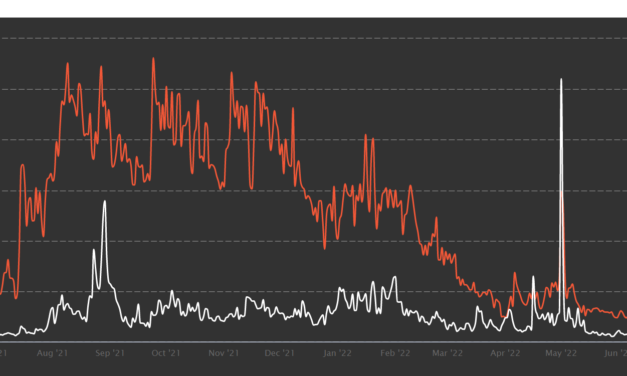
Nonfungible tokens (NFT) took center stage in the year 2021 as artists, influencers, A-list celebrities and the sports industry finally came across a fan engagement tool that empowered the general public to cash in on their success. However, the hype around NFT did not manage to stand its ground as sales plummeted to one-year lows amid the ruthless bear market of 2022.The NFT boom, which started in early 2021, upheld its glory until May 2022 — supported by a healthy and bullish crypto ecosystem and positive investor sentiment. However, Bitcoin’s (BTC) struggle to hold on to its all-time high prices had an adverse impact across the crypto ecosystem. Number of daily NFT sales between June 2021 – June 2022. Source: NonFungibleThe NFT ecosystem recorded its worst performance of the year in June 2022 as the total number of daily sales fell down to roughly 19,000 with an estimated value of $13.8 million — a number which was recorded back in June 2021. Last year, however, daily NFT sales of a similar amount were considered impressive as the nascent ecosystem saw mainstream implementations across various use cases. NFT market capitalization and trading volume. Source: NFTGoAs evidenced by data from nonfungible.com, the NFT ecosystem witnessed its highest number of daily sales of 224,768 NFTs on Sept. 24, 2021, worth $78.3 million. However, the biggest sale in terms of dollar value took place on May 1, 2022, when 118,577 NFTs were sold in a day for $780.4 million.Some of the key factors negatively impacting the hype around NFTs are falling Ether (ETH) prices, a lack of secondary market demand and unrealistic gas fees. As a result, over the last three months, the NFT market capitalization suffered a drop of nearly 40% while losing over 66% of its trading volume, as shown by data from NFTGo.Related: NFTs to appear on Facebook, cross-post with Instagram as Meta Web3 expansion continuesAmid the bear market, crypto entrepreneurs, including Changpeng “CZ” Zhao, are helping governments explore NFT use cases in ID-ing citizens. Social media giant Meta’s Facebook, too, recently announced plans to support NFTs for creators.We’re launching NFTs on Facebook! Excited to share what I’ve been working on with the world. pic.twitter.com/TaV66zRanV— Navdeep Singh (@navdeep_ua) June 29, 2022A Meta spokesperson revealed that the rollout of NFTs on Facebook would be gradual, beginning with select creators in the United States.

Čítaj viac

Integrating blockchain-based digital IDs into daily life

The last 13 years have seen blockchain technology evolve into numerous use cases — finance, data, logistics and security, among others. However, the idea of using blockchain’s immutable capabilities to ID humans got new life when Changpeng “CZ” Zhao visited the island country of Palau to kick off its digital residency program. The blockchain identity management market is estimated to grow by $3.58 billion in the span of five years from 2021 to 2025. Key factors include the rising demand for digitalization and privacy-respecting identity solutions. As a result, a myriad of solutions breached the market serving this need in the form of nonfungible tokens (NFT), distributed ledger technology (DLT) and barebone blockchain technology.Considering the plethora of use cases that blockchain can serve on a day-to-day basis, numerous government organizations began experimenting with the technology — weighing heavily on central bank digital currencies (CBDC) and verifiable and immutable user identity. Problems with traditional IDsCorrectly identifying — or ID-ing — an individual has always been paramount to governments to ensure targeted delivery of services and allowances, among other requirements, which holds true to this day. However, ongoing advancements in technology empowered the general public with tools to create IDs visually identical to the original. Given blockchain’s capability to store immutable records, authorities see the technology as a fighting chance against fraud related to ID theft and fakes. With traditional paper-based IDs comes the difficulty of confirming their legitimacy across different systems. History has shown how people successfully use fake ID cards to claim unauthorized access to a myriad of benefits. However, technological advancements such as blockchain have provided authorities with the opportunity to issue verifiable certificates and IDs while ensuring scalability, speed and security of the identity management system.Efforts on this front saw the rise of a new ecosystem comprising various blockchain-based digital ID offerings. For example, Shubham Gupta, an Indian Administrative Service (IAS) officer, recently spearheaded the launch of a Polygon-based system for issuing verifiable caste certificates on behalf of the government of Maharashtra. Speaking to Cointelegraph, he said, “if identity management systems have to be rated on a scale of 0 to 1 based on decentralization and individual control, traditional centralized ID systems will be on the far left and fully self-hosted, public blockchain-based IDs on the extreme right.”Forms of blockchain-based digital IDsWhile blockchain technology can and has been used as-is for maintaining immutable records over the internet, innovations spanning over the last decade resulted in the birth of sub ecosystems around the use of blockchain technology. “The idea of blockchain-based digital IDs has been floating around for quite a while but came into the limelight with the recent NFT boom,” blockchain adviser and Bundlesbets.com CEO Brenda Gentry told Cointelegraph.An Italian electronic identity document.While NFTs were first marketed as a tool to represent real-world objects including intellectual and physical assets, the technology found itself well-suited for a variety of applications. Recently, government organizations have begun testing NFTs for ID-ing citizens as means to reduce operational costs.“Wide-scale implementation of blockchain-based digital IDs — like issuance of national identity cards such as passports and driving licenses — takes time but I strongly believe that is the destination that the world should move toward,” Gentry added. In addition to helping authenticate people, blockchain technology discourages counterfeiting, tampering or identity theft attempts. Citing the involvement of luxury brands and artists that promoted the use of NFTs to authenticate the legitimacy and ownership of a product or art, Gentry opined that “luxury items can be checked for their authenticity on-chain which completely eliminates the chance of owning a counterfeit product.”Recent: Uganda’s gold discovery: What it could mean for cryptoNeil Martis, the co-founder and project lead of LegitDoc, which is known in the space for delivering numerous blockchain-based certificates and ID solutions to the state governments of India, envisions a greater adoption of public blockchain-based ledgers over the next decade. Web3-native decentralized IDs will play an incremental role in identifying users and authenticating them to participate in different types of Web3 native transactions.Benefits of blockchain-based digital IDsWhile blockchain’s elevator pitch is heavily inclined toward immutability, the technology boasts multiple advantages over traditional software and paper-based systems. The opinions regarding the benefits of blockchain boil down to the control over personal information.Self-sovereignty stands as one of the biggest benefits of blockchain-based digital IDs, according to Martis. This means that blockchain empowers users to share partial or selective information with their service providers instead of handing over their complete identity.With blockchain-based IDs eradicating the misuse of information, experts envision the birth of a truly trustless system without the involvement of third parties. Gentry, too, reiterated verifiability, traceability and uniqueness as some of the major benefits brought about by blockchain, as she highlighted that blockchain IDs cannot be duplicated because it’s on the distributed ledger. “All the Digital ID can be verified on the blockchain and can be traced back to the owners’ account which can also be used for Know Your Customer,” she added.Limitations of blockchain-based digital IDsMainstream acceptance of blockchain-based digital IDs will ultimately have to mean overcoming the most pressing challenges that threaten to hinder its adoption. Some of the roadblocks that stand out in the current landscape include a lack of education among the masses and a supportive regulatory environment.On the education front, Gentry has noticed a fast-changing scenario brought about by mainstream discussions and widespread adoption of the technology. However, the creation of pro-crypto regulations will need greater intervention from industry players to help countries and institutions get onboarded onto the blockchain network. Martis concurred with Gentry’s thoughts on regulations as he highlighted that blockchain IDs, no matter how decentralized, will need attestation or recognition by the issuing authorities. He added: “if the issuing authorities don’t recognize the validity of the blockchain IDs, then the same cannot be used for availing a majority of public services. This in my opinion is the biggest limitation.”Blockchain of choice for ID-ing peopleGiven that a majority of real-world identity systems are under the purview of governments and sovereigns, Martis envisions greater adoption of permissioned distributed ledger networks for issuing Identities that require government services. Gentry noted that choosing the perfect blockchain for IDing people or goods will require weighing the unique advantages and limitations of the various blockchain ecosystems. While highlighting the existing concerns such as Ethereum’s gas fees or Solana’s infamous outages, the blockchain advisor suggested that Binance’s BNB Chain is the perfect choice of blockchain because of its high transactions per second and low latency and fees.Recent: Bitcoin payments make a lot of sense for SMEs but the risks still remainSpeaking from personal experience, Gupta shared that Indian state governments tend to choose a middle ground wherein instead of a single authority fully in control of citizen identities, a group of independent departments will share a common distributed ledger that hosts citizen identities, anchored periodically on a public blockchain. The Maharashtra government is currently working to deploy a scalable blockchain-based ID system for a tribal population of 1.2 million. Martis explains that the IDs created will be used by various departments to perform analytics and identify the right beneficiaries for various national schemes.Regardless of the challenges that slow down blockchain adoption across business verticals, the advantages of the technology make its dominance inevitable. Government organizations and private entities have amped up efforts in uncovering futureproof fintech solutions via blockchain innovations. Blockchain disruptions that are well-positioned to go mainstream in addition to identity management include localized CBDCs, supply chain solutions and cross-border settlements. Decentralized identities or DIDs (decentralized identifiers) have yet to see wide-scale implementation. According to Martis, they should be settled or issued by highly decentralized public blockchains that are outside state control, adding that “Bitcoin and Ethereum stand out as the obvious choices in this regard.” 

Čítaj viac

Bitcoin Lightning Network developer updates node software with Taproot support

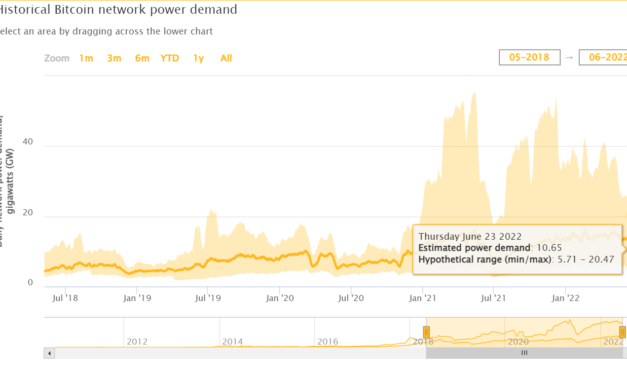
Lightning Labs, a developer of the Bitcoin (BTC) Lightning Network (LN), released a beta version of the Lightning Network Daemon (lnd) — a complete implementation of the LN node — with added support to the latest protocol upgrades including Taproot and Musig2 among other improvements.lnd is a software component that handles various aspects within the LN including managing a database, generating payment invoices and revoking payments to name a few. The latest software release, named lnd 0.15 beta (v0.15-beta), aims to empower developers to create solutions for more use cases by leveraging the Bitcoin network’s latest capabilities.Announcing lnd 0.15 beta: To Taproot and Beyond! ♾️Featuring:Taproot + Musig2 support for better privacy + efficiency, Taro soon™~95% database space reduction for new data️ New pathfinding tool to choose speed vs. cost of paymentsRead more: https://t.co/5pavMcpxBg— Lightning Labs⚡️ (@lightning) June 28, 2022In the announcement, Lightning Labs’ product growth lead Michael Levin revealed that over 50 contributors participated in launching the company’s first release in the year 2022, adding that:“This release gives complete Taproot support for the internal lnd wallet, making it one of the most advanced Taproot wallets today. Further, this release has support for an experimental Musig2 API compliant with the latest BIP draft.”The primary goal of MuSig2, a multi-signature scheme, is to allow the creation of aggregate public keys that can be used in Taproot outputs, thus, introducing the ability to authorize transactions with Schnorr signatures.Unlike previous versions, the beta release also removes the redundant data from the revocation log bucket, which showed a reduction of 95% in database size during initial testing. While the update does not reclaim space for existing states, Levin envisioned that a follow-up release may include a migration feature that could reclaim old disk space.Staying true to their commitment to make the LN more reliable, robust, and secure, Lightning Labs introduced greater control over pathfinding preferences — ultimately helping to reduce the transaction fees by identifying the lowest cost route.Related: Bitcoin network power demand falls to 10.65GW as hash rate sees 14% dropThe Bitcoin network recorded the year 2022’s lowest power demand of 10.65 gigawatts (GW) on June 25. As a result, the computing power for mining BTC blocks came down to 199.225 exahash per second (EH/s).Bitcoin network power demand from 2018-2022. Source: ccaf.ioThe sudden reduction in Bitcoin’s power demand is directly correlated to the falling hash rate. The mining hash rate corresponds to the computing power required by BTC miners to successfully mine a block — a key security metric.

Čítaj viac

Bitcoin mining revenue mirrors 2021 lows, right before BTC breached $69K

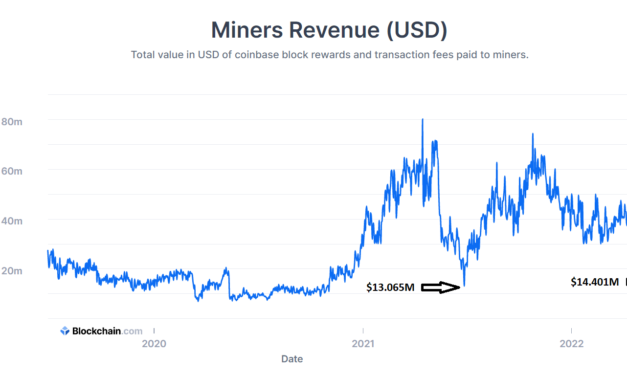
Bitcoin (BTC) visiting the $20,000 range after one and a half years made mining — the most important job of the ecosystem — a costly affair. However, if history were to repeat itself, BTC investors may witness another epic bull run that previously helped Bitcoin reach an all-time high of $69,000.Changes in Bitcoin prices directly impact the miners’ income, who earn fixed block rewards and transaction fees in BTC for running their mining operations. In June 2022, the total mining revenue dipped below the $20 million range, with Blockchain.com data recording the lowest dip of $14.401 million on June 17.Total miners revenue over time. Source: blockchain.comAs shown above, the recent dip in Bitcoin mining revenue was last seen one year back when the total value tanked to $13.065 million on June 27, 2021 — back when BTC traded at roughly $34,000. What followed after that was Bitcoin’s 5-month-long epic bull run, which was supported by pro-crypto initiatives such as El Salvador’s BTC acceptance and crypto-friendly regulations across the globe. Despite mixed sentiments about the recovery of the crypto ecosystem, small-time investors are found to have increased their investment efforts amid the bear market as they fulfill their long-term dream of owning one full BTC (1 BTC). Global recession, geopolitical tensions, falling crypto economies like Terra (LUNA) and an ongoing pandemic currently hold the Bitcoin ecosystem from unleashing its true potential.Monthly operating cash flow Vs. mining revenue. Source: Arcane CryptoA report shared by crypto-focused financial services firm Arcane Crypto revealed that potential of several public bitcoin miners to survive the ongoing bear market. The key to survival for Bitcoin miners boils down to the delicate balance between the revenue and the operating cash flow. Based on the report, Argo, CleanSpark, Stronghold, Marathon and Roit are the best-positioned miners to sustain the crypto winter. At the same time, major player Core has nearly matched its operational costs to its total revenue.Related: Compass Mining loses facility after allegedly failing to pay power billBitcoin mining hardware and hosting company Compass Mining lost one of its Maine-based hosting facilities after failing to pay the electricity bills.Effective June 14th @compass_mining facility hosting agreement in Maine was terminated by @dynamics2k for failure to pay power consumption charges. 6 late payment and 3 non payments. @MiningScandals pic.twitter.com/cSfnWMmqTY— DynamicsMining (@DynamicsMining) June 27, 2022Dynamics Mining, the owner of the mine hosting facility, alleged that Compass Mining has six late payments and three non-payments related to utility bills and hosting fees, stating “all you had to was pay $250,000 for 3 months of power consumption.”

Čítaj viac

Získaj BONUS 8 € v Bitcoinoch

nakup bitcoin z karty

Registrácia Binance

Burza Binance

Aktuálne kurzy