Autor Cointelegraph By Arijit Sarkar

Hacker drains $1.08M from Audius following passing of malicious proposal

Proposals in crypto help communities make consensus-based decisions. However, for decentralized music platform Auduis, the passing of a malicious governance proposal resulted in the transfer of tokens worth $5.9 million, with the hacker making away with $1 million. On July 24, a malicious proposal (Proposal #85) requesting the transfer of 18 million Audius’ in-house AUDIO tokens was approved by community voting. First pointed out on Crypto Twitter by @spreekaway, the attacker created the malicious proposal wherein they were “able to call initialize() and set himself as the sole guardian of the governance contract.”Hello everyone – our team is aware of reports of an unauthorized transfer of AUDIO tokens from the community treasury. We are actively investigating and will report back as soon as we know more.If you’d like to help our response team, please reach out.— Audius (@AudiusProject) July 24, 2022Further investigation from Auduis confirmed the unauthorized transfer of AUDIO tokens from the company’s treasury. Following the revelation, Auduis proactively halted all Audius smart contracts and AUDIO tokens on the Ethereum blockchain. Blockchain investigator Peckshield narrowed down the fault to Audius’ storage layout inconsistencies.The issue of @AudiusProject lies in inconsistent storage layout between its proxy and impl. In particular, the collision of Audius Community Treasury contract results in an equivalence of disabling the initializer modifier. The proxyAdmin addr (0x..abac) plays a role here. pic.twitter.com/x4CqRncahp— PeckShield Inc. (@peckshield) July 24, 2022

While the hacker’s governance proposal drained out 18 million tokens worth nearly $6 million from the treasury, it was soon dumped and sold for $1.08 million. While the dumping resulted in maximum slippage, investors recommended an immediate buyback to prevent existing investors from dumping and further lowering the token’s floor price. Investors are yet to get clarity on the stolen funds as one investor asked, “They hacked the community fund right? The team’s fund is separate correct?”While a post-mortem report is underway, Audius has not yet responded to Cointelegraph’s request for comment. Related: Yuga Labs warns of ‘persistent threat group’ targeting NFT holdersBored Ape Yacht Club (BAYC) creator Yuga Labs issued its second warning about an expected “coordinated attack” on its social media accounts.Our security team has been tracking a persistent threat group that targets the NFT community. We believe that they may soon be launching a coordinated attack targeting multiple communities via compromised social media accounts. Please be vigilant and stay safe.— Yuga Labs (@yugalabs) July 18, 2022

In June, Gordon Goner, pseudonymous co-founder of Yuga Labs, issued the first warning of a possible incoming attack on its Twitter social media accounts. Soon after the warning, Twitter officials actively monitored the accounts and fortified their existing security.

Čítaj viac
Fans seek trust and better understanding of sports NFT market: Research

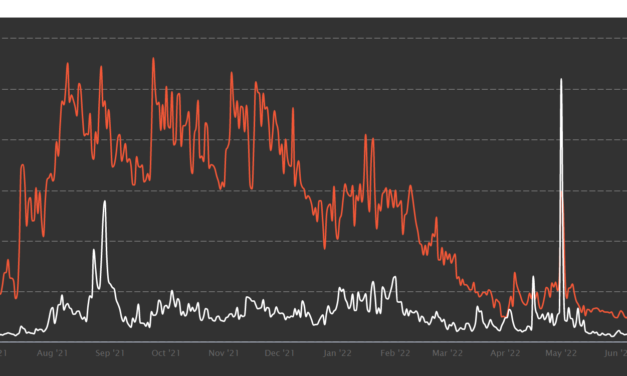
The heavy involvement of the sports ecosystem is what expedited nonfungible tokens’ (NFT) mainstream adoption as the teams and players leveraged the technology for fan engagement. However, sports fans revealed their interest in moving beyond the hype and making investments based on knowledge about NFTs and trust in the issuers.The prolonged crypto winter razed off the inflated floor prices across the NFT ecosystem, inadvertently changing investor sentiment and forcing users to rethink their long-term investment strategies. A study released by the National Research Group (NRG) revealed an openness among sports fans to learn about NFTs as they await a greener market.Number of daily NFT sales between June 2021-June 2022. Source: NonFungibleIn June 2022, NFT sales plummeted to one-year lows — signaling a momentary end of the NFT hype. Surveying 3,250 sports fans across the United States, United Kingdom, Japan and Brazil, NRG’s research revealed heightened fear of losing money or getting scammed as some of the biggest deterrents to purchasing NFTs. Out of the lot, only 15% of the respondents had complete trust in NFT marketplaces, while 30% indicated little or no trust in them. The survey revealed that “this problem is particularly acute in Japan, where 4 in 10 consumers have low trust in NFT marketplaces.”Despite the geopolitical differences, investors from all four countries unanimously agreed on the need for stricter regulations on NFTs, considering factors including age restrictions and risk tolerances.Across the US, UK, Japan and Brazil, 58% of sports fans believe to have some level of understanding regarding NFTs. Additionally, 54% (or 1,755) of the respondents believe that NFTs have positively impacted their favorite sports.Related: NFT sales will fund the restoration of physical monuments in UkraineUkraine’s Ministry of Culture and Information Policy told Cointelegraph about the government’s intention to use sales proceeds from NFTs to restore physical artwork. According to the ministry, proceeds from the sales will go toward “the restoration of Ukrainian cultural institutions,” many of which have been damaged or destroyed amid an ongoing war with Russia.

Čítaj viac

Bitcoin network difficulty drops to 27.693T as hash rate eyes recovery

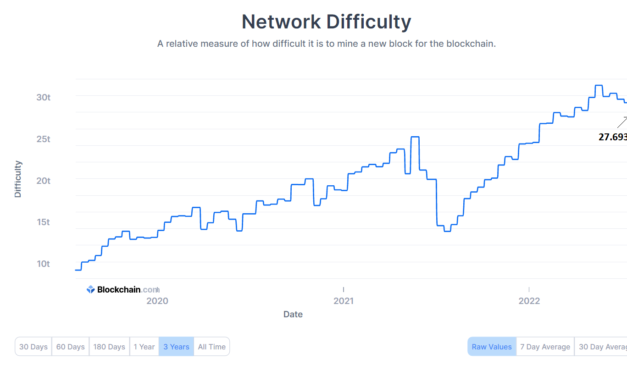
The difficulty in mining a block of Bitcoin (BTC) was reduced further by 5% to 27.693 trillion as network difficulty maintains its three-month-long downward streak ever since reaching an all-time high of 31.251 trillion back in May 2022. Network difficulty is a means devised by Bitcoin creator Satoshi Nakamoto to ensure the legitimacy of all transactions using raw computing power. The reduced difficulty allows Bitcoin miners to confirm transactions using lower resources, enabling smaller miners a fighting chance to earn the mining rewards. Despite the minor setback, zooming out on blockchain.com’s data reveals that Bitcoin continues to operate as the most resilient and immutable blockchain network. While the difficulty adjustment is directly proportional to the hashing power of miners, the total hash rate (TH/s) recovered 3.2% along similar timelines, as shown below.At its peak, the Bitcoin hash rate reached an all-time high of 231.428 exahash per second (EH/s) when BTC prices fell to $25,000 last month in June — raising momentary concerns around extensive power usage. Ever since China banned all crypto trading and mining operations in June 2021, the United States picked up slack in becoming the highest contributor to the global Bitcoin hash rate. However, Chinese miners resumed operations in September 2021. According to Statista data, the US represents 37.84% of the global hash rate, followed by China at 21.11% and Kazakhstan at 13.22%.Previously, Cointelegraph reported that meteoric drop in GPU prices have opened up a small window of opportunity for small-time miners to procure a piece of more powerful and efficient mining equipment. That being said, miners see falling GPU prices as a means to offset their operational costs amid an ongoing bear market.Related: Sustainable Bitcoin mining power mix hits 59.5%: BTC Mining CouncilEasing up concerns related to exorbitant power usage, a report released by the Bitcoin Mining Council uncovered that nearly 60% of the electricity used for BTC mining comes from sustainable sources. In Q2 2022, #Bitcoin mining efficiency surged 46% YoY, and sustainable power mix reached 59.5%, above 50% for the 5th quarter in a row. The network was 137% more secure YoY, only using 63% more energy. It is hard to find an industry more clean & efficient.https://t.co/gqYn8qew9R— Michael Saylor⚡️ (@saylor) July 19, 2022The study also found that BTC mining accounted for just 0.09% of the 34.8 billion metric tons of carbon emissions estimated to be produced globally and consumed just 0.15% of the global energy supply.

Čítaj viac

Polygon zero-knowledge EVM rollup aims cheaper Web3 transactions

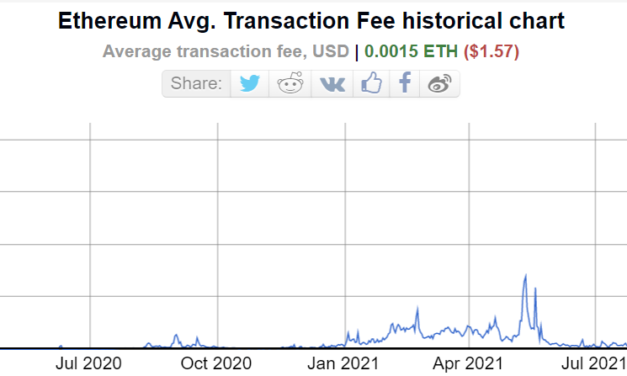
Polygon, a Web3 infrastructure on the Ethereum blockchain, announced the launch of Polygon zkEVM or zero-knowledge Ethereum Virtual Machine, a Layer-2 scaling solution aimed at reducing transaction costs and improving scalability. The new zero-knowledge (ZK) scaling solution, Polygon zkEVM, operates in full compatibility with existing Ethereum (ETH)-based smart contracts, developer tools and wallets using zero-knowledge cryptography protocol, a.k.a. zk proof. Polygon uses zk proof to club multiple transactions into groups before relaying them over to the Ethereum blockchain as a single transaction. This ability to transmit multiple transactions as a single transaction results in lesser gas fees, which can be split between the various senders involved in the transaction — thus bringing down the gas fees when compared to sending them sepeartly over the Ethereum blockchain. While investors were subject to exorbitant gas owing to the rise in on-chain transactions, Ethereum’s average gas fee fell down to $1.57 — a number last seen in December 2020.Ethereum average transaction fee YTD. Source: BitInfoChartsAs a result, Polygon zkEVM is well-positioned to bring down the infamous gas prices further. Polygon promises faster settlement and far better capital efficiency through the newly-launched solution, adding to its capability in easy migration of EVM-compatible decentralized applications (dApps) over to zkEVM. Moreover, the company revealed that the solution also caters to the seamless creation of nonfungible tokens (NFT) and other blockchain-based applications. When compared to layer-1 solutions, Polygon estimates a 90% reduction in costs by using the zk-rollup approach. Related: Ethereum devs confirm the perpetual date for The MergeWhile sub-ecosystems continue to launch solutions hoping to improve major blockchains like Bitcoin (ETH) and Ethereum, in-house developers support the drive by implementing consensus-based upgrades. In a recent conference call, core Ethereum developer Tim Beiko propose September 19 as the tentative target date for the crucial transition from proof-of-work (PoW) mining consensus to proof-of-stake (PoS).This merge timeline isn’t final, but it’s extremely exciting to see it coming together. Please regard this as a planning timeline and look out for official announcements!https://t.co/ttutBceZ21 pic.twitter.com/MY8VFOv0SI— superphiz.eth (@superphiz) July 14, 2022Following up on the discussion, Ethereum developer superphiz.eth shared the roadmap and clarified that the proposed target date should be seen as a roadmap rather than a hard deadline.

Čítaj viac

US federal agency issues legal advisory on NFT investments

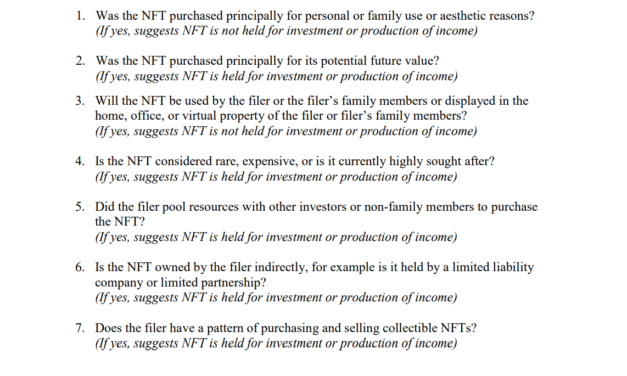
The United States Office of Government Ethics (OGE) issued a legal advisory recommending various instances when senior government officials are required to disclose their investments in nonfungible tokens (NFT).In the legal advisory presented to the designated agency ethics officials, Director Emory Rounds III said that all NFT investments — both fractionalized (F-NFTs) and collectibles — worth $1,000 must be reported if “held for investment or production of income” at the end of the reporting period. The guidance provided by the federal agency also requires reporting of NFT investments if officials made profits over $200 during the reporting period, adding that:“Public financial disclosure filers must also disclose purchases, sales, and exchanges of collectible NFTs and F-NFTs that qualify as securities.” The advisory primarily targets reporting of NFTs investments that represent “property,” such as real estate. However, the OGE previously ruled that personal assets, including clothing, electronics or family photos — or NFTs representing the same — are not reportable. Based on the circumstances disclosed by each filer, collectibles may or not be required to disclose as financial investments. Director Rounds laid down seven questions to help filers self-determine their reporting requirement, as shown below.Factors to consider for financial disclosure. Source: oge.govFilers have been advised to use the OGE Form 278e for reporting NFT investments, wherein investors must include details such as the value, income type and income amount of all eligible NFTs. The OGE revealed to continue monitoring advancements in crypto and modify the above guidance as deemed necessary in the future.Related: US lawmaker criticizes SEC enforcement director for not going after ‘big fish’ crypto exchangesCongressman Brad Sherman advised the Securities and Exchange Commission (SEC) to pursue securities cases against cryptocurrency exchanges with “fortitude and courage.” Highlighting SEC’s attempt to investigate crypto exchanges, enforcement director Gurbir Grewal referred to a case brought against Poloniex in August 2021. However, Sherman pointed out the need for pursuing investigations against bigger exchanges such as Binance and Coinbase:“The big fish operating the major exchanges did many, many tens of thousands of transactions with XRP. You know it’s a security — that means they were illegally operating a securities exchange. They know it’s illegal because they stopped doing it, even though it was profitable. […] I hope you focus on that.”In tune with Sherman’s request for stricter monitoring of crypto exchanges, both SEC chair Gary Gensler and Grewal cited concerns about cryptocurrency enforcement in the government department’s budget request for the 2023 fiscal year.

Čítaj viac

Získaj BONUS 8 € v Bitcoinoch

nakup bitcoin z karty

Registrácia Binance

Burza Binance

Aktuálne kurzy