Autor Cointelegraph By Arijit Sarkar

Pandas, cyborgs, dogs, koalas dominate BNB Chain Red Alarm flag list

BNB Chain, a blockchain network created by crypto exchange Binance, identified over 50 on-chain projects that pose a significant risk to the users. A mix of crypto spin-offs resembling Dogecoin (DOGE) and Binance and others dedicated to pandas, cyborgs and koalas made the list as untrustworthy and high-risk projects.BNB Chain’s Red Alarm feature, which was implemented to protect investors from potential rug pulls and scams, flagged projects based on two main criteria — if the contract performs differently from what the project owners advertised or if the contract shows risks that might influence users’ funds.Speaking to Cointelegraph, Gwendolyn Regina, Investment Director at BNB Chain, said that the Red Alarm system analyzed 3,300 contracts just in July, adding that the company continues to develop further measures for highlighting deceptive practices in the ecosystem.New projects that have not been tested and lack real products are flagged by the system based on obvious features that have been historically used in scams, rug pulls and phishing. Regina added:“We will tend to put them on the ‘Red Alarm’ list to effectively warn users of steering clear or participating with caution.”As a result, the real-time identification of risky projects serves as a proactive measure in helping protect investor funds. Red Alarm also allows users to assess project risks by entering the contract address to discover if it has logical flaws or fraud risks. In addition to BNB Chain’s measures, Regina recommended investors “do your own research” while engaging with projects within the BNB Chain ecosystem.Related: White hat hackers have returned $32.6M worth of tokens to Nomad bridgeJust like investors, well-intentioned projects, too, are equally vulnerable to attacks and scams. Velodrome Finance, a trading and liquidity marketplace, recovered $350,000 of lost funds after tracing the attack back to one of its own team members. Following an internal investigation, Velodrome revealed:“Much to our disappointment, we learned the attacker was a fellow team member Gabagool.”While many community members came in support of the prominent coder, Gabagool owned up to the allegations made against him. Velodrome later disclosed working with the legal counsel to determine the next steps.

Čítaj viac

AML and KYC: A catalyst for mainstream crypto adoption

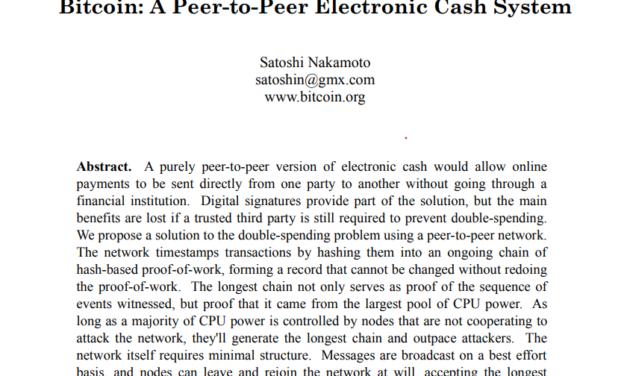
For Satoshi Nakamoto, the creator of Bitcoin (BTC), the motivation to create a new payment ecosystem from scratch in 2009 stemmed from the economic chaos caused by the banking sector’s over-exuberant and risky lending practices mixed accompanied by the bursting of the housing bubbles in many countries at the time. “And who do you think picked up the pieces after the fallout? The taxpayer, of course,” said Durgham Mushtaha, business development manager of blockchain analytics firm Coinfirm, in an exclusive interview with Cointelegraph. Satoshi recognized the need for a new monetary system based on equity and fairness — a system that gives back power into the hands of the people. A trustless system with anonymous participants, transacting peer-to-peer and without the need of a central entity. Snippet from the Bitcoin whitepaper. Source: bitcoin.orgHowever, a subsequent market downturn — fueled by the initial coin offering bubble bursting — made the crypto industry realize the need to build credibility, authority and trust by proactively working with regulators and legislators. Enter Anti-Money Laundering (AML) and Know Your Customers (KYC) procedures.Mushtaha started the discussion by highlighting how, unlike fiat currency, transactions in coins and tokens built on blockchain technology are far easier to trace using on-chain analytics and AML tools. Furthermore, introducing KYC procedures to identify and legitimize users across major crypto exchanges resulted in a far more robust financial system that became more impervious to money laundering and other illicit activity. As a result, it effectively bolstered the sector’s image and enticed more people to trust their hard-earned money in the market. “I see the next bull market becoming a watershed moment, where the masses dive into crypto as fears dissipate and the sector grows exponentially,” he said.Impact of KYC and AML on the evolution of financeThe early discussions and implementation of global AML and KYC legislation date back five decades, marked by the establishment of the Bank Secrecy Act (BSA) in 1970 and the global Financial Action Task Force (FATF) in 1989. “The risk scenario indicators developed in traditional finance over the past 50 years have been adopted into crypto and niche sectors of the industry, including decentralized finance,” added Mushtaha:“Where we differ from traditional finance is our on-chain analytical processes. There are no blockchains in traditional finance, so they are missing a huge part of the jigsaw as the blockchain sector is not siloed.” Sharing insights into what today’s KYC and AML implementation looks like from a provider perspective, Mushtaha revealed that Coinfirm has over 350 risk scenario indicators that cover money laundering, financing of terrorism, sanctions, drug trade, ransomware, scams, investment fraud and more. With AML getting more sophisticated in the decentralized finance (DeFi) space, “We can now tell you whether your wallet was directly implicated in illicit activities or has inherited risk from another address by receiving assets from ill-gotten gains.” In addition, technology has evolved alongside the crypto ecosystem to provide risk profiles on wallet addresses and transactions based on on-chain analytics.Declining use of cryptocurrencies in money launderingYear after year, numerous reports have confirmed a consistent decline in the use of money laundering — with transactions involving illicit addresses representing just 0.15% of cryptocurrency transaction volume in 2021. Mushtaha believes that this finding stands to reason. “Those involved in illicit activity would be wise to steer clear of blockchain-related assets and stick to the tried and tested dollar. The United States dollar is still the most utilized and preferred currency for money laundering,” he said while adding that, in crypto, once a wallet address has been identified as holding assets that were earned through illegal activity, there’s little the criminal can do. 99.85% of activity on blockchains is NOT crime. Keep this in mind when reviewing the next harsh regulation proposal.–Crypto Crime Trends for 2022: Illicit Transaction Activity Reaches All-Time Low in Share of All Cryptocurrency Activity https://t.co/94VB7FiyZb— Sten Tamkivi (@seikatsu) January 16, 2022With present-day regulatory scrutiny ensuring crypto exchanges are KYC compliant, bad actors find it difficult to off-ramp crypto assets into fiat or spend them in open markets. Speaking about the various methods most commonly used to transfer illicit funds, Mushtaha stated:“Sure, they can try to make use of anonymizing techniques, like mixers, tumblers and privacy coins, but then their assets will be flagged and tainted for using them.” As cryptocurrencies become more accepted and prevalent globally, criminals will turn to a black market in order to sell ill-gotten assets. Given the availability of marketplaces where money can be spent without KYC, it will be incumbent on future law enforcement agencies to crack down on such sites.KYC and AML tools can now correlate IP addresses with wallet addresses, and clustering algorithms do an amazing job at identifying associated addresses. Such measures would be difficult, even for state-level actors, to launder through exchanges outside their borders. Mushtaha added, “The Office of Foreign Assets Control (OFAC) has lists of identified addresses belonging to sanctioned persons and entities. The assets in those addresses are too hot for anyone to handle.”Role of CBDCs in countering money launderingCentral bank digital currencies (CBDCs) could offer central banks a level of control never seen in fiat currency. Imagine all of the issues with fiat, like government manipulation and inflation, but now with the power of on-chain analytics. CBDCs will allow more granular scrutiny of users’ spending habits and central banks to freeze holdings, limit them, set expiry dates, automatically tax every transaction or even decide what can and can’t be bought with them. “Every merchant, financial institution and retail customer would also need to comply with KYC, thereby disincentivizing money laundering,” said Mushtaha.Libra, a permissioned blockchain-based stablecoin launched by Facebook’s parent company Meta, failed to gain traction when it was launched in 2019. Consequently, mainstream conversations around Meta’s crypto initiatives catalyzed numerous governments to try out CBDCs, with China being one the first to launch its CBDC.Worldwide CBDC initiative overview. Source: atlanticcouncil.orgThe possibilities for currency control are not the sole motivations for this wave of government-sponsored innovation. While pointing out that governments no longer follow the gold standard, Mushtaha highlighted present-day inflation as a direct result of federal and central agencies printing money at will.“The United States printed more dollars than ever existed before. And the result of that is rampant inflation that’s off the charts.” Moreover, Mushtaha argued that increasing the interest rates too much, too quickly, would cause a catastrophic cascade of overextended debt-ridden financial institutions to collapse. As a result, CBDCs stand out as a solution for central banks, adding that “For the first time, central banks could destroy money as well as create it.”Evolution of AML, KYC and technological advancementsBased on his extensive experience in the AML/KYC sector, Mushtaha stated that technology adapts to the evolution of regulations and not the other way round. Startup trading platforms that decide to integrate AML tools have the option to apply for a virtual asset service provider (VASP) and securities licenses. “Becoming compliant means a huge pool of opportunities becomes open to you. Funding in this space is only available to those focusing on compliance.” As a result, AML solution providers find themselves bridging the gap between the crypto world and the compliant financial system.Mushtaha shared an instance working with a startup that is currently developing a nonfungible token (NFT)-based KYC solution using zero-knowledge Proofs. “The cleverness comes from their recognition that NFTs used for KYC don’t need to solve the double spend problem, so can be disengaged from the blockchain entirely. This then allows for private biometric data to be stored on the NFT and a zk-Proof to be sent to each platform where the individual wants to open an account.” Although the solution is designed to perform as a centralized entity for storing the NFT information “most likely on a permissioned (publicly inaccessible) chain,” Mushtaha affirms it’s a step in the right direction as NFTs serve KYC use cases over the next decade as digitalization continues to permeate across industry verticals.In terms of AML, new tools and advancements are coming out every month owing to the accelerated rate of innovation. According to Mushtaha, an in-house tool allows Coinfirm to analyze every wallet address that contributes assets to a smart contract-controlled liquidity pool, adding that “We can provide risk profiles for tens of thousands of addresses at a time.”AI innovations focusing on algorithmically generated transaction-based user behavior pattern recognition will be a key trend. “The blockchain holds a wealth of behavior-related data, that can be used to analyse money laundering patterns, and then extrapolate risk profiles for wallet addresses that behave in these ways,” explained Mushtaha.Machine learning tools, which have collected large pools of data sets over the years across the crypto landscape, will also be utilized to predict potential trade outcomes.Governments monitoring cross-border crypto transactionsThe FATF issued its revised guidance in October last year, where they labeled every crypto asset that preserves privacy or that doesn’t involve an intermediary of some kind as high risk. This is not surprising as the FATF’s explicit mandate is to eliminate “any threats to the integrity of the international financial system,” of which it considers cryptocurrencies to be one. Hence, the introduction of the Travel Rule in 2019 requires all VASPs to pass on certain information to the next financial institution in a transaction. When the rule gets applied to un-hosted wallet addresses held by private individuals, however, “The FATF seems to be laying the groundwork to apply the Travel Rule to these wallets if peer-to-peer transactions increase in the next few years, potentially imposing on privacy rights,” said Mushtaha. A more prudent approach, according to Mushtaha, would be to harmonize the mostly fragmented implementation approaches of the existing Travel Rule across jurisdictions, making cross-border transactions more straightforward while also focusing on VASP compliance.Crypto entrepreneurs’ role in countering money launderingGiven the availability of off-the-shelf AML solutions designed to tailor-fit each VASP’s particular requirements, Mushtaha believes “there really is no excuse anymore” for neglecting compliance. It is also incumbent on VASPs to establish comprehensive educational materials for their users as the world prepares for frictionless mass adoption. #Binance works closely with regulators worldwide, with the purpose of driving Web3 into the mainstream.Hear from Binance VP, Global Marketing, James Rothwell who covers the importance of regulation in establishing a Web3 world. pic.twitter.com/ZaJfLQPX35— Binance (@binance) August 2, 2022

Mushtaha believes that crypto entrepreneurs are in a unique position to help write the next chapter of the global financial system, and they should understand that AML compliance isn’t an impediment to their success — but a catalyst. “Most retail investors want to navigate this space safely, managing their risks while transacting,” he recommended. “And giving these investors peace of mind should be a VASP’s priority.” Working toward a regulatory futureKYC and AML are necessary elements of today’s macro economy and are important components of the crypto space. Mushtaha disagrees with the belief that regulations erode anonymity. “Regulations will drive mass adoption, but it’s incumbent on the players in this space to proactively put forward the framework for regulation that encourages innovation while disincentivizing illicit activity. There is a need to strike a balance where one can monitor money laundering while maintaining a user’s privacy. These are not mutually exclusive goals; you can have both.” And, to investors, Mushtaha advised the age-old adage, “do your own research.”

Čítaj viac

Velodrome recovers $350K stolen funds from team member Gabagool

Velodrome Finance, a trading and liquidity marketplace, announced the recovery of $350,000 stolen on Aug. 4. However, the occasion turned bittersweet when internal investigations pointed out the involvement of a prominent team member, who goes by the pseudo name Gabagool.On Aug. 4, one of Velodrome’s high-worth wallets — dedicated for operating funds such as salaries — was drained off $350,000 before it could be transferred to the company’s treasury multisig wallet. A subsequent internal investigation revealed the attacker’s identification, which allowed the company to recover the entire loot. Velodrome’s official statement revealed:“Much to our disappointment, we learned the attacker was a fellow team member Gabagool.”While many community members came in support of the prominent coder, Gabagool owned up to the allegations made against him following Velodrome’s investigation. An update from Velodrome on our investigation into the team wallet exploit. pic.twitter.com/sz1ePStcT0— Velodrome (,) (@VelodromeFi) August 13, 2022Nearly six hours into the revelation, Gabagool released a note revealing various events that led him to attempt theft. Velodrome’s biggest mistake was to give ownership of its wallet’s private key to five individuals, which included Gabagool.Gabagool, just like many other investors, lost vast amounts of money during the 2022 crypto crash. In an attempt to recoup losses, Gabagool made the hasty decision of withdrawing $350,000 in various cryptocurrencies only to convert it to Ether (ETH) and send it to Tornado Cash.Gabagool note owning up to Velodrome theft. Source: TwitterBy the time Gabagool decided to return the stolen funds, Velodrome investigators “revealed they had already discovered my involvement.” He ended the note by stating:“Not much else to say. I’m extremely stupid, incredibly disappointed in myself and (frankly) unsure about what next, legally speaking.”On the other hand, Velodrome disclosed working with the legal counsel to determine the next steps. Going forward, Velodrome has decided to revoke ownership of private keys from team members and instead set up gnosis safes for all monetary operations.Related: BlueBenx fires employees, halts funds withdrawal citing $32M hackBlueBenx, a Brazilian crypto lending platform, too, encountered a hack, but what followed was incomparable to Velodrome Finance. BlueBenx reportedly blocked all of its 22,000 users from withdrawing their funds following an alleged hack that drained $32 million.While no details about the hack were revealed, numerous investors raised eyebrows on the matter, with one stating:“I think there’s a high probability of it being a scam because this whole hacker attack story seems like a lot of bullshit, something they invented.”The lack of trust among investors stems from the fact that numerous crypto platforms have recently halted funds withdrawal while hiding their incompetency in fulfilling the previously promised yield returns to the users.

Čítaj viac

BlueBenx fires employees, halts funds withdrawal citing $32M hack

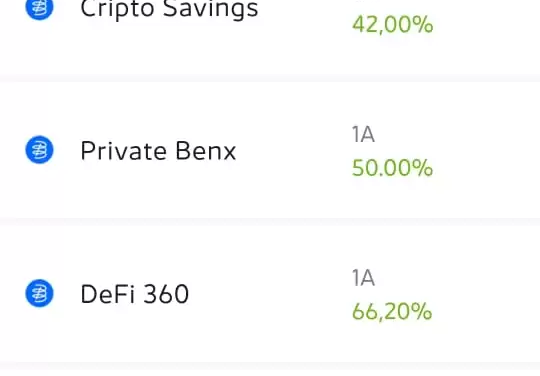
BlueBenx, a Brazilian crypto lending platform, reportedly blocked all of its 22,000 users from withdrawing their funds following an alleged hack that drained $32 million (or 160 million Brazilian real). While no details about the hack were made available, the company allegedly laid off most of its employees.BlueBenx joins the growing list of crypto companies that failed to deliver on their promise of exorbitant yield returns this crypto winter. The Brazilian crypto lender promised up to 66% returns for users investing in cryptocurrencies via various in-house earning avenues.A report from the local news board Portal do Bitcoin highlighted that BlueBenx halted all forms of withdrawals after falling victim to an “extremely aggressive” hack. According to BlueBenx’s lawyer, Assuramaya Kuthumi, the attack resulted in the loss of $32 million, which investors found hard to believe — given the lack of clarity about the alleged hack. In the (roughly translated) words of an unnamed investor told Portal do Bitcoin:“I think there’s a high probability of it being a scam because this whole hacker attack story seems like a lot of bullshit, something they invented.”The lack of trust among investors stems from the fact that numerous crypto platforms — that offer high yields — have alleged similar scenarios in the past, wherein they end up halting funds withdrawal while hiding their incompetency in fulfilling the previously promised returns to the users.Related: Investors shifting toward lower-risk crypto yields — Block Earner GMConsidering the growing risks involved in high-yield services, as stated above, crypto investors are now on the move to trying out lower-risk crypto yields as safer strategies.Block Earner, an Australian fintech company, witnessed a surge of investors looking out for the “less risky version” of those returns. Speaking to Cointelegraph, the company’s general manager Apurva Chiranewala stated:“Given that the risks have gone up significantly for those returns, those guys have actually started coming in engaging with us because we look like the less riskier version of those double-digit return products.”As a result of this change in inverter sentiment, crypto companies like Block Earner are required to simultaneously build institutional products owing to the growing interest in that space.

Čítaj viac

The Merge: Top 5 misconceptions about the anticipated Ethereum upgrade

The excitement around Ethereum’s (ETH) upcoming upgrade, The Merge, which involves the merger of two blockchains — Mainnet Ethereum and Beacon Chain — has unknowingly spurred rumors across the community. Termed the most significant upgrade in the history of Ethereum, The Merge does indeed mark the end of proof-of-work (PoW) for the Ethereum blockchain. However, here are five misconceptions that stand out among the rest.Misconception 1: Ethereum gas fees will reduce after The MergeEthereum’s impending upgrade will reduce Ethereum’s infamous gas fees (transaction fees) is one of the biggest misconceptions circulating among investors. While reduced gas fees tops every investor’s wishlist, The Merge is a change of consensus mechanism that will transition the Ethereum blockchain from PoW to proof-of-stake (PoS). Instead, lowering gas fees in Ethereum will require working on expanding the network capacity and throughput. The developer community is currently working on a rollup-centric roadmap to make transactions cheaper.Misconception 2: Ethereum transactions will be faster after The MergeIt is safe to assume that Ethereum transactions will not be noticeably faster. However, there is some truth to this rumor, as Beacon Chain allows validators to publish a block every 12 seconds, which on the Mainnet is roughly 13.3 seconds.While Ethereum developers believe that transitioning to PoS will enable a 10% increase in block production, the slight improvement will go unnoticed by users.Misconception 3: The Merge will result in downtime of the Ethereum blockchainContrasting the misconceptions that envision positive outcomes for Ethereum from The Merge, a popular rumor suggests that the planned upgrade will momentarily take down the Ethereum blockchain. The developers anticipate no downtime as blocks transition from being built using PoW to being built using PoS. Misconception 4: Investors will be able to withdraw staked ETH after The MergeStaked ETH (stETH), a cryptocurrency backed 1:1 by ETH, currently lies locked on the Beacon Chain. While users would love to be able to withdraw their stETH holdings, the developer community has confirmed that the upgrade does not facilitate this change.Withdrawal of stETH holdings will be made available during the next major upgrade after The Merge, known as the Shanghai upgrade. As a result, the assets will remain locked and illiquid for at least 6-12 months after the merger.Misconception 5: Validators will not be able to withdraw ETH rewards til the Shanghai upgrade While stETH remains blocked for investors until withdrawals are resumed following the Shangai upgrade, validators will have immediate access to the fee rewards and maximal extractable value (MEV) earned during block proposals from the execution layer or Ethereum Mainnet.As the fee compensation will not be newly issued tokens, it will be available to the validator immediately.Related: Ethereum will outpace Visa with zkEVM Rollups, says Polygon co-founderSharing his take on Ethereum’s untapped potential, Polygon co-founder Mihailo Bjelic told Cointelegraph that zkEVM Rollups, a new scaling solution for Ethereum, will allow the smart contract protocol to outpace Visa in terms of transaction throughput.Sandeep Nailwal, Polygon’s other co-founder, echoed Bjelic’s thoughts as he envisioned the solution slicing down Ethereum fees by 90% and increasing transaction throughput to 40–50 transactions per second.

Čítaj viac

Získaj BONUS 8 € v Bitcoinoch

nakup bitcoin z karty

Registrácia Binance

Burza Binance

Aktuálne kurzy