Autor Cointelegraph By Arijit Sarkar

Crypto mining can benefit Texas energy industry: Comptroller's office

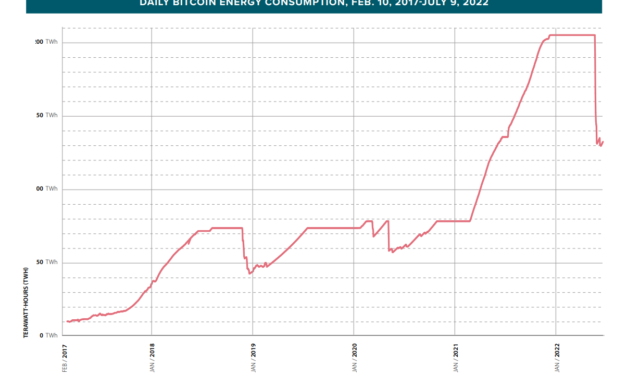
The United States filled in the wide gap in Bitcoin (BTC) mining that was left open by China by the end of June 2021. Despite looming rumors of high power consumption, officials in Texas, one of the fastest growing crypto mining hubs in the US, now believe that mining operations can, in fact, garner a symbiotic relationship with the energy industry. A newsletter from the Texas Comptroller’s office revealed the state’s pro-crypto stance with the intent to host long-term miners and operators. Clarifying the general misconception about Bitcoin’s energy usage, the fiscal note highlighted that unlike “manufacturing facilities or industrial chemical plants, which can be expected to be around for decades,” cryptocurrency mining facilities do not place big electrical demands on the grid.With greater crypto miners moving into Texas, concerns around power demand remain as the sudden surge threatens to disturb the balance between supply and demand. While other power-hungry industries often continue production amid market fluctuations, one of the concerns raised in the newsletter by Texas-based research associate Joshua Rhodes was:“The difference is that Bitcoin mines (mining facilities) can come in so fast and may be gone so fast depending on the price of Bitcoin.”Given the unique positioning of the crypto mining market, Texas officials believe miners can participate in demand response programs — which involve turning off miners’ power during peak demand. This process is widely adopted by energy-intensive industries such as petrochemical plants. Moreover, the study envisioned that increased mining operations could spur additional energy infrastructure, especially in remote areas of West Texas. Related: Bitcoin mining to cost less than 0.5% of global energy if BTC hits $2M: ArcaneA prolonged bear market brought down mining revenue to record lows in June 2022. However, data from blockchain.com showed that BTC mining revenue jumped nearly 69% in one month — from $13.928 million on July 13 to $23.488 million on Aug. 12.In addition, lower mining equipment (GPU) prices have now allowed BTC miners to upgrade and expand their mining rigs as they pursue mining the last 2 million BTC.

Čítaj viac
AMM protocol SudoRare disappears from the internet with 519 ETH

SudoRare, an automated market maker (AMM) protocol for ERC-721 to ERC-20 swaps, suddenly shut down its services and social media accounts after reportedly making away with 519 Ether (ETH), worth roughly $815,000. A crypto community member, sungjae_han, was first to point out a suspicious transaction that drained substantial funds off SudoRare using LooksRare (LOOKS) and USD Coin (USDC) tokens.#PeckShieldAlert #rugpull Seems like @SudoRare rugged 519 $ETH (~$815k). SudoRare already deleted its social accounts/groups, sudorare[.]xyz is downStole funds already transferred to 3 new addresses (173 $ETH/address):0x75c3b2…39810x0498d1…80740xbFb784…7EAa https://t.co/mPC4bl4k6W pic.twitter.com/O5D7jThYvm— PeckShieldAlert (@PeckShieldAlert) August 23, 2022A subsequent intervention from blockchain investigator Peckshield hinted toward the possibility of a small-scale rug pull involving the loss of 519 ETH. Strengthening PeckShield’s suspicions, SudoRare decided to go offline from the internet — deleting all social media accounts and the main website, sudorare.xyz.SudoRare website down along with all other social media presence. Source: sudorare.xyzThe following screenshot shows that the alleged stolen fund was equally divided and transferred to three different accounts, each receiving 173 ETH. Stolen funds transferred to three different accounts in ETH. Source: @PeckShieldWhile investigations into the matter are still underway, the disappearance of SudoRare comes as a reminder to investors to “do your own research” (DYOR) before investing in projects pitching unrealistic returns.Related: Ronin hackers transferred stolen funds from ETH to BTC and used sanctioned mixersA recent hack on Velodrome Finance was traced back to one of its team members, Gabagool, who later returned the stolen funds worth $350,000.Gabagool, too, released a note revealing various events that led him to attempt theft, which involved losing funds during the 2022 crypto crash. He added:“Not much else to say. I’m extremely stupid, incredibly disappointed in myself and (frankly) unsure about what next, legally speaking.”Velodrome is yet to take legal action against the crime and has revealed working with the legal counsel to determine the next steps.

Čítaj viac

Average Bitcoin transaction fee drops under $1 as network difficulty recovers

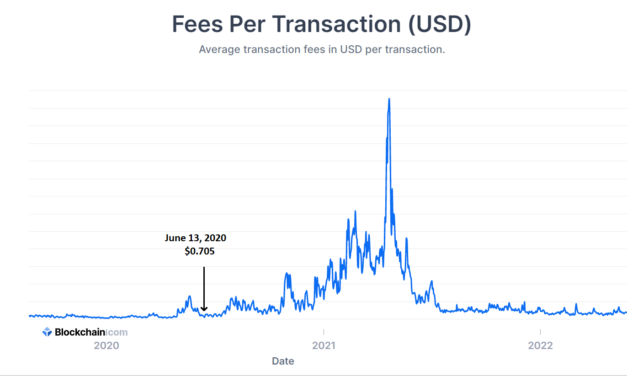
The average transaction fees on the Bitcoin (BTC) blockchain fell below $1 for the first time in over two years, further strengthening its use case as a viable mainstream financial system.High transaction fees over blockchain networks work against the users, especially when making low-value transactions. For example, transaction fees over Ethereum (ETH) blockchain skyrocketed several times during the nonfungible token (NFT) hype, inducing stress on general users.While the Bitcoin ecosystem has also endured its fair share of high transaction fees in the past, timely upgrades — including the Lightning Network and Taproot — guarantee faster and cheaper transactions over time. As of Aug. 22, the average Bitcoin transaction fees fell down to $0.825, a number last seen on June 13, 2020.Average Bitcoin transaction fees over the past 3 years. Source: Blockchain.comIn addition to timely upgrades, the drop in transaction fees can be attributed to multiple factors, including falling market prices and lower mining difficulty. However, the difficulty of mining a new BTC block sees a steady recovery as miners gain access to cheaper hardware while recovering from the prolonged chip shortage.Bitcoin network difficulty chart. Source: Blockchain.comAs seen above, August also marked the end of the three-month-long downfall of network difficulty — recovering back to 28.351 trillion from its freefall. Thanks to consistent community efforts, the Bitcoin network continues to display telltale signs of a healthy financial system.Related: Pushing Bitcoin to become more scalable with zero-knowledge proofsAlthough users expect every network upgrade to reduce gas fees and transaction speeds, not all upgrades are built to serve the same purpose. For example, the most anticipated Ethereum upgrade, The Merge, will not reduce gas fees.As explained by the Ethereum Foundation:“The Merge deprecates the use of proof-of-work, transitioning to proof-of-stake for consensus, but does not significantly change any parameters that directly influence network capacity or throughput.”The Merge upgrade involves joining the existing execution layer of the Ethereum Mainnet with the Beacon Chain, effectively eliminating the need for energy-intensive mining.

Čítaj viac

Can Web3 be hacked? Is the decentralized internet safer?

Web3 came into existence posed as a blockchain-powered disruption to the current state of the internet. Yet, as a nascent technology, a fog of assumptions plagues discussions about the real capabilities of Web3 and its role in our day-to-day lives.Considering the promise of a decentralized internet using public blockchains, a complete transition to Web3 would require scrutiny across several factors. Out of the lot, security stands as one of the most crucial features as, in a Web3-powered world, tools and applications hosted over the blockchains go mainstream.Smart contract vulnerabilitiesWhile the blockchains that host Web3 applications remain impenetrable from being hostage to attackers, hackers target the vulnerabilities within the project’s smart contracts. Smart contract attacks on decentralized finance (DeFi) platforms have surged, with a recent study revealing that approximately $1.6 billion in cryptocurrencies was stolen in the first quarter of 2022 alone. Although DeFi is a subset of the Web3 spectrum, it reflects the biggest vulnerability within the ecosystem. As a result, Web3 entrepreneurs need to redirect their marketing budget to the development of the core system.As seen throughout the year, vulnerabilities that allow hackers to drain vast amounts of assets result in impermanent losses for the investors and may cause an indirect collapse of related ecosystems.Insider threatsIn addition to external hacks, bad actors within the system may dupe the project and its investors. Fail-safe mechanisms with watered-down access to employees are required to avoid internal attacks.On Aug. 14, trading and liquidity automated market maker (AMM) Velodrome Finance recovered $350,000 from one of its team members, Gabagool. One of Velodrome’s high-worth wallets was drained off $350,000. A following internal investigation revealed the attacker’s identification, allowing the company to recover the entire loot. Fortifying Web3Over six months of the bear market coupled with countless hacks have forced crypto investors to realign their investments with ecosystems that reflect safety. As a result, Web3 entrepreneurs are expected to take measures that ensure the long-term success of their offerings.One way to minimize the risks of an attack is to conduct bug bounty initiatives. Bug bounties attract whitehat hackers, who try to identify vulnerabilities from a hacker’s perspective. Developers are rewarded financially for finding and fixing valid bugs in the system.In addition, entrepreneurs must set up multisig wallets for storing funds and avoid centralized control over the wallets. Such measures, when implemented across the system, reflect a greater decentralization and insulation from orchestrated attacks.

Čítaj viac

FTX revenue reportedly grew 1000% in one year, leaked documents reveal

FTX was among the many crypto exchanges with a front-row seat to witness the crypto hype of 2021, back when Bitcoin (BTC) and other cryptocurrencies hit their all-time highs. Driven by massive customer onboarding, partnerships, sponsorships and other factors, FTX’s revenue reportedly grew 1000% in 2021 — revealed internal documents.Audited financials of FY 2020-2021 show FTX witnessing a 1000% increase in revenue — growing from $90 million in 2020 to $1.2 billion in 2021, claimed CNBC alleging access to the documents. The revenue breakdown discloses a 1842.85% increase in operating income for FTX, from $14 million to $272 million in one year. The crypto exchange amassed $388 million in net income, a 2182.35% increase from last year’s $17 million.FTX has reportedly made $270 million in the first quarter of 2022. However, the exchange’s track record during the crypto winter is yet to be revealed. Despite the stellar first quarter performance, the ongoing crypto winter has most likely impacted the growth trajectory owing to numerous market crashes.The report further claims that FTX possessed $2.5 billion in cash by the end of 2021 with a profit margin of 27%.FTX has not yet responded to Cointelegraph’s request for comment.Related: FTX US among 5 companies to receive cease and desist letters from FDICBinance CEO Changpeng ‘CZ’ Zhao recently raised concerns about jitters, a phenomenon wherein an existing trade order gets postponed to allow the completion of newer trades. Just learned a new word, jitters. On 1 particular exchange, sometimes your orders will be stuck for a bit, and a few other orders will get in front of you. Apparently, this happens often enough on this exchange that the traders coined a term for it, jitters. (Front running) — CZ Binance (@cz_binance) August 19, 2022While CZ did not explicitly target any particular exchange during the discussion, the crypto community on Twitter assumed it was aimed at FTX. “All of you guys knew and didn’t say anything. We need to fight the bad players,” he added.

Čítaj viac

Získaj BONUS 8 € v Bitcoinoch

nakup bitcoin z karty

Registrácia Binance

Burza Binance

Aktuálne kurzy