Autor Cointelegraph By Arijit Sarkar

Ethereum Merge spikes block creation with a faster average block time

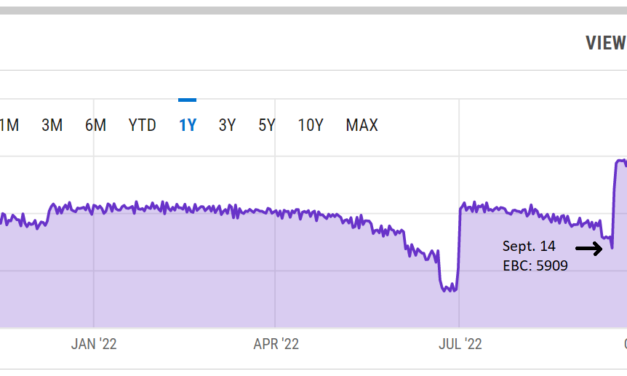
The Merge upgrade for Ethereum (ETH), which primarily sought to transition the blockchain into a proof-of-stake (PoS) consensus mechanism, has been revealed to have a positive impact on the creation of new Ethereum blocks.The Merge was considered one of the most significant upgrades for Ethereum. As a result of the hype, numerous misconceptions around cheaper gas fees and faster transactions plagued the crypto ecosystem, which was debunked by Cointelegraph. However, some of the evident improvements experienced by the blockchain post-Merge include a steep increase in daily block creation and a substantial decrease in average block time.Ethereum blocks per day. Source: YChartsOn Sept. 15, Ethereum completed The Merge upgrade after successfully transitioning the network to PoS. On the same day, the number of blocks created daily (EBC) shot up by roughly 18% — from approximately 6,000 blocks to 7100 blocks per day.Ethereum average block time (EBT). Source: YChartsComplementing this move, the average block time — the time it takes the miners or validators within a network to verify transactions — for Ethereum dropped over 13%, as evidenced by data from YCharts.The above findings showcase the positive impact of The Merge upgrade on the Ethereum blockchain. Related: Ethereum Merge was ‘executed flawlessly,’ says Starkware co-founderFollowing the Ethereum upgrade, GPU prices in China witnessed a significant drop as the blockchain moved away from the power-intensive proof-of-work (PoW) consensus mechanism.As Cointelegraph reported, the Nvidia GeForce RTX 3080’s price dropped from $1118, or 8,000 yuan, to 5,000 yuan within three months, according to a Chinese merchant. The merchant further stated that no one (in China) is buying new computers, let alone new GPUs.

Čítaj viac
Transit Swap loses over $21M due to internal bug hack, issues apology

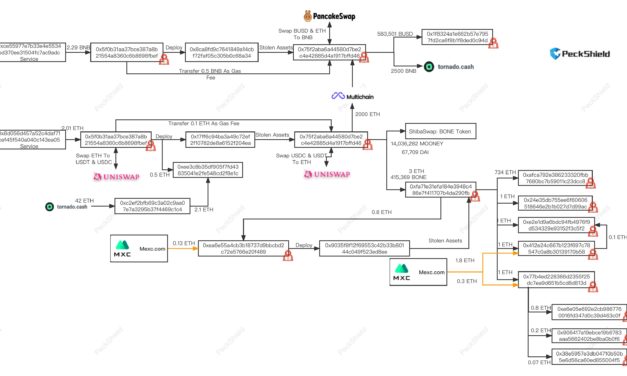
Transit Swap, a multi-chain decentralized exchange (DEX) aggregator, lost roughly $21 million after a hacker exploited an internal bug on a swap contract. Following the revelation, Transit Swap issued an apology to the users while efforts to track down and recover the stolen funds are underway.“We are deeply sorry,” stated Transit Swap while revealing that a bug in the code allowed a hacker to make away with an estimated $21 million. Blockchain investigator Peckshield narrowed down the attack to a compatibility issue or misplaced trust in the swap contract. pic.twitter.com/KJ7u5xoxBp— Transit Swap | Transit Buy | NFT (@TransitFinance) October 2, 2022Peckshield, along with other investigators, including SlowMist, Bitrace and TokenPocket joined in on the pursuit to track down the hacker. Transit Swap stated:“We now have a lot of valid information such as the hacker’s IP, email address, and associated on-chain addresses. We will try our best to track the hacker and try to communicate with the hacker and help everyone recover their losses.”The flowchart below depicts the flow of the stolen assets, as shared by Peckshield.The ongoing investigation hinted that the hacker may have performed earlier withdrawals from known exchanges. Transit Swap has promised to share more details with the community in due time, adding that “Thank you for your understanding and trust.”Transit Swap has not yet responded to Cointelegraph’s request for comment.Related: Amber Group uses simple hardware to show just how fast, easy the Wintermute hack wasReciprocating the updated security measures implemented by crypto businesses, hackers continue to evolve their methods to dupe investors. #MEV A very profitable MEV bot, internally named as 0xbad, was somehow tricked/hacked with 1,101 ETH loss (~$1.45M) in the following tx: https://t.co/FxXSY8AyhX— PeckShield Inc. (@peckshield) September 27, 2022

Recently, a hacker used an Ethereum (ETH) arbitrage trading bot to exploit a “bad code” vulnerability for draining 1,101 ETH, which was around $1.41 million at the time of writing.

Čítaj viac

Nexo-labeled address withdraws $153M in Wrapped BTC from MakerDAO

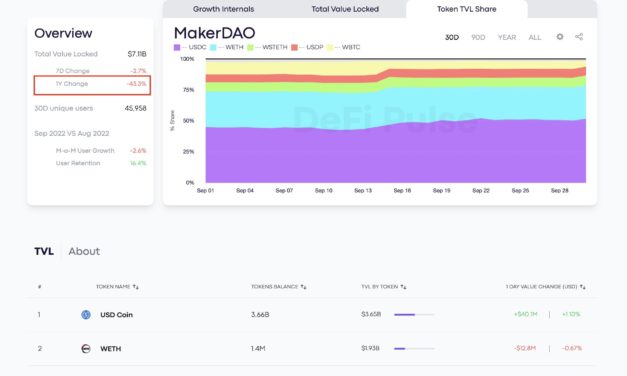
Just a few days after market analysts predicted a 50% drop in NEXO price due to regulatory pressure and investor concerns, a crypto wallet address labeled as NEXO 0x8fd withdrew 7,758.8 Wrapped Bitcoin (WBTC) — roughly worth $153M — from MakerDAO.On Sept. 26, regulators from eight U.S. states filed a cease-and-desist order against Nexo under the allegations of offering unregistered securities to investors without warning. Moreover, Kentucky regulators accused Nexo of insolvency owing to liabilities exceeding assets when excluding Nexo.Following suit, on Sept. 30, blockchain investigator Peckshield alerted the transfer of 7,758.8 WBTC from MakerDAO. One of the main reasons the crypto community chose to link the funds’ withdrawal with Nexo’s insolvency rumors is the name of the wallet — Nexo: 0x8fd.MakerDAO details overview. Source: PeckshieldAs shown above, the total value locked (TVL) on MakerDAO has suffered a decline of 43.3% over the past year, which currently stands at $7.11 billion.Transaction details overview. Source: PeckshieldTransaction details show the transfer of DAI tokens worth $50.1 million from Nexo: 0x8fd to a null address (possibly a burn address) via DSProxy. As highlighted in the above screenshot, the transaction hash also confirms the transfer of $153.2 million in WBTC.Wish I had seen celsius moving funds before freezing my account … make your own mind up what this means https://t.co/JuQ2fXJIuS— cryptochicca.eth (@CryptoChicca) September 30, 2022While the crypto community suspects wrongdoing, further investigations on the matter are underway.Nexo has not yet responded to Cointelegraph’s request for comment.Related: Nexo ‘surprised’ by state regulators’ actions, says co-founderDespite the ongoing FUD, Nexo continues to broaden its business. Most recently, on Sept. 27, Nexo purchased a stake in Hulett Bancorp, a holding company that owns a federally chartered Summit National Bank. The acquisition allows Nexo and its customers to open bank accounts with Summit National Bank. In addition, Nexo’s retail and institutional clients based out of the US will get access to asset-back loans, card products, and escrow and custodial solutions offered through Summit.

Čítaj viac

Net Bitcoin ATMs growth drops globally for the first time ever

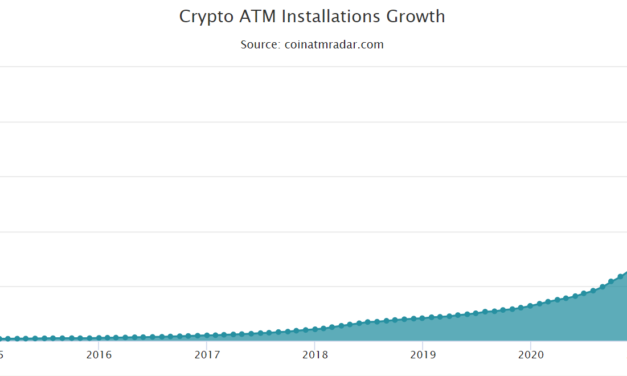
The domino effect of a prolonged bear market seeped into the Bitcoin (BTC) ATM ecosystem as September 2022 recorded negative growth in global net installations for the first time in history — primarily driven by a slowdown in the United States.The total number of Bitcoin ATMs installed over time fell to 37,980 in Sept. from an all-time high of 38,776 ATMs in August — resulting in a drop of -2.05%, as evidenced by data from CoinATMRadar. The number of Bitcoin machines installed over time. Source: CoinATMRadarData on net changes of crypto ATM installations confirm that, in September, 796 crypto ATMs were pulled off from the global network. The United States alone recorded a reduction of 825 ATMs. However, Europe, Canada and a few other jurisdictions cushioned the downfall with new installations locally.The net change of cryptocurrency machines number installed and removed monthly. Source: CoinATMRadarDespite the setback, data based on 60 days suggest that nearly 14 crypto ATMs are being installed globally per day, with Genesis Coin representing a 40.3% share of ATMs among other manufacturers. Other popular crypto ATM manufacturers include General Bytes and BitAccess.The sudden reduction in the crypto ATM installations can be attributed to geopolitical tensions among factors, including lack of regulatory clarity and market uncertainties.Related: How Bitcoin ATMs in Greece fare during a record-breaking tourist seasonAlthough crypto ATM installations have taken a temporary hit due to external factors, countries continue to show interest in having functional crypto ATMs within their borders.wMost recently, Japan decided to reintroduce crypto ATMs after 2014, spearheaded by local crypto exchange Gaia Co. Initially, new ATMs will be installed across Tokyo and Osaka. The firm plans to set up 50 BTMs across the country by August 2023. As Cointelegraph reported, Gaia became the first locally-registered crypto company to have installed crypto ATMs in Japan.

Čítaj viac

US senator bill seeks to cushion crypto exchanges from SEC enforcement actions

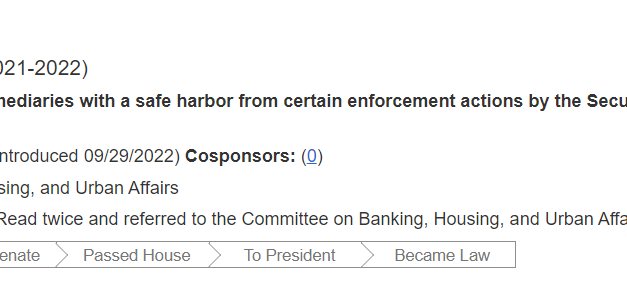
United States Senator Bill Hagerty, a member of the Senate Banking Committee, introduced legislation seeking a safe harbor for cryptocurrency exchanges from “certain” Securities and Exchange Commission (SEC) enforcement actions.The Digital Trading Clarity Act of 2022, introduced by Sen. Hagerty, aims to provide regulatory clarity around two primary concerns plaguing crypto exchange establishments — (i) the classification of digital assets and (ii) related liabilities under existing securities laws. A bill to provide digital asset intermediaries with a safe harbor from certain enforcement actions by the Securities and Exchange Commission, and for other purposes. Source: congress.govSen. Hagerty outlined an overview of the problems amid regulatory hurdles:“The current lack of regulatory clarity for digital assets presents entrepreneurs and businesses with a choice: navigate the significant regulatory ambiguity in the U.S., or move overseas to markets with clear digital asset regulations.”The aforementioned regulatory uncertainty, according to Sen. Hagerty, discourages investments in the crypto spaces and hampers job creation opportunities in the US. As a result, the blockade “jeopardizes the United States’ leadership in this transformational technology at such a crucial time.”The senator believed that the legislation, when passed, would not only provide “much-needed certainty” to crypto businesses but also improve the growth and liquidity of U.S. cryptocurrency markets.To establish the legislation as law, the bill needs approval from the Senate, the House and the President of the United States.Related: US lawmakers propose amending cybersecurity bill to include crypto firms reporting potential threatsRunning parallel to the regulatory reforms recommended by the US senators, the federal government amped up efforts to study the feasibility of central bank digital currencies (CBDCs) in the American market. Under Biden’s directive, the Office of Science and Technology Policy (OSTP) analyzed 18 CBDC design choices — outlining various pros and cons of each system:“It is possible that the technology underpinning a permissionless approach will improve significantly over time, which might make it more suitable to be used in a CBDC system.”The technical evaluation for a U.S. CBDC system highlighted the department’s inclination toward an off-ledger, hardware-protected system.

Čítaj viac

Získaj BONUS 8 € v Bitcoinoch

nakup bitcoin z karty

Registrácia Binance

Burza Binance

Aktuálne kurzy