Autor Cointelegraph By Arijit Sarkar

Future of Web3 security with Immunefi and Brave CEOs: The Bug House 2022

Celebrating the myriads of accomplishments earned by the crypto ecosystem, Immunefi, Electric Capital, Bitscale Capital and MA Family together hosted The Bug House — a party for bringing together the global Web3 community. In a panel hosted by Cointelegraph, editor-in-chief Kristina Lucrezia Cornèr sat with Mitchell Amador, founder and CEO at Immunefi, and Brendan Eich, founder and CEO of Brave browser, to discuss the evolution of Web3 and its future trajectory.“There’s a lot of Web2 in Web3. That’s a problem right now,” began Eich when asked about the ongoing Web2 to Web3 transition. From using trusted servers to sub-custody wallets, Amador believed that such Web2 sites could be full of adversaries. He also pointed out the recent EIP-5593 proposal, which aims to prevent man-in-the-middle attacks.In Web2, there is a common practice of implementing security features post-launch through patches and antiviruses, which can be inherited by Web3 apps using such services. In addition, security concerns in Web3 stem from the centralization through decentralized application (DApp) sites.Speaking about the security concerns in Web3, Amador stated that hackers in Web3 are very different from Web2 hackers. According to him, there are two types of hackers. In Web3, hackers are found to be young, typically under the age of 35 and most under the age of 30. In relation to the second type of hacker, Amador highlighted the influx of older tech-savvy individuals — “which many blockchain hackers lack” — that have spent a few years understanding Web3 and are able to break into the systems. He added:“We’ve seen a number of these guys, including several of the top 10 hackers now; they just storm the leaderboard with their skills. They just need to get good enough.”Supporting this stance, Eich added that, during the bull run era of 2021, he noticed the rise of reentrancy attacks. Brave has been using HackerOne to protect its in-house crypto wallets and has tripled its bug bounty to eradicate the wallet’s security concerns.Eich further highlighted that Brave has total control over the browser and crypto wallets, which helps them fend off phishing attacks on the users. Brave has amassed a wide demography of users that prefer privacy, crypto or both, currently serving 20 million daily users, which, when compared to last year, has doubled.When it comes to protecting the Web3 community, Amador believes it boils down to ethos:“To wish for, fight for, and create a better world for which their most sinister and capricious behaviors simply won’t work and won’t be allowed. If we do that successfully, we will draw these expert security talents, their best executives, their best leaders over to our side and neuter them by destroying the base of their ability to work.”Cornèr agreed with the duo as she stated that in Web3 security, it’s not only about money; it’s about the culture and values that the community protects, which brings out the need for education.While Amador further revealed the efforts of Immunefi, Brave and other partners to work with the governments trying to make Web3 more accessible, adding:“We’re in a position where we need to heavily lobby and ask for the support and graces of various other power players precisely because what we’ve built today is not good enough, not valuable enough and not safe enough.”Eich, on the other hand, highlighted the need to develop better programming languages and tools to safeguard the systems. He called for a need to segregate the world of ethos from the world of bad programming. “Education sounds prim and proper. But if it doesn’t have incentives, it’s not gonna work,” he concluded.As a bug bounty platform, Immunefi created trust and legitimacy in the industry by solving the problem related to projects not willing to pay up bug bounties after successful bug discovery. They did this by providing an impartial, third-party service that can mediate that interaction and make sure both sides come to the task. Related: Solana unveils Google partnership, smartphones, Web3 store at BreakpointImmunefi recently released a Whitehat Leaderboard for listing the top 20 most elite white hats in Web3. “As the volume of saved funds continues to grow, the leaderboard is another opportunity to give our white hats the recognition they deserve, as well as to encourage them to keep pushing the boundaries to make the web3 ecosystem safer,” Amador noted in a statement.

Čítaj viac
Solana unveils Google partnership, smartphones, Web3 store at Breakpoint

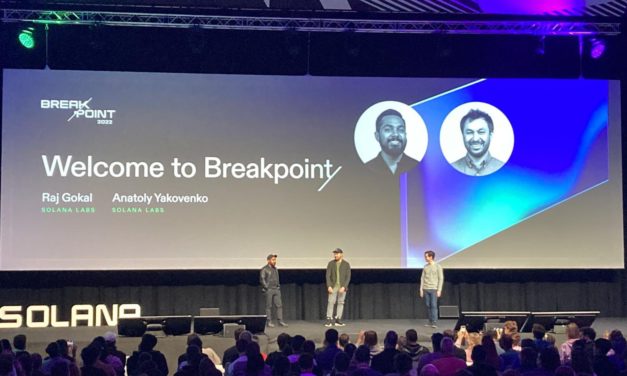
During the ecosystem’s annual gathering at Breakpoint 2022 in Libson, Solana made a series of launch announcements as it prepares to go mainstream. Cointelegraph’s ground team — present during the conference — shared insights into Solana’s roadmap, which includes the launching of smartphones, dApp stores and a partnership with Google Cloud, among others. Good morning from @SolanaConf Come say hi if you see us with our Cointelegraph merch Follow this thread to get more updates you on this lovely event! pic.twitter.com/4m2jNaTSNS— Cointelegraph (@Cointelegraph) November 5, 2022Solana Breakpoint, a four-day conference scheduled from Nov. 4 to Nov. 7, attracted 13,000 people in just one of the four venues it’s being held simultaneously. QR Code giveaways and GeoNFTs for Solana StoreFortunately for Cointelegraph’s ground team, the venue featured Solana co-founder Raj Gokal and Solana Labs co-founder Anatoly Yakovenko.Soon after, Vibhu Norby, the CEO and founder of Solana Spaces, took the stage to deliver an interactive presentation while asking attendees to scan QR codes to participate in a giveaway!Norby further unveiled the Solana Store in Miami, showcasing a walkaround video of people checking out the store, as shown above. In addition, the CEO revealed that:“Now anyone, anywhere can build their own Solana Store.”While explaining the process of building a Solana store, Norby announced the launch of GeoNFTs — a nonfungible token (NFT) implementation — that allows users to geo-tag an area in their city. He further explained:“If you have a GeoNFT, you can redeem it 1-for-1 with the exclusive rights to open a Solana store in that region.”With GeoNFTs, Solana aims to empower solo entrepreneurs that wish to get into business.Solana smartphones available for pre-order in early 2023“It’s made for the people,” said the Solana mobile team while announcing the launch of its upcoming smartphones. Cointelegraph found that the preorders for Solana mobile phones will commence in 2023. However, the company is yet to declare an official date for its availability.A differentiating feature of the Solana phone lies in its ability to securely store the private keys of crypto wallets. The Solana smartphone will be powered by a Qualcomm chipset sporting an Arm-based SoC, allowing for higher productivity.Cointelegraph’s ground team managed to bring in a sneakpeak of the soon-to-be-launched Solana smartphone.Solana dApp store: A promise of crypto-friendly policiesGearing up for the Web3 disruption, Solana announced the launch of the Solana dApp Store. During the conference, a Solana spokesperson highlighted the need for a good user experience in Web3.Supporting the cause, Solana’s dApp store promises to do away with charges, revenues and fees. Moreover, the company confirmed with the interested participants that submissions would open january 2023.Google Cloud is soon to become a Solana node validatorWhile the above announcements mark a series of milestones for Solana, the ecosystem’s partnership with Google Cloud evidently stole the limelight.Based on the information collected by Cointelegraph’s ground team, Google Cloud is building a block-producing Solana validator to participate in and validate the network. Google Cloud’s Blockchain Node Engine, which was first announced on Oct. 27, will feature on Solana chain from 2023. The integration will allow users to launch a dedicated Solana node in the Cloud.Additionally, Google Cloud will index Solana data and bring it to BigQuery — a fully-managed, serverless data warehouse — by next year, making it easier for the Solana developers to access historical data.Related: Solana-based protocol seeking to decentralize ride-sharing raises $9MOn Oct. 11, Solana (SOL) users were attacked by hackers via a fake Solana wallet security update.Hackers were found airdropping NFTs to users masquerading as a new Phantom wallet security update. However, the fraudulent update was a malware designed to steal crypto assets.Users falling for the fake Phantom update hack saw malware being downloaded from GitHub, which attempts to steal browser information, history, cookies, passwords, SSH keys and other user information.

Čítaj viac

Polygon Studios' Ryan Watt talks Web3's core principles and fairer internet

The year 2022 in crypto was eventful in many ways. However, the negative impacts of a bear market dampened the excitement around the blockchain upgrades that significantly brought crypto ecosystems closer to the future of finance.For Bitcoin, it was the Taproot soft fork upgrade, which was aimed at improving the scripting capabilities and privacy of the Bitcoin network. Ethereum underwent the Merge upgrade to transition from a proof-of-work to a proof-of-stake (PoS) consensus mechanism.Leading decentralized Ethereum scaling platform Polygon kicked off the year with mainnet upgrades based on Ethereum Improvement Proposal (EIP)-1559, otherwise known as the London hard fork. The upgrade was accompanied by Polygon (MATIC) token burning and better fee visibility.On Jan. 25, Ryan Wyatt joined Polygon Studios as the CEO after resigning from YouTube as global head of gaming. Speaking to Cointelegraph, Wyatt discussed the importance of timely blockchain upgrades and his vision for Polygon.Cointelegraph: What is your perspective on blockchain upgrades when it comes to Polygon? What are some key points of consideration when discussing changes to the network?Ryan Wyatt: As with everything we do, Polygon takes a holistic approach to upgrades. There are always multiple different solutions to every issue, so it is more productive to explore as many of them as possible. There are many paths to explore when it comes to Ethereum scaling, and aggregating multiple solutions together represent the most promising strategic approach. Recent: US Election update: Where do the pro-crypto candidates stand ahead of the election?For example, our latest upgrade, zkEVM — the first zero knowledge rollup fully compatible with Ethereum Virtual Machine (EVM) — is principally designed to address Ethereum’s high transaction fees and latency. Whereas Polygon Avail, which we announced shortly before zkEVM, addresses the data availability problem by taking a modular approach (decoupling transaction execution from data availability). It is already clear that there cannot be a “one solution to rule them all,” a full suite of scaling products needs to be developed to bring mass adoption to Ethereum and Web3 in general. CT: How do you think the general public perceives blockchain upgrades? And, what impact does it have on the decision-making process for the devs, if any?RW: Decentralization, usability and user-centricity are among the core principles of Web3, so network upgrades often reflect those ideals. We believe that people usually appreciate upgrades that aim to increase the overall utility and usability of blockchains. Similarly, developers tend to prioritize their communities’ needs when discussing and implementing upgrades, so that’s a mutually beneficial relationship.CT: What implications do blockchain upgrades such as the Merge have on the other ecosystems that are directly or indirectly connected to the Ethereum ecosystem?RW: Before the Merge, almost all carbon emissions on Polygon — roughly 99.9% — emanated from smart contracts and holdings on the Ethereum network. Subsequently, as the Merge has now massively reduced Ethereum’s own energy consumption and ensuing carbon emissions, this positive effect has also rubbed off on Polygon and related platforms, making them much more sustainable as well.The scaling issue, however, still persists. While the transition to PoS laid the groundwork for sharding and other scaling techniques, it did little to remediate issues with high fees and slow transaction speeds. As such, layer-2 solutions like Polygon still hold invaluable utility. As Ethereum becomes more scalable and efficient, so will Polygon; every improvement made to Ethereum enhances Polygon’s existing strengths. CT: What is Polygon’s secret to becoming one of the biggest names in the crypto space. Also, how do you intend to maintain a dominant position in the future?RW: Polygon’s primary mission is to help in collaborative building toward a fairer internet, where anyone can find opportunities anywhere. We provide the infrastructure for a new world where people and technology collaborate and exchange value globally and freely, without gatekeepers or intermediaries. To this end, Polygon is onboarding world-class new talent from Web2 and Web3 to provide both the tech stack and the infrastructure needed to ensure long-term success for projects. Polygon’s recruitment drive includes top-tier talent from leading companies such as EA, Amazon and Google.Meanwhile, Polygon’s developer network is constantly expanding and now exceeds 37,000 decentralized applications (DApps), while more than 60 metaverse platforms support Polygon, including Sandbox, Decentraland and Somnium Space.Polygon is also helping many Web2 companies, including Starbucks, Adobe, Clinique and Stripe, to integrate Web3 functionality and has raised $450 million in February to further fuel its Web3-focused initiatives.CT: Does Ethereum’s latest upgrade help improve Polygon? RW: All DApps in the Polygon ecosystem now benefit from significantly lower energy consumption/carbon emissions thanks to the Merge. This is coupled with our own sustainability efforts, which saw the network go carbon neutral this year — benefiting thousands of Polygon DApps with a negligible carbon footprint. Recent: WhatsApp crash: Are decentralized blockchain messengers a real alternative?By the end of the year, Polygon aims to go carbon-negative as it continues to onboard projects that cater to Web3. Businesses in crypto have taken the lead in building Web3 solutions and blockchain networks like Polygon are prepared to onboard, enable cross-compatibility with other ecosystems and improve the overall performance of such offerings.

Čítaj viac

Here's why Binance's CZ invested in Twitter following Elon Musk acquisition

The acquisition of Twitter by billionaire Elon Musk got mixed reactions from crypto and global communities, sparking discussions around changes to censorship, account verification and the launch of new crypto and blockchain-centric features. However, Binance CEO Changpeng “CZ” Zhao’s decision to invest $500 million in the social media site took the limelight.Acknowledging the buzz, CZ shared six reasons why he opted to support Twitter and what it may mean for the future of Twitter.Ever since Twitter’s new sink was in, I was asked about it in every interview. And I had many interviews last week. So, here is a summary.Why did we do it? 6 reasons. — CZ Binance (@cz_binance) November 4, 2022CZ’s primary reason for investing in Twitter was his belief in free speech. “Free speech is a prerequisite for having freedom of money, which we are building for,” said CZ while highlighting the importance of Twitter in providing a common platform where the general public and prominent figures can voice their opinions.The second reason for the fund injection is related to Binance’s support for entrepreneurs. In CZ’s words, “With Elon at the helm, we believe Twitter will continue to grow and become an impactful platform for everyone.” CZ listed “tremendous untapped value” as the third reason for the investment, as he believed that the social media platform could deliver innovative business models without the need for selling user data. With this potential at the backdrop, CZ offered to help with Web3 integration for Twitter, which was also his fourth reason.The fifth, however, was a personal one for CZ. Twitter has been crucial to CZ in maintaining open communication with the crypto space, including entrepreneurs, investors, journalists and the general public.CZ also revealed having a similar mindset to Musk — the sixth reason — when it comes to making changes to Twitter, which includes eliminating bots, adding an edit button, paying for blue ticks and paying for commenting on posts.“Entrepreneurs don’t plan. We execute and adjust,” said CZ as he revealed no etched-in-stone plans for Twitter. While addressing Crypto Twitter, Binance CEO stressed that Twitter was a long-term investment and is not bothered by short-term stock price fluctuations and market conditions.Related: How CZ built Binance and became the richest person in cryptoAccording to CZ, central bank digital currencies (CBDCs) are not a threat to the crypto ecosystem. On the contrary, he said mainstreaming CBDCs would validate and improve trust in blockchain technology. Last year, CZ refuted the idea of CBDCs, stating that they would not be able to match the freedom offered by Bitcoin (BTC) and Ether (ETH).

Čítaj viac

Joe Biden unhappy with Elon Musk for buying a platform that “spews lies”

The relevance of social media platforms in swaying global politics was first highlighted with the rise of Facebook (rebranded later to Meta), which was accused of manipulating information based on user demographics. Twitter, which was recently acquired by Elon Musk, got the short end of the stick as US President Joe Biden accused the website of spewing lies.Biden attended a fundraising event in Chicago for upcoming elections, wherein he called out Elon Musk for purchasing Twitter. He stated:“Now what are we all worried about? Elon Musk goes out and buys an outfit that sends and spews lies all across the world.”While the Biden administration has previously clarified its stance to promote the suppression of hate speech and misinformation on social media platforms, the president highlighted the lack of supervision on Twitter, adding:“There’s no editors anymore. There’s no editors. How do we expect kids to be able to understand what is at stake.”Ever since Bitcoin (BTC) launched in 2010, the crypto community chose Twitter as its home for discussing various nuances and attaining consensus on the decisions made. Musk’s $44 billion Twitter acquisition came with a promise of free speech. However, with the increase in hate speech, numerous advertisers have backed out from doing business with Twitter over content moderation concerns.Musk’s immediate course of action for Twitter includes imposing an $8/month fee for users that wish to retain their account verification.Related: Elon Musk faces class-action suit over mass Twitter layoffsSupporting Musk’s Twitter acquisition drive, Changpeng “CZ” Zhao, the CEO of crypto exchange Binance, chipped in $500 million using fiat currency.Binance has laid out plans to form a team to support Twitter’s blockchain efforts, however, an official statement is currently being awaited.

Čítaj viac

Získaj BONUS 8 € v Bitcoinoch

nakup bitcoin z karty

Registrácia Binance

Burza Binance

Aktuálne kurzy