Autor Cointelegraph By Arijit Sarkar

FTX funds on the move: bankruptcy proceedings, insider threat or a hack?

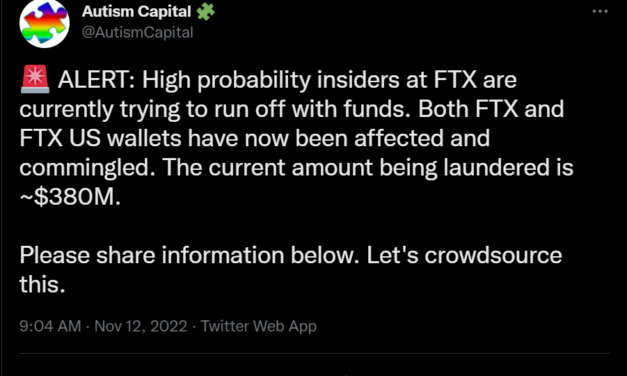
The recent tensions between the two major crypto exchanges FTX and Binance, which was accompanied by a massive selloff of FTX Token (FTT), resulted in the collapse of roughly 130 companies linked to FTX Group — including FTX Trading, FTX US, West Realm Shires Services, and Alameda Research. Following the resignation of FTX CEO Sam Bankman-Fried and the revelation of the company’s intent to file for Chapter 11 bankruptcy, on-chain data hinted at the commencement of bankruptcy proceedings as multiple FTX wallets were found transferring funds over to a common Ethereum (ETH) wallet address.The wallet address in question received funds from various international and U.S.-based wallets linked to FTX, which amassed over 83,878.63 ETH (worth over $105.3 million) in just two hours starting at 9:20 PM ET on Nov. 11 and continued to see an influx of funds at the time of writing.Or Sam wants to make it all back in one trade pic.twitter.com/p38fQ516Gv— Steven (@Dogetoshi) November 12, 2022With all eyes on FTX, the late-night fund transfers on a Friday night raised questions about the company’s intent. While some blockchain investigators saw it as the start of the bankruptcy process, speculations around ill-intent or an external hack surfaced across the crypto ecosystem.The wallet owner was found swapping $26 million Tether (USDT) to DAI via 1inclh while approving USDP — a Paxos-issued stablecoin — for trade on CoW Protocol. As the situation unfolds, the wallet also approved transfers and sales of other cryptocurrencies, including Chainlink (LINK), cUSDT and stETH.The funds coming from FTX wallets were later moved to new addresses, out of which one of them was labeled as FTX on Etherscan, as pointed out by blockchain investigator PeckShield. A subsequent investigation also confirmed that 8,000 ETH was wormholed from Solana to one of the new addresses within the last hour.The involvement of a hacker, at this time, seems unlikely as they typically would have moved funds from FTX’s wallet to their own wallets. However, many pointed out the possible involvement of an insider. Until the dust settles, the community continues to monitor the movement of funds. However, investors are advised to avoid speculations until confirmed reports set in. FTX has not yet responded to Cointelegraph’s request for comment. Related: FTX’s ongoing saga: Everything that’s happened until nowAdding to investor’s concerns, FTX sources told Reuters that between $1 billion and $2 billion of client money is unaccounted for in the company’s spreadsheet. The unconfirmed report also suggests that SBF secretly moved $10 billion in funds to Alameda Research while pointing out that the whereabouts of missing funds remain unknown.

Čítaj viac
FTX-Binance standoff highlights the need for clear rules — Sen. Lummis

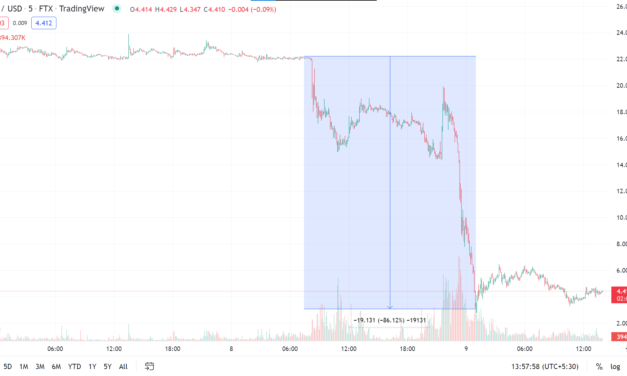
The feud between the CEOs of crypto exchanges FTX and Binance — Sam Bankman-Fried (SBF) and Changpeng “CZ” Zhao — not only crashed cryptocurrency prices but also reminded regulators to step in and avoid similar fallouts in the future.Ever since CZ publicly announced Binance’s intent to liquidate its FTX Token (FTT) holdings, investors anticipating a price dump began selling off their FTT holdings as a means to minimize their losses. What followed was a steep 86% drop in FTT’s market value, down from the $22 range to $3.00 in a matter of hours.FTX Token (FTT) price dropped over 86%. Source: TradingViewHowever, the eventful day concluded with CZ announcing Binance’s intent to acquire FTX, and SBF sufficed the move citing consumer protection. Reacting to this development, United States Senator Cynthia Lummis — known in the community for her strong belief in crypto — highlighted the need for clearer crypto regulations:“The recent events that have transpired between FTX and Binance are the clearest example yet of why we need clear rules of the road for digital asset exchanges in the United States.”She pointed out the importance of the Lummis-Gillibrand Responsible Financial Innovation Act, a bill sponsored by Senator Lummis that seeks to bring digital assets within the regulatory perimeter. [embedded content]Given the evident influence of crypto entrepreneurs in swaying the cryptocurrency prices with just a few tweets, Lummis highlighted:“Market manipulation, lending activity, and whether customer funds and assets were appropriately safeguarded are just a few of the many issues my colleagues and I need to consider in the coming days.”While SBF chose to remain silent over the last 16 hours at the time of writing, CZ revealed topping Binance’s SAFE insurance fund with cryptocurrencies worth $1 billion to adjust to recent price fluctuations.Related: Binance’s FTX acquisition seen as chess move by crypto communityAs a result of the FTX-Binance fiasco, SBF’s personal wealth plummet 94% and ripping off his billionaire status overnight.Before Binance’s takeover announcement, Bankman-Fried’s 53% stake in FTX was worth around $6.2 billion.

Čítaj viac

Alameda on the radar of BitDAO community for alleged dump of BIT tokens

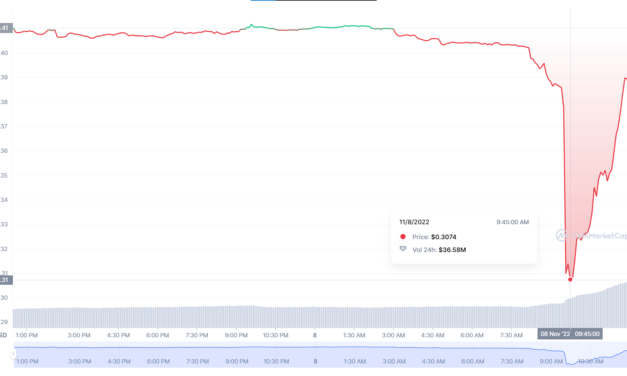
The recent concerns related to the volatility of FTX Token (FTT) seeped into FTX CEO Sam Bankman-Fried’s other business operation, Alameda Research, as the BitDAO community requested information about Alameda’s BitDao (BIT) holding commitment.On Nov. 2, 2021, BitDAO swapped 100 million BIT tokens with Alameda in exchange for 3,362,315 FTT tokens with a public commitment to hold each other’s tokens for three years, so until Nov. 2, 2024. Given the rising uncertainties and speculations, the BitDAO community was quick to react to the sudden fall of BIT prices on Nov. 8, 2022, suspecting Alameda of dumping the BIT tokens and breaching the three-year mutual no-sale public commitment.BIT market price chart (1 day). Source: CoinMarketCapTo narrow down the reasons for BIT’s price drop, the BitDAO community requested an allowance for monitoring and verifying Alameda’s commitment to holding BIT tokens. BitDAO provided proof of honoring its side of the commitment by sharing an address that shows BitDAO Treasury holding all 3,362,315 FTT tokens.In return, the community gave Alameda a deadline of 24 hours to prove its commitment, requesting that:“The preferred method is for Alameda to transfer the 100 million $BIT tokens to an on-chain (non-exchange) address for the BitDAO community to verify, and hold until the end of the agreement.”Ben Zhou, the co-founder of crypto exchange Bybit, summed up the matter by stating that while nothing is confirmed, the BitDAO community wants to confirm proof of funds from Alameda.Standing up against the accusation, Caroline Ellison, the CEO at Alameda Research, confirmed no wrongdoing from the company’s end and promised to share the proof of funds, telling Zhou that:“Busy at the moment but that wasn’t us, will get you proof of funds when things calm down.”BitDAO’s proposal to request for Alameda’s funds proof was accompanied by vague warning:“If this request is not fulfilled, and if sufficient alternative proof or response is not provided, it will be up to the BitDAO community to decide (vote, or any other emergency action) how to deal with the $FTT in the BitDAO Treasury.”Alex Svanevik, the CEO of blockchain analytics platform Nansen, investigated the on-chain data to find that Mirana Ventures — Bybit’s venture capital arm — withdrew 100 million BIT from FTX. However, he advised the crypto community not to fall for speculations, as withdrawing funds doesn’t mean Alameda is selling.Related: Coinbase, Alameda-backed Mara launches African crypto wallet serviceFrom Nov. 6, numerous FTX users faced problems while withdrawing their funds from the exchanges, such as delays and failures.FTX addressed the concerns raised by investors by highlighting the smooth operation of the matching engine. However, the exchange agreed on delays with Bitcoin (BTC) withdrawals due to limited node throughput. In addition, users facing delays in stablecoin withdrawals were told that withdrawal speeds would get back to normal after banks resumed operations during the weekdays.

Čítaj viac

Crypto no more in top 10 most-cited potential risks: US central bank report

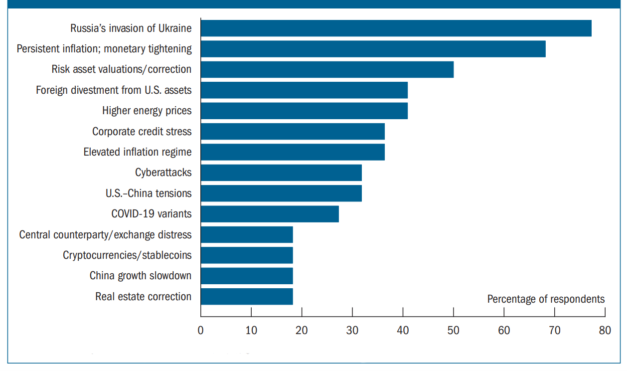
While proponents of traditional finance remain keen on dismissing Bitcoin (BTC) and the crypto ecosystem as financial risks, a survey conducted by the Federal Reserve Bank of New York — one of the 12 federal reserve banks of the United States — revealed 11 factors that overshadow crypto in terms of risk in 2022.Geopolitical tensions, foreign divestments, COVID-19 and high energy prices were found to be some of the most-cited potential risks for the US economy, according to a central bank survey published by the Federal Reserve System.Federal Reserve Bank of New York survey results. Source: Federal Reserve SystemOut of the 14 factors that pose a financial risk, crypto stands at the 11th position — revealing a change in investor mindset owing to the continued efforts of crypto entrepreneurs to educate the masses. Some of the pressing risk concerns raised by the respondents were related to the power struggle of global economies, which includes the U.S.-China tensions, the Russia-Ukraine war, higher energy prices, rising inflation, the COVID-19 pandemic and cyberattacks, to name a few.However, the U.S central maintains its anti-cryptoposition when it comes to evaluating the risks in crypto investment. It pointed out in the report that selected cryptocurrencies — including BTC, Ether (ETH), Binance Coin (BNB), Cardano (ADA) and XRP — are down about 69 percent in value compared to the Nov. 2021 peak, adding that:“Speculation and risk appetite appear to be the primary driving forces of crypto-asset prices, which have recorded big swings in recent years.”The central bank also cited the collapse of the Terra (LUNA) ecosystem, highlighting that entities that had direct exposure to the in-house stable TerraUSD (UST) found themselves in financial distress, sometimes leading to bankruptcy.”Related: Joe Biden unhappy with Elon Musk for buying a platform that “spews lies”On the other side of the world, India launched its home-grown central bank digital currency (CBDC) for the wholesale segment. While the country is still opposed to the idea of mainstreaming cryptocurrencies, the pilot project saw the involvement of nine local traditional banks, which include the State Bank of India, Bank of Baroda, Union Bank of India, HDFC Bank, ICICI Bank, Kotak Mahindra Bank, Yes Bank, IDFC First Bank and HSBC.Related reports suggested that India’s central bank — the Reserve Bank of India (RBI) — plans to launch the digital rupee for the retail segment within a month in select locations.

Čítaj viac

SEC issues subpoena to influencers promoting HEX, PulseChain and PulseX

Over several years, social media influencers have earned a bad rep among regulators for shilling risky and unvetted tokens to millions of investors. Pursuing the crackdown on such scenarios, the U.S. Securities and Exchange Commission (SEC) reportedly issued a subpoena to influencers who were found promoting cryptocurrencies such as HEX, PulseChain and PulseX.Swedish researcher Eric Wall shared an official letter from the SEC dated Nov. 1, which was addressed to influencers. It read:“We believe that you may possess documents and data that are relevant to an ongoing investigation being conducted by the staff of the United States Securities and Exchange Commission.”The letter was accompanied by a subpoena that was issued as part of the investigation, which demanded the influencers in question to produce the required documents by Nov. 15, 2022.GUYS. IT’S HAPPENING. Hexicans influencers are getting subpoenad by the SEC over HEX, PulseChain and PulseX. The HEX information channels are filled with information about how to shred your digital evidence pic.twitter.com/PrTYBRT9Wc— Eric Wall X (@ercwl) November 5, 2022While the HEX community members retaliated against the finding as fake news, Wall quickly pointed out that HEX information channels on Discord and Telegram were filled with information on preserving anonymity on data and discussions.He further challenged the Hexians those who claimed that the subpoena was fake, stating:“Hexicans: time to post the unblurred versions here. If they’re fake—no harm right?”On Nov. 3, Richard Heart, the founder of HEX, tweeted:“Do you accept the good advice you’re given? You think you do, but do you really? Are you using secret chats with self-destruct timers? Or are you a slow learner? Is it hard for you to click buttons?”The above tweet supports Wall’s claims. However, Wall maintains that he has no respect for the SEC and that he’s just sharing the information.Related: Web3 Foundation makes bold claim to SEC: ‘DOT is not a security. It is merely software’SEC chair Gary Gensler recently used examples of SEC enforcement against crypto lending firm BlockFi and a former Coinbase employee in justifying the agency’s actions on violations of U.S. securities laws while writing for the Practising Law Institute’s Annual Institute on Securities Regulation.According to the SEC chair, the commission’s enforcement staff consisted of “public servants” and “cops on the beat” who were “uniting public zeal with unusual capacity.”

Čítaj viac

Získaj BONUS 8 € v Bitcoinoch

nakup bitcoin z karty

Registrácia Binance

Burza Binance

Aktuálne kurzy