Autor Cointelegraph By Arijit Sarkar

American CryptoFed registration at risk as SEC alleges filing anomalies

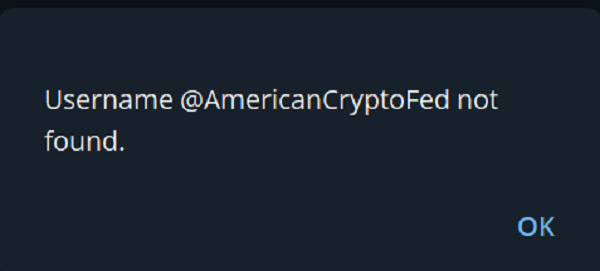
American CryptoFed DAO, the first decentralized autonomous organization (DAO) to get legal recognition in the United States, is at risk of losing its registration after the U.S. Securities and Exchange Commission (SEC) dug up anomalies in the Form S-1 registration statement dated Sept. 17, 2021.The Wyoming Secretary of State’s office recognized American CryptoFed as a legal entity in July 2021, at a time when the organization’s CEO, Marian Orr, believed that “Wyoming is arguably the top blockchain jurisdiction in the world.”However, on Nov. 18, 2022, the SEC instituted administrative proceedings against the DAO to determine the issuance of a stop order. A stop order from the SEC would retract American CryptoFed’s registration and bar sales of in-house tokens, Ducat and Locke.According to the SEC’s Division Of Enforcement, the Form S-1 registration statement filed by American CryptoFed lacks vital information, such as audited financial statements and details about its business and management. The SEC further believed that the American CryptoFed filing contains “misleading statements and omissions” while being inconsistent in describing the tokens as securities.In this regard, David Hirsch, Chief of the Enforcement Division’s Crypto Assets and Cyber Unit stated that:“American CryptoFed not only failed to comply with the disclosure requirements of the federal securities laws, but it also claimed that the securities transactions they seek to register are not in fact securities transactions at all.”Hirsch clarified that issuers must provide the required disclosure information to the SEC. However, the SEC claimed non-cooperation from American CryptoFed during its examination of its registration statement.Based on the information made available to the public, Hirsch shared SEC intent regarding the DAO:“The Enforcement Division is seeking to stop American CryptoFed’s registration to protect investors against misleading information.”Cointelegraph found that the official Telegram channel for the DAO has been disabled. Official Telegram account of American CryptoFed is not found. Source: Cointelegraph (via Telegram)However, the deletion of the Telegram account was not yet linked to the SEC’s investigation at the time of writing. American CryptoFed has not yet responded to Cointelegraph’s request for comment.Related: US national crypto laws should look like New York’s, says state regulatorThe Securities Commission of the Bahamas (SCB) recently ordered the transfer of all digital assets of FTX Digital Markets (FDM) to a digital wallet owned by the commission.Securities Commission of The Bahamas Assumes Control of Assets of FTX Digital Markets Ltd. pic.twitter.com/IzW4PGZSJm— Securities Commission of The Bahamas (@SCBgov_bs) November 18, 2022The assets were seized “for safekeeping,” according to an official statement shared by the SCB.

Čítaj viac
Binance CEO CZ begins working on Vitalik Buterin's ‘safe CEX’ ideas

The collapse of numerous major crypto ecosystems in 2022 revealed the urgent need for revamping the way crypto exchanges operate. Ethereum (ETH) co-founder Vitalik Buterin believed in exploring beyond “fiat” methods to ensure the stability of crypto exchanges, including technologies such as Zero-Knowledge Succinct Non-Interactive Argument of Knowledge (ZK-SNARKs). Following a discussion with angel investor Balaji Srinivasan and crypto exchanges such as Coinbase, Kraken and Binance, Buterin recommended options for the creation of cryptographic proofs of on-chain funds that can cover investor liabilities when required, a.k.a, safe centralized exchanges (CEX). Having a safe CEX: proof of solvency and beyondhttps://t.co/AKEweYZfj2Big thanks to @balajis and staff from @coinbase @binance @krakenfx for discussion!— vitalik.eth (@VitalikButerin) November 19, 2022The best case scenario, in this instance, would be a system that does not allow crypto exchanges to withdraw a depositor’s funds without consent.Vitalik’s new ideas. Working on this. Just don’t read the title aloud around people (Vitalik wrote it).https://t.co/AtR6KiSx5B— CZ Binance (@cz_binance) November 19, 2022

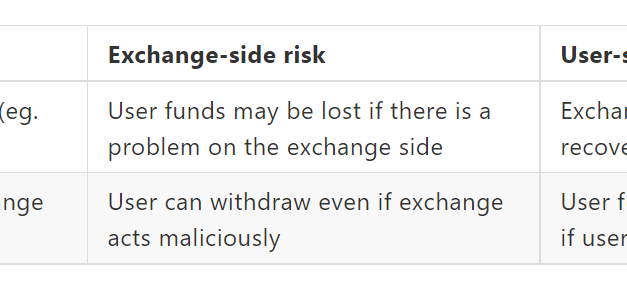
Fellow crypto entrepreneur CZ, who has been vocal about Binance’s intent for complete transparency, acknowledged the importance of Buterin’s recommendations, stating that:“Vitalik’s new ideas. Working on this.”The earliest attempt to ensure fund safety was proof-of-solvency, wherein crypto exchanges publish a list of users and their corresponding holdings. However, privacy concerns eventually fueled the creation of the Merkle tree technique — which dampened the privacy leakage concerns. While explaining the inner workings of the Merkle tree implementation, Buterin explained:“The Merkle tree technique is basically as good as a proof-of-liabilities scheme can be, if only achieving a proof of liabilities is the goal. But its privacy properties are still not ideal.”As a result, Buterin placed his bets on cryptography via ZK-SNARKs. For starters, Buterin recommended putting users’ deposits into a Merkle tree and using a ZK-SNARK to prove the actual claimed value. Adding a layer of hashing to the process would further mask information about the balance of other users.Buterin also discussed implementing proof-of-assets for confirming an exchange’s reserves while weighing the pros and cons of such a system, considering that crypto exchanges hold fiat currencies and the process would require crypto exchanges to rely on trust models better suited for the fiat ecosystem.While long-term solutions will need the involvement of multisig and social recovery wallets, Buterin pointed out two alternatives for the short-term — custodial and non-custodial exchanges, as shown below:Two short-term options for alternatives for safe CEX. Source: hackmd.io (via Vitalik Buterin)“In the longer-term future, my hope is that we move closer and closer to all exchanges being non-custodial, at least on the crypto side,” added Buterin. On the other hand, highly centralized recovery options can be used for wallet recovery for small funds. Related: Crypto self-custody a ‘fundamental human right’ but not risk-free: CommunityOn Nov. 4, Buterin added a new category of milestones to the Ethereum technical roadmap — aimed at improving censorship resistance and decentralization of the Ethereum network.https://twitter.com/VitalikButerin/status/1588669782471368704The updated technical roadmap now inserts the Scourge as a new category, which will run parallel to other previously-known segments — the Merge, the Surge, the Verge, the Purge and the Splurge.

Čítaj viac

SBF's lawyers terminate FTX representation due to conflicts of interest

Paul, Weiss, the law firm backing FTX CEO Sam Bankman-Fried (SBF) amid bankruptcy, renounced representing the entrepreneur, citing a conflict of interest. The decision to withdraw from representation after SBF’s tweets were found to disrupt the law firm’s reorganization efforts.Starting Nov. 14, SBF published a series of tweets that amassed extensive attention across Crypto Twitter. The move, however, sparked speculations that the cryptic tweets were used to distract bots from noticing concurrently deleted tweets. While no ill-intent could be concluded, Paul, Weiss attorney Martin Flumenbaum believed that SBF’s “incessant and disruptive tweeting” was negatively impacting the reorganization efforts:“We informed Mr. Bankman-Fried several days ago, after the filing of the FTX bankruptcy, that conflicts have arisen that precluded us from representing him.”The law firm’s decision to back out from helping SBF coincided with a much-awaited ruling of fellow fraudster Elizabeth Homes, who got sentenced to prison after being convicted of criminal fraud.SBF currently faces scrutiny from multiple directions, including ongoing investigations around the misuse of customer funds and disclosing of bankruptcy-related documents.Despite informing the defendants, the court may refuse an attorney’s request and order them to continue representation — which may seem impossible considering SBF’s behaviorial concerns raised by the law firm.Related: Sam Bankman-Fried says he regrets filing for bankruptcy: ReportRecently, Binance CEO Changpeng “CZ” Zhao opened up about the time when Binance was almost ready to bail out FTX from a collapse. Reflecting on the situation, he said:“When he came to me, I knew he was desperate. If we can’t help him, there’s probably nobody else that would. Probably a bunch of people passed on the deal before us.”However, the deal for a takeover was called off after a due diligence revealed bigger problems.

Čítaj viac

Bitcoin scarcity rises as bad exchanges take 1.2M BTC out of circulation

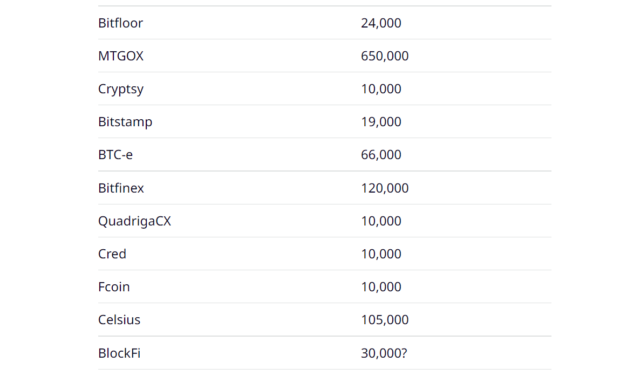
One of the biggest factors differentiating Bitcoin (BTC) from fiat currency and most cryptocurrencies is the hard limit of 21 million on its total circulating supply. However, the demise of numerous crypto exchanges over the last decade has permanently taken out at least 5.7% (1.2 million BTC) of the total issuable Bitcoin from circulation.The lack of clarity around a crypto exchange’s proof-of-reserves came out as the primary reason for their sudden collapses, as seen recently with FTX. Historical data around crypto crashes revealed that 14 crypto exchanges, together, were responsible for the loss of 1,195,000 BTC, which represents 6.3% of the 19.2 Bitcoin currently in circulation.Bitcoin lost due to defunct crypto exchanges. Source: Casa BlogAn investigation conducted by Jameson Lopp, co-founder and CTO of Bitcoin storage platform CasaHODL, revealed that Mt. Gox maintains the top position when it comes to exchanges losing BTC holdings.While the scarcity of Bitcoin is directly related to its value as an asset, Lopp pointed out that fake Bitcoin offerings currently threaten the ecosystem, adding that “Bitcoin will not be a great store of value if most people are buying fake bitcoin.” Investigations confirm that at least 80 crypto assets have “Bitcoin” in their names, aimed purely to mislead BTC investors.As a result, investors purchasing fake Bitcoin assets negatively impact the price appreciation of the original Bitcoin.80+ crypto assets have the word “bitcoin” in their name.14 have a market cap over $1,000,000.3 claim to be Bitcoin.1 is Bitcoin.— Jameson Lopp (@lopp) September 22, 2022To ensure Bitcoin’s position as sound money, self-custody comes out as the most effective way to reduce reliance on crypto exchanges and corporate “paper Bitcoin” contracts.Related: Blockstream CEO Adam Back talks Bitcoin over a game of JengaSalvadorean President Nayib Bukele announced plans to acquire 1 BTC every day starting from Nov. 17, 2022. We are buying one #Bitcoin every day starting tomorrow.— Nayib Bukele (@nayibbukele) November 17, 2022

Public records show that El Salvador currently holds 2,381 BTC at an average buying price of $43,357. However, stagnant Bitcoin performance opened up a window of opportunity for the country to substantially bring down its average price of Bitcoin acquisition.

Čítaj viac

South Korea seizes $104M from Terra co-founder suspecting unfair profits

While crypto exchange FTX stole the limelight from other fallen ecosystems, South Korean authorities continue their efforts to bring closure to the victims of the year’s first crypto crash — Terraform Labs. Nearly six months after the Terra (LUNA) blockchain was officially halted, South Korean authorities froze approximately $104.4 million (140 billion won) from co-founder Shin Hyun-seong based on suspicion of unfair profits.The decision to freeze Shin’s asset worth over $104 million was approved by the Seoul Southern District Court, which was based on a request from the prosecutors. The claim related to Shin’s involvement in selling pre-issued Terra (LUNA) tokens to unwary investors.Based on suspicion of profiting from unwarranted LUNA sales, the district court froze the allegedly stolen funds until further investigations are underway, reported local news media YTN. “Reports that CEO Shin Hyun-seong sold Luna at a high point and realized profits or that he made profits through other illegal methods are not true,” Cointelegraph previously quoted Shin’s attorney.The preindictment preservation of the funds is a way of preventing bad actors from disposing of stolen funds and causing more financial damage or losses for the investors. Shin is currently being investigated by South Korean authorities on two charges — making unfair profits from issuing in-house tokens LUNA and TerraUSD (UST) and leaking customer transaction information of Chai — a Korean payment app linked to Terra — to Terraform Labs.On November 14, the South Korean prosecutors requested the accused co-founder appear in court as part of an investigation into the firm’s collapse.Related: Terra Labs, Luna Guard commission audit to defend against allegations of misusing fundsIn the first week of November, the prosecutors accused Terra co-founder Do Kwon of manipulating Terra’s price.”It’s highly disappointing to see the Korean prosecutors continue to try to contort the Capital Markets Act to fit their agenda and push baseless claims. Prior judicial decisions and statements by the Korean financial authorities, including the FSC, establish that cryptocurrency tokens are not investment contract securities,” said Terraform Labs spokesperson in a written statement to Cointelegraph.

Čítaj viac

Získaj BONUS 8 € v Bitcoinoch

nakup bitcoin z karty

Registrácia Binance

Burza Binance

Aktuálne kurzy