Autor Cointelegraph By Arijit Sarkar

Binance proof-of-reserves is 'pointless without liabilities': Kraken CEO

The collapse of the crypto exchange FTX revealed the importance of proof-of-reserves in avoiding situations involving the misappropriation of users’ funds. While exchanges have proactively started sharing wallet addresses to prove the existence of users’ funds, several entrepreneurs, including Kraken CEO and co-founder Jesse Powell, called the practice “pointless” as exchanges fail to include liabilities.According to Powell, a complete proof-of-reserve audit must include the sum of client liabilities, user-verifiable cryptographic proof that each account was included in the sum and signatures proving the custodian’s control over the wallets. While Kraken’s proof-of-reserve does allow verification of assets against the company’s liabilities, Powell continues to call out other players that have missed out on including accounts with negative balances.I’m sorry but no. This is not PoR. This is either ignorance or intentional misrepresentation.The merkle tree is just hand wavey bullshit without an auditor to make sure you didn’t include accounts with negative balances. The statement of assets is pointless without liabilities. https://t.co/b5KSr2XKLB— Jesse Powell (@jespow) November 25, 2022Powell called out CoinMarketCap in the past for sharing an incomplete proof-of-reserves as it lacked “cryptographic proof of client balances and wallet control.” He reiterated that reserves are not the list of wallets but assets minus liabilities. Binance’s recently released proof-of-reserves system allows users to verify their assets using a Merkle tree. However, Powell shared his displeasure as the system failed to include accounts with negative balances, stating that:“The whole point of this is to understand whether an exchange has more crypto in its custody than it owes to clients. Putting a hash on a row ID is worthless without everything else.”Moreover, he asked the media and journalists to refrain from “overselling it and misleading consumers.” Instead, he recommended they take the time to understand the motive behind proof-of-reserves.On the other hand, few community members refuted Powell’s need for a trusted auditor.Related: Crypto exchange Kraken freezes accounts related to FTX and AlamedaOn Nov. 19, Binance CEO Changpeng Zhao confirmed to have started working on building a safe centralized exchange (CEX),  idea put forth by Ethereum co-founder Vitalik Buterin.In this instance, the best-case scenario would be building a system that does not allow crypto exchanges to withdraw a depositor’s funds without consent.

Čítaj viac
New York AG pushes prohibition of crypto purchases via retirement funds

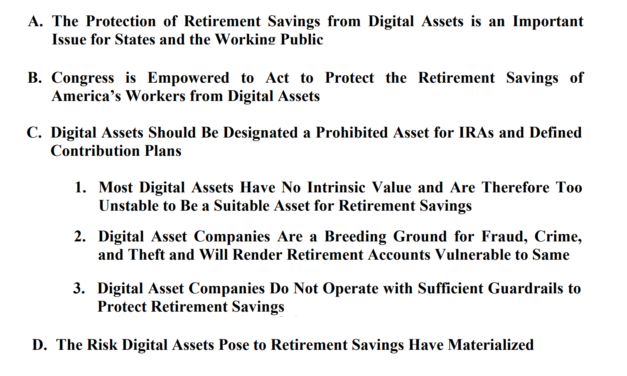
The turmoil surrounding crypto exchange FTX and Sam Bankman-Fried (SBF) reaffirmed regulators’ belief about the need for stricter oversight across the crypto ecosystem. Seeking investor protection against a similar fallout, New York Attorney General (NYAG) Letitia James recommended prohibiting crypto investments in defined contribution plans and individual retirement accounts (IRAs).In a letter addressed to the members of the U.S. Congress, James requested legislation that would bar U.S. citizens from purchasing cryptocurrencies and digital assets using their funds in IRAs and defined contribution plans such as 401(k) and 457 plans. However, a survey from October 2022 showed that nearly 50% of U.S.-based investors want to see crypto become a part of their 401(k) retirement plans.James further pitched the rejection of two acts — the recently proposed Retirement Savings Modernization Act and the Financial Freedom Act of 2022 — that are aimed at allowing investments in digital assets. While highlighting SBF’s involvement in running a Ponzi Scheme and misappropriating users’ funds, James jotted down four primary reasons explaining her call to exclude digital assets from IRAs and defined contribution plans, as explained below. First and foremost, the NYAG pointed out the importance of protecting retirement savings in the long term. Secondly, she highlighted Congress’ historical obligation to protect the retirement funds of U.S. citizens. James used narratives including frauds and lack of sufficient guardrails as her third reason to prohibit crypto investments. The final concern was around the volatility and custodial and valuation uncertainties.On the other hand, the NYAG clarified that there is a distinction between digital assets and blockchain technology. She does believe that U.S. citizens should be allowed to purchase stakes in publicly traded blockchain-based businesses in retirement accounts. Key considerations by NYAG for the prohibition of crypto investments via retirement funds. Source: ag.ny.gov (collated by Cointelegraph)An immediate measure in this regard would be adding subparagraphs to existing laws — 26 U.S. Code § 408: Individual retirement accounts and 29 U.S. Code § 1104: Fiduciary duties — for prohibiting digital assets investments.Related: US Senate committee schedules FTX hearing for Dec. 1, CFTC head to testifyUnited States senators Elizabeth Warren, Tina Smith and Richard Durbin requested Fidelity Investments reconsider its Bitcoin (BTC) offering to retirement savers, stating:“The recent implosion of FTX, a cryptocurrency exchange, has made it abundantly clear the digital asset industry has serious problems.”A Fidelity spokesperson told Cointelegraph that the company “has always prioritized operational excellence and customer protection.”

Čítaj viac

Hong Kong believes stablecoin volatility can spillover to traditional finance

The fall of crypto giants this year reignited questions about the stability of cryptocurrencies and their impact on fiat ecosystems. Hong Kong Monetary Authority (HKMA) assessed the situation and found that the instabilities of crypto assets, including asset-backed stablecoins, can potentially spill over to the traditional financial system.The HKMA assessment on asset-backed stablecoins pointed out the risks of liquidity mismatch, negatively impacting their stability during “fire-sale” events. A fire sale event relates to a momentary price fluctuation when investors can purchase stablecoins cheaper than their market price — a phenomenon noticed during the Terra (LUNA) crash.According to Hong Kong’s central bank, the interconnection of crypto assets has made the crypto ecosystem more vulnerable to systematic shocks. In addition, the increase in crypto exposure from financial institutions can be subject to knock-off effects from abrupt developments in cryptocurrency prices:“The growing size of asset-backed stablecoins, together with their inherent risks, could make asset-backed stablecoins a potential magnifier of the volatility spillover from crypto to traditional financial assets.”The flowchart shared by HKMA suggests that fluctuations in the price of asset-backed stablecoins could result in reserve adjustment by stablecoins. This is mainly driven by the assumption that the demand and supply of stablecoins can trigger volatility in their price.Illustration of Tether’s transaction mechanism and spillover channel from crypto to traditional financial assets. Source: HKMAThe study also recalled the crash of Terra USD (UST), an algorithmic stablecoin issued by Terraform Labs, which had caused mass redemption of Tether (USDT). In this light, HKMA recommended standardizing regular disclosures that can help regulators inspects liquidity conditions and risks.The second recommendation for regulators is to strengthen the asset-backed stablecoins’ liquidity management via restrictions on the composition of reserve assets.Related: Could Hong Kong really become China’s proxy in crypto?The Securities and Futures Commission of Hong Kong advised management companies looking to offer exchange-traded fund (ETF) offerings to “have a good track record of regulatory compliance,” among other requirements.HKEX welcomes the SFC’s announcement today permitting the listing of ETFs with virtual assets as their underlying. This will support the continued growth of #HongKong as Asia’s premier #ETF marketplace, further strengthening Hong Kong’s role as an international financial centre. pic.twitter.com/zLRgAUV6iX— HKEX 香港交易所 (@HKEXGroup) October 31, 2022The SFC circular came as part of a policy update from Hong Kong’s government, which announced its readiness to engage with global crypto exchanges on regulatory issues.

Čítaj viac

South Korea investigates crypto exchanges for listing native tokens

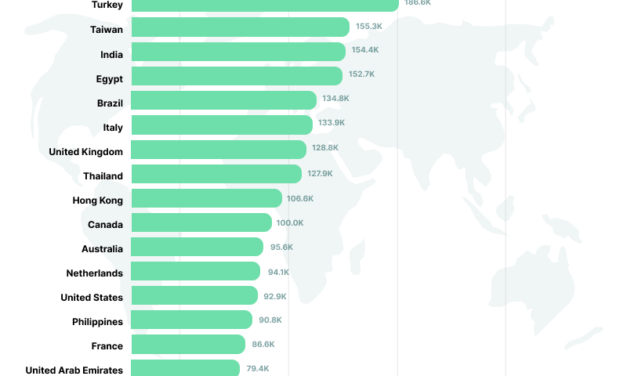
Native cryptocurrencies turned out to be the biggest factor contributing to the demise of numerous exchanges and ecosystems this year, most recently during the FTX collapse. Korea’s financial authority, Korea Financial Intelligence Unit (KoFIU), took notice of the same as it launched a probe into crypto exchanges in relation to listing their in-house, self-issued tokens.Crypto exchange FTX and its 130 affiliate firms recently filed for bankruptcy due to a price crash of its in-house token, FTX Token (FTT). While Korean crypto exchanges are barred from issuing native tokens, KoFIU’s probe into the same is to ensure regulatory adherence for investor’s safety, according to a local report.Initial investigations revealed that all crypto exchanges performed lawful operations across South Korea. However, a Financial Services Commission (FSC) spokesperson revealed plans for deeper investigation because “there are still some doubts related” to in-house token listings.Flata Exchange is one of the primary suspects and is being investigated for listing its in-house token, FLAT, back in January 2020, as reported by local media Yonhap. Major exchanges such as Upbit and Bithumb have been cleared by the authorities and the investigations will be more focused on smaller exchanges.On average, 297,229 unique South Korean users visited FTX.com monthly, making South Korea top the chart of countries that were most impacted by FTX’s collapse, confirmed a CoinGecko analysis.Related: South Korean prosecutors call on Terra co-founder Shin Hyun-seong to cooperate: ReportBased on suspicion of profiting from unwarranted LUNA sales, South Korean authorities froze approximately $104.4 million (140 billion won) from FTX co-founder Shin Hyun-seong.The Seoul Southern District Court approved the decision to freeze Shin’s assets until further investigations are concluded.

Čítaj viac

Bankrupt crypto exchange FTX begins strategic review of global assets

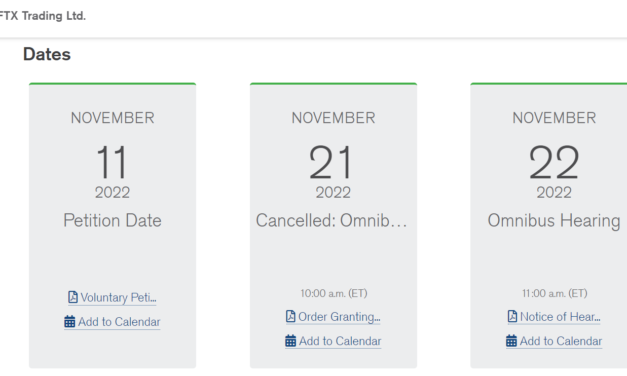
As part of the recent bankruptcy filing, the defunct crypto exchange FTX, along with 101 of the 130 affiliated companies, announced the launch of a strategic review of their global assets. The review is an attempt to maximize recoverable value for stakeholders. FTX, at the time led by CEO Sam Bankman-Fried (SBF), filed for Chapter 11 bankruptcy on Nov. 11 after being caught misappropriating user funds. The bankruptcy filing sought to cushion the losses of stakeholders connected to FTX and affiliated companies, a.k.a FTX debtors.1/ Sharing a Press Release issued early today – FTX launches strategic review of its global assets. Text below (and link). https://t.co/wxz9MYnXrn— FTX (@FTX_Official) November 19, 2022FTX debtors are in talks with financial services firm Perella Weinberg Partners for various sale or reorganization attempts. However, FTX cautioned that “the engagement of PWP is subject to court approval.”Official documents filed with the U.S. Bankruptcy Court. Source: KrollSBF’s replacement, CEO John J. Ray III, confirmed that FTX affiliates have solvent balance sheets, which could be sold or restructured to cut losses. While highlighting that some subsidiaries, such as crypto exchange LedgerX, are exempted as debtors in the bankruptcy filing, he added:“Either way, it will be a priority of ours in the coming weeks to explore sales, recapitalizations or other strategic transactions with respect to these subsidiaries and others that we identify as our work continues.”Moreover, FTX debtors have parallelly filed motions seeking interim relief from the bankruptcy court, which is slated to be heard on Nov. 22, 2022. While no deadline for sale or restructuring has been set, Ray requested all stakeholders “to be patient.”Related: FTX leadership pressed for information by US subcommittee chairmanOn Nov. 19, the law firm assisting FTX and SBF amid bankruptcy backed off from representing the entrepreneur, citing conflicts of interest. According to Paul, Weiss attorney Martin Flumenbaum:“We informed Mr. Bankman-Fried several days ago, after the filing of the FTX bankruptcy, that conflicts have arisen that precluded us from representing him.”Flumenbaum believed that Sam Bankman-Fried’s “incessant and disruptive tweeting” negatively impacted the reorganization efforts of the lawyers.

Čítaj viac

Získaj BONUS 8 € v Bitcoinoch

nakup bitcoin z karty

Registrácia Binance

Burza Binance

Aktuálne kurzy