Autor Cointelegraph By Anthony Clarke

Mainstream NFT adoption will be driven mostly by their utility

Nonfungible tokens (NFTs) have seen a stratospheric surge in popularity accompanied by sky-high values, giving rise to legitimate and ongoing worries about a market bubble, as many projects lacked real-world application or utility.NFT utility is an essential component because it adds value and functionality to the technology. One of the most well-known use cases for NFTs is the ownership of digital art pieces like CryptoPunks. Play-to-earn (P2E) gaming is another use case that had massive popularity in 2021. NFTs can assist firms in various sectors with their operations since, at their core, they contain evidence of ownership and proof of provenance. In addition, collections have access to a strong branding strategy that works in conjunction with their public image due to granting commercial rights to NFT owners for their assets.However, the market needs additional use cases for NFT technology to reach mainstream adoption as it adds value and usefulness to NFTs, helping them to stand out among the crowded digital asset projects.For example, picture-for-proof (PFP) projects may have driven huge NFT growth in 2021, but a lot of it was based on speculation by investors trying to make a profit. In addition, market leaders like the Bored Ape Yacht Club have actual utility, with each ape granting the owner access to events and copyright licenses to monetize their NFTs. Many copycat projects lacked any utility, apart from mimicking popular projects and promising vague “future developments” for holders.Furthermore, brands that want to use NFTs need a solid strategy that spans their business model and industry for particular use cases. Unfortunately, many have entered the NFT market without a proper plan or vision, rushing on the hype train or cash grabs. As a result, NFT hype has led to confusion among investors and consumers alike.Users want utilityHowever, as the market has matured, it seems like it is shifting toward a focus on utility, with investors becoming savvier and expecting additional use cases for their NFTs.Kameshwaran Elangovan, co-founder and chief operations officer at NFT launchpad GuardianLink, told Cointelegraph:“People have also grown beyond just thinking about speculative profit. They have started to think about long-term investments. The growing knowledge and awareness about NFTs have, in a lot of beneficial ways, helped the market and the offerings shift towards NFTs that have utilities rather than the ones that just represent a gimmick.”Ted Mui, CEO at Chibi Clash — a P2E blockchain game — told Cointelegraph, “The market is going to shift towards a focus on utility because people are becoming more careful with how and where to spend their money. That’s why they say a bear market is for building. People will need more than the promise of good art to convince them and increase their confidence in investing their hard-earned money.” He continued:“That’s where the utility will come into play and also be the reason NFTs are adopted into wider society. As it stands, owning digital art is still relatively foreign to most people, and at most, it’s a cool concept. The utility will allow the mainstream to attach a more tangible value to owning an NFT — this will ultimately be the catalyst for a more wide stream adoption.”What are the use cases?When it comes to real-world utility, digital ticketing is a promising use case for NFTs. NFT tickets are essentially digital assets that save a user’s credentials to provide them entrance to an event. To make the experience of being a fan even more immersive, they can also provide ticket holders extra benefits, such as access to the backstage area, merchandise and other items. In addition, NFT tickets can potentially reward artists, event organizers and other stakeholders with recurring royalties, assisting in establishing a stronger link with fans.When using NFT tickets, everyone can follow the transactions on a blockchain ledger, making it simpler to know when and where the ticket was purchased and sold. In addition, smart contracts can enable NFT tickets to hold a fixed price, preventing ticket scalpers from inflating prices on the secondary market. As a result, the NFT ticketing market is expected to be worth $68 billion by 2025 and presents a practical use case for NFT technology.Organizers can put up a rule that will cause a royalty payment to be made if a ticket is transferred to a new owner. This will allow them to decide how royalties are distributed after secondary ticket sales.Metaverse real estate has also gained traction as an NFT utility. On a metaverse platform, an area of digital land that users may own is called NFT virtual land. Because each NFT is one of a kind and it is simple to demonstrate digital ownership, they are well suited for use in representing land ownership. In addition, people can use NFT land for various purposes including working, socializing, gaming and promoting their businesses. The value of a plot is determined by factors such as its usefulness, rarity, the project it will host and market speculation. Users can acquire NFT land directly from a project via a land sale or on the secondary market through an NFT exchange like OpenSea. However, before making a purchase, users should completely understand the potential risks and benefits of the virtual property and the project that will be built on it. Benefits include being able to build on the virtual land and rest spaces to other users. One of the risks of investing in virtual land is an investor losing money if the land’s value decreases over time. Putting more of a focus on utility will bring about several positive changes, one of which is the potential resolution to the problem of investors seeking quick liquidity and immediate returns. While cryptocurrencies and NFTs will always appeal to those seeking to get wealthy quickly, utility encourages ownership over short-term flips.

Čítaj viac
What remains in the NFT market now that the dust has settled?

Over the last two years, nonfungible tokens (NFTs) have emerged as one of the most active and noticeable aspects of Web3.The data stored on blockchains by NFTs may be connected with files that include various forms of media, such as photographs, videos and audio. In certain instances, it can even be related to physical items. The owner of an NFT will often have ownership rights over the data, material or item connected with the token, and these tokens are typically purchased and traded on specialized markets. The rise of NFTs was meteoric in 2021, but it hasn’t been very steady since then, and it seems to have fallen sharply in 2022. Why NFTs exploded in popularity in 2021In 2021, two of the most active markets for NFTs were collectible art projects and the video game industry. NFTs have ushered in a new era of video gaming, which has resulted in the proliferation of new types of games, such as blockchain-based play-to-earn games that provide players with in-game benefits. Users now have the opportunity to own in-game assets for the first time and make a possible profit from such assets by trading them on NFT platforms like OpenSea.Axie Infinity, a game that included both NFTs and its own native cryptocurrency, became the most popular crypto game overall. Axie’s NFT market reached a milestone of $1 billion in total trading volume. In addition, the game accounted for two-thirds of blockchain-game NFT transactions in 2021, according to a report covered by Cointelegraph in March this year.The gaming industry can help to bring NFTs into the mainstream due to their massive popularity. Pavel Bains, executive producer of Mixmob — a card strategy racing game — told Cointelegraph: “NFTs within crypto gaming are a massive tool, probably one of the top three driving forces in crypto mainstream adoption. Right now, the biggest roadblock we’re facing is that the games aren’t very fun to play. Some will say, ‘Oh, the onboarding experience is bad… Using a crypto wallet isn’t ideal. You need to abstract it away.’ I don’t believe that. Kids will go through pain to get what they want if it’s fun.” Fear of missing out also seemed to play a major role, with the massive success of picture-for-proof collections like the Bored Ape Yacht Club (BAYC) soaring from a mint price of $300 to up to $3.4 million for a rare golden ape.No matter what it is, there are usually two types of adopters: those who see the potential in a trend and are willing to stick with it and those who join in because everyone else is doing it. NFTs are no different.How NFTs have fared in 2022NFT sales stayed fairly strong in the first half of 2022, with crypto users spending $2.7 billion on minting NFTs during that period. However, despite a strong start to the year, there have been some negatives within the NFT space.Earlier this year, the floor prices for BAYC dropped below $100,000, only to recover, with the cheapest Bored Ape recently selling for 73 Ether (ETH) ($125,000) on OpenSea. Recent: Music NFTs a powerful tool to transform an audience into a communityThis year also saw users losing their Bored Apes due to user error. “Fat finger” errors have led to Bored Apes worth hundreds of thousands being sold for far less. For example, Ape #835 sold for 115 Dai on March 28 this year, with Ape #6462 selling for 200 USD Coin (USDC) on May 15.Ape #6462 was purchased for 200.0 USDC https://t.co/u3lQymdO1B— boredapebot (@boredapebot) May 15, 2022In September, daily NFT trading volume on OpenSea was down nearly 99% from its May 1 peak of $405.75 million, with a daily volume of $10.29 million at publishing time. When it comes to individual collections, BAYC currently has a daily trading volume of only $400,000, according to DappRadar. According to the decentralized application explorer, CryptoPunks has no trading volume as of 7:20 a.m. UTC Oct. 3.Due to current market conditions, one can expect to see fluctuations in the value of NFT projects, according to experts. Yaroslav Shakula, CEO of Yard Hub — a framework for NFT, Web3 and blockchain entrepreneurial ideas — told Cointelegraph: “NFTs have surely been affected by the bear market but, in many cases, less severely than classic crypto and altcoins. What will happen next depends on the global political and macroeconomic situation. All tech stocks and risky assets are now tanking against the U.S. dollar, so in a short- and mid-term period, one might expect fluctuations in NFT prices as well.”Despite these low volumes, NFTs continue to enjoy significant visibility.Many people may have noticed a dramatic increase in the amount of people’s profile pictures on Instagram and Twitter that include a monkey, bear or other NFT image.In January this year, Twitter announced that users would be able to officially use NFTs as their profile pictures via Twitter Blue. The premium, subscription-based version of Twitter allows users to connect their wallets and post a hexagon-shaped profile picture once an NFT is connected. Meta quickly followed Twitter’s lead and implemented a similar feature for Instagram and Facebook.Celebrities continue to be involved in the NFT space, with Snoop Dogg recently collaborating with Mobland, a mafia-themed metaverse, to create digital weed farm NFTs. The weed farms were developed as a part of NFT 3.0, the third generation of NFTs.The future of NFTs Not only do some industry professionals feel that the NFT market will continue to exist, but they also anticipate that it will continue to expand and play an increasingly crucial role in the digital economy. According to a report covered by Cointelegraph, the NFT market could be worth $231 billion by 2030. This is due to continued adoption within the video game, music, art and digital collectible industries.Shakula is bullish on NFTs for the long-term, telling Cointelegraph, “In the long-term, NFTs definitely look good — I’m sure they have a big future. This technology opens many new opportunities, even for classic businesses and common users. They can be used for tokenizing assets and providing them to employees as perks and benefits.” Experts also believe that our lives will become more virtual in the coming years. It’s possible that in the near future, people will be able to carry out their daily activities within a virtual space, using virtual assets. Essentially, this will represent the creation of a metaverse in which everything is transformed into an NFT token. Although it is unknown how this will coexist with our physical life in the “real world,” the revolution is already well on its way to being realized.Recent: Terra could leave a similar regulatory legacy to that of Facebook’s LibraSome experts believe that NFTs will soon reach mainstream status. Jack Vinijtrongjit, CEO of AAG — a Web3 development firm — told Cointelegraph, “NFTs are evolving from just being a collectible and speculative tool to real world use cases, such as identity and customer relationship management. We can already see companies like Starbucks using it as a replacement for their membership card and universities issuing NFTs for a diploma. I believe we are about to see NFTs moving from niche to mainstream as the result.”The reaction of the video game industry to the introduction of NFTs has been the subject of much conjecture. Although some businesses are currently delivering digital assets as a part of blockchain games like Ember Sword, the widespread adoption of this technology has not yet occurred in the gaming community, leading many specialists to wonder how or even whether they will take off in the mainstream gaming industry.

Čítaj viac

Are noncustodial crypto wallets a practical option for the everyday hodler?

As crypto ownership becomes more and more common, holders will need to think about how they protect and hold their assets. The safest option is storing cryptocurrency in a personal wallet. Crypto wallets are programs that allow users to store, send and receive cryptocurrency. Each wallet has a private key that allows the wallet to be spent. Private keys are cryptographic strings of code that allow owners to spend the funds inside a wallet, as well as prove ownership. Wallet information is also stored offline, reducing the risk of a hacking attempt. Everyday non-technical crypto users can benefit from the increased security, but it may come at the cost of convenience, depending on their needs. What is a custodial wallet?A custodial wallet is a kind of online cryptocurrency wallet that a third party manages, such as an exchange, after users make their first cryptocurrency purchase. In other words, the exchange is the custodian, responsible for safely holding the user’s cash and keeping track of the keys. The bulk of client money is housed in cold storage hardware wallets at major United States crypto exchanges.A custodial wallet is less secure than a noncustodial wallet. Yet, many people still choose them since they are easier to use and involve less responsibility. If users forget their password for their exchange account, they can probably reset it through established identity verification processes. What is a noncustodial wallet?With a noncustodial cryptocurrency wallet, users are the sole guardians of their private keys and, therefore, the assets that are being stored. Noncustodial wallet since it removes the need for a trusted third party and, in some respects, are more secure than custodial wallets. There are many different kinds of noncustodial wallets, including browser-based ones, software wallets for mobile phones and computers and hardware wallets. Hardware wallets, which come in various formats, are said to provide the highest level of security for storing crypto. These digital currency wallets resemble USB drives but have a display and physical buttons instead.Hiccups with noncustodial walletsNoncustodial wallets are simple to set up. For software noncustodial wallets, holders need to download the wallet, back up the recovery seed phrase, or a key comprising a 12-, 18- or 24-word string of random words, and set a password.Furthermore, if users forget their password, the seed phrase serves as a backup by which they can still access their assets.Beyond this, there is little support for hardware wallet users should users lose their keys or fail to take the necessary operational security measures for securing the password and keys. If a user loses, deletes or forgets their key, they risk losing access to their funds entirely. Therefore, in order to adequately protect this information, noncustodial wallet users are required to take extra measures to ensure the password and wallet are secure.Related: Simple steps to keep your crypto safeWhen securing seed phrases, the usual advice is for users to write them down on a piece of paper and keep them stored in a safe place. However, it’s generally not recommended that users keep seed phrases stored on text files on their personal computers or mobile devices. For example, personal computers and Android devices are susceptible to viruses, while notes stored on iPhones can be compromised if a user’s iCloud account is hacked. So instead, the best practice for keeping seed phrases safe is to keep them offline.There are additional methods that users can take to secure their seed phrases. For example, Serenity Shield is a digital storage platform that enables users to recover their seed phrases in the event of loss via its Strongbox feature. Seed information is on the blockchain as a non-transferable nonfungible token (NFT). This way, only the owner can access and read the information stored within the Strongbox. Other than concerns about keeping them secure, the mechanics of sending transactions on noncustodial wallets can also be challenging for crypto newcomers. Most noncustodial wallets require users to pay for transactions using the native cryptocurrency of the network upon which the token is built. For example, if a user wants to transfer Tether (USDT) on Ethereum, they need to have Ether (ETH) in their wallet to pay for gas. So, users will have to buy ETH, then move it to their wallet before they can transfer the USDT.However, hot wallets on exchanges enable users to pay for transactions using the same token. For example, cryptocurrency exchange Binance enables users to pay for Tether transactions using USDT instead of ETH or the tokens of other networks it runs on like BNB or Tron (TRX). Since users don’t need to hold the network’s native token, token transfers are simplified. Some in the crypto space believe that noncustodial wallets are still not practical for everyday users who may not be concerned with backing up their own private keys. Hsuan Lee, CEO of Portto, the developer of the Blocto multichain wallet, told Cointelegraph that when a new user “gets their hands on a blockchain app for the first time, they cannot care less if they hold the keys themselves, they simply want to get started quickly.” Rodolphe Seynat, co-founder of Serenity Shield — a digital storage and privacy platform — told Cointelegraph, “Noncustodial wallets have a long way to go before they can be considered as viable options for everyday use. There would have to be adoption of cryptocurrency more widely to give them a general use case for the average retail user,” adding: “That said, I strongly believe noncustodial wallets do remain a safer, more secure and more private way for users to manage assets and position themselves well for the future.”User friendly?Wallet providers have worked to make them more user-friendly over time. For example, both custodial and noncustodial wallets tend to remind users to double-check the destination addresses to avoid the funds being lost. There is even an option to automatically copy an address by using a button, to further reduce the chances of any mistakes in the transfer process.In addition, solutions like Coinbase Wallet enable users to set usernames when creating a new wallet. Usernames make it simple for people to send and receive crypto since they’re easier to remember, leading to fewer mistakes when transferring funds. The wallet also lets the user decide if they want their wallet to be public (other Coinbase wallet users can search for their username) or private.Regarding crypto transactions, lower fees usually mean longer transaction times due to lower priority from miners, while higher fees mean faster speeds and users may not widely know this. Therefore, many crypto wallets have the transaction fee preset at a medium level, allowing the user to send a transaction with the average transaction times.So, sending tokens with a noncustodial wallet can be frustrating for the average, non-technical user. In cases where users expect to send out tokens regularly, they may find a custodial wallet more convenient. On the other hand, when it comes to long-term storage and safekeeping, noncustodial wallets are the best choice, as long as the seed phrase is kept safe.

Čítaj viac

Boom and bust: How are Defi protocols handling the bear market?

Decentralized finance (DeFi) has been one of the fastest-growing sectors in the crypto space since its emergence in 2018. However, like many other sectors, DeFi has seen a negative impact in the current bear market.While 2022’s downturn has taken its toll many DeFi projects — and the cryptocurrency space in general — some continue to build.Bear markets, while difficult for investors, can spark game-changing breakthroughs in the industry, and a new era of creativity seems inevitable if past events are any indication.This leads to the question: Which protocols will usher in DeFi’s next generation of technological advancement, and which won’t?The fable of the ant and the grasshopper may give some indication.While the ants are busy storing food for the winter, the grasshopper is busy playing his fiddle and singing away the summer. Finally, when winter arrives, the grasshopper goes to the ants for help because he is freezing and hungry. Unfortunately, the ants don’t want to help him and tell him that he should have spent his time getting ready for winter instead of wasting it on other things, so he’s on his own now.The moral of the story is that it pays of to make diligent use of ones times in order to prepare for the future.Similarly, many projects that fueled the euphoria that led up to the present market downturn did not significantly advance the underlying technology of DeFi. They employed over-leveraged tokenomics to concentrate on cash flow creation instead.So, it seems reasonable to think that the protocols focused on hype and profit are the most likely to fail during a bear market, while projects focusing on creating real user value are more likely to survive.John Patrick Mullin, co-founder of SOMA.finance, a decentralized marketplace for digital assets and compliant digital securities, told Cointelegraph:”Many founders of DeFi projects seem to focus on riding the hype train and doing more of what has already worked to earn a quick buck. However, I believe that what the space and its users actually need to flourish, regardless of the market situation, is more foresight and innovation from industry leaders.”Recent: Crypto’s correlation with mainstream finance could bring more bleeding soonWhile it’s clear that some projects in the space seem to be driven mainly by profit, some believe that there are more sustainable-minded founders.Linh Han, CEO of Hectagon, a DAO-based investing platform, told Cointelegraph, “The pressure and characteristics of the market force project to achieve short gain. In addition, it also makes founders have to compromise more. However, founders in the Defi space are not short-sighted. Truly, no one who comes to crypto space to build this early is short-sighted.”How DeFi platforms have performed during the bear marketA portion of the DeFi sector, most notably the lending market, has shown its ablitiy to weather the ups and downs experienced by the industry overall. The aggregate quantity of loans created demonstrates that there is still a substantial demand for these DeFi protocols.Despite the current market conditions, DeFi lending platforms continued to grow in user engagement. According to data from Defillama, the amount of money locked into DeFi platforms rose over 500% since last year.In addition, Aurora, an Ethereum Virtual Machine compatible network on the Near Protocol, launched a $90 million fund to support DeFi apps on the network. This will help developers to continue building within DeFi, potentially bringing new platforms into the space.Aurigami, a liquidity and lending protocol on Aurora, raised $12 million to help them build out their platform during the current market conditions. The platform currently has the highest TVL on Aurora, and they conducted a risk analysis and simulation of worst-case scenarios for the protocol.Building during a bear market enables platforms to gain loyal users and set a foundation for themselves before the next bull market. However, there have been some negatives during this period too.For example, the Terra blockchain ecosystem collapsed earlier this year, dropping over 80% and leading to over $40 billion in investor losses. During a previous interview with Cointelegraph, Mike McGlone, a senior commodity strategist at Bloomberg, said that Terra’s collapse was part of a natural purge in the crypto space that occurs in every bear market. This leads back to the point about some protocols being unprepared to deal with market downturns, especially when large, coordinated sell off’s have been suspected as one of the causes behind Terra Classic (LUNC) — formerly Terra (LUNA) — and its stablecoin TerraUSD (USTC) collapsing.The bear market is an opportunityBear markets can help legitimate projects that continue to build and innovate stand out, while hype-based projects slow down or fail. Mullin agrees with this viewpoint, telling Cointelegraph: “Bear markets tend to weed out the weaker projects and founders looking for a quick buck. If projects are to not just survive but also thrive during the bear market, they have no other options than to innovate and create real value to the space and its community.”Lucas Huang, co-founder of Aurigami, told Cointelegraph, “The market has always been cyclical in nature, and no matter the circumstances, there’ll be opportunities to capitalize on. This market slowdown serves as a chance for platforms to build, refine, and innovate — all without the excitement and distractions of a bull market.” Huang continued:”Experienced investors will always find value no matter the market conditions, and we see this bear market as simply a shift in user behavior. Does the bear market have a negative effect on DeFi platforms? Of course. But DeFi is dynamic enough to provide utility in both bull and bear; the question is, what can you do to capitalize on it?”Projects that continue to build during bear markets can also gain long-term users who are more likely to stick around, instead of the fair-weather investors who only show up during the bull markets.Recent: Collapse of Terra blockchain ecosystem forces talent migrationThe bear market is a great time for new technology to come into the crypto space. Indeed, some great innovations have emerged from crypto winters. For example, Ethereum had its token sale in the bear market of 2014, while the decentralized swap platform Uniswap was deployed on Ethereum in the bear market of 2018.Milana Valmont, founder and CEO at KIRA, a decentralized network for hosting DeFi applications, told Cointelegraph:”The best innovations happen during a bear market because teams are head deep in developing revolutionary technology. Standards are high during the bear market, so new ideas are tested under pressure and not kept alive by bull market liquidity. Innovation during a bear market is exactly how the renaissance period came to fruition.”Vid Gradišar, CEO at NewsCrypto.io, a social and educational crypto platform, told Cointelegrpah that the bear market is like a “self-care routine” for the cryptocurrency space, in that “the excessive noise of unsustainable business models is silenced, giving everyone the opportunity (and the need) to focus on what counts in the long term.” “Some of the best innovations in crypto happen in bear markets, but when you look behind the scenes, this shouldn’t come as a surprise. In a bull market, incentives are often skewed towards unsustainable business models. At the same time, those that want to build something truly long-term are more attracted to the relative calm and rationality that comes with a lack of excessive mainstream interest in crypto.”

Čítaj viac

How adoption of a decentralized internet can improve digital ownership

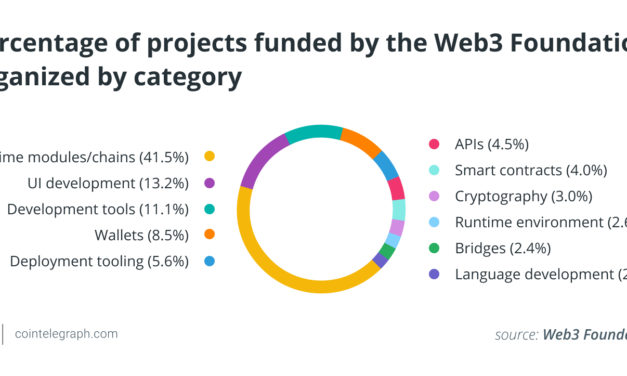
Known as Web2, the current iteration of the internet emphasizes creating and distributing user-generated content. Websites like YouTube, social media apps like Instagram and Twitter, news sites, personal blogs and more make up a large part of the internet.Web2 is a step up from Web1, which was mainly a read-only web version filled with simple static websites. Web3 aims to bring decentralization and token-based economies to the internet. Web2 versus Web3The development of several different web protocols at the beginning of the twenty-first century made it possible for programs and content to be linked via read-and-write interactions. Web2, in its present form, enables users to consume material created by other users and create their own content. Readers are probably best acquainted Web2. As a result of Web2’s autonomy in content production, the age of social networks was ushered in, and with it came the proliferation of blogs, online forums and online markets.However, rent-seeking centralized corporations have taken advantage of this free flow of information to monetize user data and habits, despite the undeniable fact that Web2 has offered users significant advantages. The demand for a web that developers and users control has increased, primarily due to a breakdown of trust, user exploitation and data control.The goal of Web3 is to encourage open services driven by decentralized applications (DApps) rather than centralized apps controlled by tech behemoths. Users of Web3 can connect to applications and protocols directly, removing the need for third-party intermediaries in the process. Web3 has been described as the “read/write/own” version of the internet. Open services built on Web3 encourage permissionless entrance, maximize value and ensure verifiability. These services are much more dependable, equitable and ethical.Users are not required to pay recurring fees or provide personal information to use technological platforms; instead, they are invited to participate in the governance and operation of the protocols. Participants are stakeholders in the network, rather than just consumers or goods abused to satisfy economic demands.Tokens or coins are used in this setting to symbolize accessibility, governance and ownership of decentralized networks. In Web2, the user plays the role of the product; in Web3, they take on the role of the owner.Úrsula O’Kuinghttons, director of communications and partnerships at the Web3 Foundation, an organization that supports blockchain and Web3, told Cointelegraph: “There are two primary considerations when we think of ownership in Web3. The first concerns how organizations are managed. The existing, flawed status quo puts ownership in the hands of the various powerful individuals fronting up organizations, institutions, and corporate entities.”O’Kuinghttons continued, “A properly decentralized web ensures ownership of these monolithic structures is stripped of such hierarchy. It means networks and communities have much more power in governance and decision-making. It also means rewards are shared more fairly. The engineers are building Web3 to embrace the power of a peer-to-peer network to create lasting and effective solutions with blockchain.”Recent: How GameFi contributes to the growth of crypto and NFTs”The other key issue surrounds sovereign ownership of data. Web3 seeks to safeguard the legitimate claims of individuals to have full control of their data and put privacy at the forefront of their online lives. This goal can be reached through zero-knowledge proof protocols, encryption, and private keys.”How Web3 will bring ownership to usersWeb3 will bring ownership to users in many ways, one of them being the ability to host websites that cannot be censored or taken down. The current web hosting system relies mainly on servers controlled by centralized organizations. These organizations can take websites down if they feel they have a good enough reason to do so.Decentralized file storage networks allow people to build censorship-free websites using the InterPlanetary File System (IPFS) protocol. Instead of using a central server, with IPFS, every individual acts as a server by caching a piece of data from the site. Once another user visits that site, the data is loaded from one of the cached users. So, for example, if a million users visit a site to view a photo, the photo file can be loaded from any of those million hosts when the next person visits the site.This process removes the need for a centralized entity, as the burden of serving the website is distributed between the users who have accessed it. This is possible because data files have a unique cryptographic hash as an address instead of a user-generated name like red-car.png. Once the file is requested, the unique hash is sought and recovered from the cache.Organizations like the Web3 Foundation are providing support for the development of technologies and applications in the field of decentralized web software protocols. They provide grants to teams across the world who are helping to build out the Web3 ecosystem. The foundation currently supports 415 projects in the Polkadot ecosystem with its grant program. In addition, over 1,000 grant applications have been submitted. Decentralized autonomous organizations (DAOs) also play a big part in Web3 infrastructure. The next wave of user adoption in Web3 ownership and accessibility will be driven by community-owned and governed DAOs, with nonfungible tokens (NFTs) helping to drive this adoption.DAOs are self-governing groups whose decisions are carried out using smart contracts on the blockchain. DAOs eliminate the need for a governing body or single point of authority by bringing together individuals with common interests and talents. Furthermore, because of the blockchain’s distributed structure, all decisions and transactions can be viewed and confirmed by everyone.DAOs may be used to facilitate collective ownership in the context of NFTs. Members make decisions by voting at regular intervals, and access to built-in treasuries needs member approval. The escalating cost of NFTs has unintentionally put many collections out of reach for individual customers. DAOs can enable users to share the cost and ownership of individual NFTs to level the playing field and foster the decentralized ethos of accessibility and inclusion.DAOs provide a governance structure for Web3 that enhances involvement while reducing the chance of corruption or censorship. They may be found in several situations ranging from social media to play-to-earn games. The popularity of DAOs will spread to decentralized finance (DeFi), NFT collection and philanthropic organizations as DAOs gain traction. Furthermore, unlike hierarchical organizations, DAOs allow immediate decision-making once all members agree.Nonprofits could greatly benefit from the DAO concept. Administrative expenditures and resource distribution hesitation are unlikely to offset the benefit of a charity’s outstanding work. Moreover, using DAOs enables the effective and timely distribution of funds to their intended beneficiaries. Consequently, NGOs may have a stronger influence on their end purposes.Recent: Why quantum computing isn’t a threat to crypto… yetDAOs may also be utilized as a direct avenue for investment and quick DeFi adoption. DAO-conducted peer-to-peer crypto transactions are inexpensive, practically instant and unregulated by bank laws. As a result, members who take out loans or engage in other activities may earn better returns than they would have received at a traditional bank. This industry’s tremendous development seems to have no end.Using NFTs and DAOs to buy and store these digital assets expands the creator economy, which is especially significant, given the present generation’s obsession with social media and content creation. Because the value of a creator’s work is inextricably related to their reputation, following and establishment, the creators gain. DAOs, like many large organizations and businesses, will most certainly enable user access to Web3 in the future.

Čítaj viac

Získaj BONUS 8 € v Bitcoinoch

nakup bitcoin z karty

Registrácia Binance

Burza Binance

Aktuálne kurzy