Autor Cointelegraph By Andrew Singer

Skewed data: How could a new US law boost blockchain analysis?

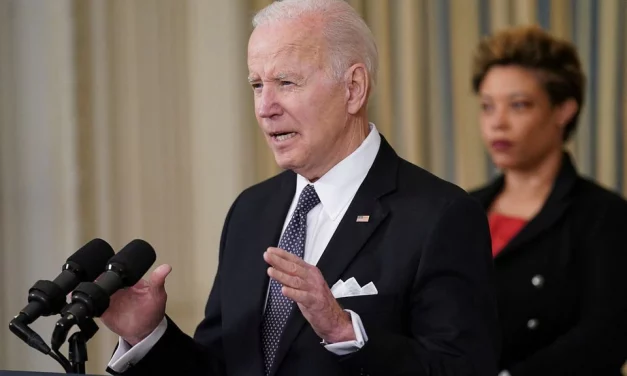
2020 was a record year for ransomware payments ($692 million), and 2021 will probably be higher when all the data is in, Chainalysis recently reported. Moreover, with the outbreak of the Ukraine-Russia war, ransomware’s use as a geopolitical tool — not just a money grab — is expected to grow as well.But, a new U.S. law could stem this rising extortionist tide. United States President Joe Biden recently signed into law the Strengthening American Cybersecurity Act, or the Peters bill, requiring infrastructure firms to report to the government substantial cyber-attacks within 72 hours and within 24 hours if they make a ransomware payment.Why is this important? Blockchain analysis has proven increasingly effective in disrupting ransomware networks, as seen in the Colonial Pipeline case last year, where the Department of Justice was able to recover $2.3 million of the total that a pipeline company paid to a ransomware ring. But, to maintain this positive trend, more data is needed and it has to be provided in a more timely manner, particularly malefactors’ crypto addresses, as almost all ransomware attacks involve blockchain-based cryptocurrencies, usually Bitcoin (BTC).This is where the new law should help because, until now, ransomware victims rarely report the extortion to government authorities or others. U.S. President Joe Biden and Office of Management and Budget Director Shalanda Young at the White House, March 28, 2022. Source: Reuters/Kevin Lamarque“It will be very helpful,” Roman Bieda, head of fraud investigations at Coinfirm, told Cointelegraph. “The ability to immediately ‘flag’ specific coins, addresses or transactions as ‘risky’ […] enables all users to spot the risk even before any laundering attempt.”“It absolutely will aid in analysis by blockchain forensic researchers,” Allan Liska, a senior intelligence analyst at Recorded Future, told Cointelegraph. “While ransomware groups often switch out wallets for each ransomware attack, that money eventually flows back to a single wallet. Blockchain researchers have gotten very good at connecting those dots.” They have been able to do this despite mixing and other tactics used by ransomware rings and their confederate money launderers, he added. Siddhartha Dalal, professor of professional practice at Columbia University, agreed. Last year, Dalal co-authored a paper titled “Identifying Ransomware Actors In The Bitcoin Network” that described how he and his fellow researchers were able to use graph machine learning algorithms and blockchain analysis to identify ransomware attackers with “85% prediction accuracy on the test data set.” While their results were encouraging, the authors stated that they could achieve even better accuracy by improving their algorithms further and, critically, “getting more data which is more reliable.”The challenge for forensic modelers here is that they are working with highly imbalanced, or skewed, data. The Columbia University researchers were able to draw upon 400 million Bitcoin transactions and close to 40 million Bitcoin addresses, but only 143 of these were confirmed ransomware addresses. In other words, the non-fraud transactions far outweighed the fraudulent transactions. With data as skewed as this, the model will either mark a lot of false positives or will omit the fraudulent data as a minor percentage.Coinfirm’s Bieda provided an example of this problem in an interview last year:“Say you want to build a model that will pull out photos of dogs from a trove of cat photos, but you have a training dataset with 1,000 cat photos and only one dog photo. A machine learning model ‘would learn that it is okay to treat all photos as cat photos as the error margin is [only] 0.001.’”Put otherwise, the algorithm would “just guess ‘cat’ all the time, which would render the model useless, of course, even as it scored high in overall accuracy.”Dalal was asked if this new U.S. legislation would help expand the public dataset of “fraudulent” Bitcoin and crypto addresses needed for a more effective blockchain analysis of ransomware networks. “There is no question about it,” Dalal told Cointelegraph. “Of course, more data is always good for any analysis.” But even more importantly, by law, ransomware payments will now be revealed within a 24-hour period, which allows for “a better chance for recovery and also possibilities of identifying servers and methods of attack so that other potential victims can take defensive steps to protect them,” he added. That’s because most perpetrators use that same malware to attack other victims. An underutilized forensic toolIt’s generally not known that law enforcement benefits when criminals use cryptocurrencies to fund their activities. “You can use blockchain analysis to uncover their entire supply chain of operation,” said Kimberly Grauer, director of research at Chainalysis. “You can see where they’re buying their bulletproof hosting, where they buy their malware, their affiliate based in Canada” and so on. “You can get a lot of insights to these groups” through blockchain analysis, she added at a recent Chainalysis Media Roundtable in New York City. But, will this law, which will still take months to implement, really help? “It’s a positive, it would help,” Salman Banaei, co-head of public policy at Chainalysis, answered at the same event. “We advocated for it, but it’s not like we were flying blind before.” Would it make their forensic efforts significantly more effective? “I don’t know if it would make us a lot more effective, but we would expect some improvement in terms of data coverage.”There are still details to be worked out in the rule-making process before the law is implemented, but one obvious question has already been raised: Which companies will need to comply? “It is important to remember that the bill only applies to ‘entities that own or operate critical infrastructure,’” Liska told Cointelegraph. While that could include tens of thousands of organizations across 16 sectors, “this requirement still only applies to a small fraction of organizations in the United States.”But, maybe not. According to Bipul Sinha, CEO and co-founder of Rubrik, a data security company, those infrastructure sectors cited in the law include financial services, IT, energy, healthcare, transportation, manufacturing and commercial facilities. “In other words, just about everyone,” he wrote in a Fortune article recently.Another question: Must every attack be reported, even those deemed relatively trivial? The Cybersecurity and Infrastructure Security Agency, where the companies will be reporting, recently commented that even small acts might be deemed reportable. “Because of the looming risk of Russian cyberattacks […] any incident could provide important bread crumbs leading to a sophisticated attacker,” the New York Times reported. Is it right to assume that the war makes the need to take preventive actions more urgent? President Joe Biden, among others, has raised the likelihood of retaliatory cyber-attacks from the Russian government, after all. But, Liska doesn’t think this concern has panned out — not yet, at least:“The retaliatory ransomware attacks after the Russian invasion of Ukraine do not seem to have materialized. Like much of the war, there was poor coordination on the part of Russia, so any ransomware groups that might have been mobilized were not.”Still, almost three-quarters of all money made through ransomware attacks went to hackers linked to Russia in 2021, according to Chainalysis, so a step up in activity from there can’t be ruled out. Not a stand-alone solutionMachine-learning algorithms that identify and track ransomware actors seeking blockchain payment — and almost all ransomware is blockchain enabled — will doubtlessly improve now, said Bieda. But, machine learning solutions are only “one of the factors supporting blockchain analysis and not a standalone solution.” There is still a critical need “for broad cooperation in the industry between law enforcement, blockchain investigation companies, virtual asset service providers and, of course, victims of fraud in the blockchain.”Dalal added that many technical challenges remain, mostly the result of the unique nature of pseudo-anonymity, explaining to Cointelegraph: “Most public blockchains are permissionless and users can create as many addresses as they want. The transactions become even more complex since there are tumblers and other mixing services which are able to mix tainted money with many others. This increases the combinatorial complexity of identifying perpetrators hiding behind multiple addresses.”More progress?Nonetheless, things seem to be moving in the right direction. “I think we are making significant progress as an industry,” added Liska, “and we have done so relatively fast.” A number of companies have been doing very innovative work in this area, “and the Department of Treasury and other government agencies are also starting to see the value in blockchain analysis.”On the other hand, while blockchain analysis is clearly making strides, “there is so much money being made from ransomware and cryptocurrency theft right now that even the impact this work is having pales compared to the overall problem,” added Liska.While Bieda sees progress, it will still be a challenge to get firms to report blockchain fraud, especially outside of the United States. “For the past two years, more than 11,000 victims of fraud in blockchain reached Coinfirm through our Reclaim Crypto website,” he said. “One of the questions we ask is, ‘Have you reported the theft to law enforcement?’ — and many victims hadn’t.”Dalal said the government mandate is an important step in the right direction. “This surely will be a game changer,” he told Cointelegraph, as attackers will not be able to repeat the use of their favored techniques, “and they will have to move much faster to attack multiple targets. It will also reduce the stigma attached to the attacks and potential victims will be able to protect themselves better.” 

Čítaj viac
US e-cash: Bill proposes digital currency that replicates cash, bypasses the Fed

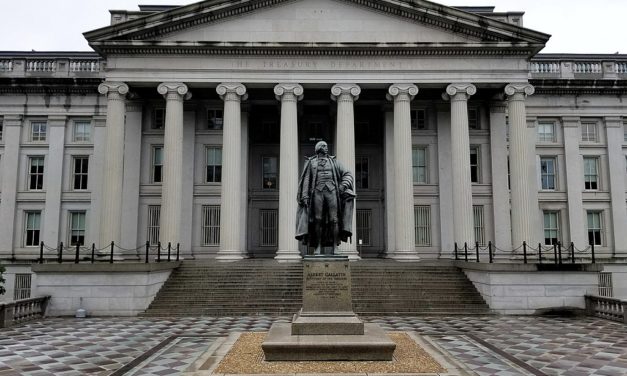
The Electronic Currency and Secure Hardware Act (ECASH Act), introduced today in the United States House of Representatives, could herald a new direction in government-sponsored digital currencies.The legislation calls for the U.S. Secretary of the Treasury to develop and pilot an electronic version of the U.S. dollar that is easy to use for the economically marginalized or technically challenged. It would also “maximize” consumer protection and data privacy, according to its principal sponsor Representative Stephen Lynch, chair of the Fintech Task Force in the House Financial Services Committee.Interestingly, e-cash, as it’s called, would be issued by the U.S. Treasury Department, not the Federal Reserve Board, which means it would technically not be a central bank digital currency (CBDC) nor would it be built on a blockchain or require the internet to operate. It is designed to “replicate the privacy-respecting features of physical cash,” such as coins and notes to the greatest extent possible.The initiative isn’t meant to necessarily preclude a Fed-issued CBDC, however. The pilot program launched by the ECASH Act will “complement, and advance ongoing efforts undertaken by the Federal Reserve and President Biden to examine potential design and deployment options for a digital dollar,” said Lynch, a democratic representative from Massachusetts, in a statement. Representatives Chuy Garcia, Ayanna Pressley and Rashida Tlaib are co-sponsors of the bill. The bill envisions the launch of a two-phase e-cash pilot program within 90 days of enactment — with the deployment of e-cash to the American public expected no later than 48 months after enactment. The legislation is being proposed and supported by a coalition of progressives, consumer advocates, civil libertarians and even some crypto “true believers,” Rohan Grey, assistant professor at Willamette University College of Law, told Cointelegraph. Most Republicans will probably oppose it, “but I hope to be pleasantly surprised,” he added. What is striking is that the proposal doesn’t involve a central bank or digital ledger technology (DLT), which could presage a new path in state-sponsored digital money development. It arguably offers more privacy and anonymity than any other government-sponsored digital currency project to date, calling for an “electronic dollar” to be used by the general public that is capable of: “Instantaneous, final, direct, peer-to-peer, offline transactions using secured hardware devices that do not involve or require subsequent or final settlement on or via a common or distributed ledger, or any other additional approval or validation.”There is presently no other similar CBDC proposal in the world like this, said Grey, who worked with Congressman Lynch’s office in developing the bill. The current CBDC debate on digital money often pits currencies with a centralized digital ledger, like China’s digital yuan, against digital currency issued on a distributed (decentralized) ledger, or blockchain. What is proposed in nearly all instances, however, is the use of a ledger. That is, “transactions get recorded on a common balance sheet somewhere,” said Grey, adding:“The whole digital currency debate so far has taken place in the realm of account-based money.” But, with e-cash, there would be no ledger, just as no ledger is used for physical cash transactions. This should appeal to privacy advocates and civil libertarians who want to preserve anonymous monetary transactions. Digital ledger technology, even when decentralized, does not allow for complete anonymity. “If you don’t have a ledger, there’s no one who can censor transactions and no one you have to ask permission for,” explained Grey. U.S. Treasury building. Source: Sealy j.How would it work? E-cash could be exchanged by two individuals tapping their phones together. It might be sent over distances like secured text messages, though this would require phone service, unlike face-to-face. It is intended to be easily used in a retail setting. Grey envisions a future mobile phone app with three accounts or options: one for the owner’s bank account, the second for a credit card account and a third e-cash account. But, dispensing with all intermediaries like credit card companies, banks or the government also introduces some risks. Grey added: “You’re holding the money on your device. If you lose your device, you lose the money — that’s the risk. Just like you lose your physical wallet on the train, you lose all the money inside the wallet.”In recent years, the U.S. has been under some growing pressure to develop a central bank digital currency, particularly as China moves closer to a full roll-out of its digital yuan. Lynch referenced the challenges in today’s statement: “As digital payment and currency technologies continue to rapidly expand and with Russia, China, and over 90 countries worldwide already researching and launching some form of Central Bank Digital Currency, it is absolutely critical for the U.S. to remain a world leader in the development and regulation of digital currency and other digital assets.” As noted above, a Federal Reserve-issued digital dollar could still follow. “There’s nothing precluding the Fed from issuing a CBDC as well,” Grey told Cointelegraph. “In fact, that would be expected since the different designs serve different functions, like cash and checking accounts today.”E-cash will be subject to U.S. regulations, too. It would be “classified and regulated in a manner similar to physical currency and would therefore be subject to existing anti-money laundering, counterterrorism, Know Your Customer, and financial transaction reporting requirements and regulations,” according to the sponsors. Still, why would e-cash be issued through the Treasury Department and not the Federal Reserve? “If you were to say you wanted to create something digital that works like physical currency: It’s a token, it’s a bearer instrument, there are no accounts, no intermediaries or it’s going to be retail focused, who should issue that?” asked Grey. Treasury is the obvious candidate in his view.After all, the Treasury already houses the United State Mint, the nation’s oldest monetary institution, as well as the Bureau of Engraving and Printing. The Treasury now participates in activities that are similar to electronic cash, like providing prepaid debit cards. In addition, the institution is more capable than the Fed at balancing competing political interests, he added. “The Federal Reserve consists mostly of macro-economically trained academics and bankers,” said Grey. They’re not civil liberty experts or foreign affairs specialists. The Treasury, by contrast, encompasses agencies like the Office of Foreign Assets Control, which enforces foreign economic sanctions. Treasury has a wider scope and a broader skill set, in his view. Moreover, U.S. central bankers have been saying for some time that critical decisions regarding digital currencies need to be made by elected lawmakers, Grey added. “So, now we are taking them at their word.” 

Čítaj viac

EU vote on Bitcoin mining: What does it mean for the industry?

Proof-of-work (PoW) crypto mining won’t be banned in the European Union — not this year at least. That’s the conclusion from last week’s closely watched committee vote in the European Parliament (EP). A last-minute amendment presented by an ad hoc coalition of social democrats and Greens would have established a de facto ban on proof-of-work mining — the type of consensus mechanisms used by native cryptocurrencies like Bitcoin (BTC) and Ether (ETH) — has been decisively rejected. The crypto community can breathe easily, but some still worry that the industry’s problem with its energy-intensive consensus protocols remains. “My first reaction to the Economic and Monetary Affairs committee vote outcome was a sigh of relief,” Joshua Ellul, director at the Centre for Distributed Ledger Technologies and senior lecturer at the University of Malta, told Cointelegraph, adding:“It is definitely a sign that crypto and distributed ledger technology is no longer a niche bringing together technologists, investors, hobbyists and idealists — it is a technology that is here to stay.”But, Ellul also believes that the community should not rest easy with last week’s win. Miners who support PoW blockchain projects should be “investigating renewable energy sources,” not only in anticipation of other possible regulatory actions but also to minimize their carbon footprint. The committee vote was part of the European Union’s ongoing Markets in Cryptocurrency Assets (MiCA) process designed to bring harmonization, clarity and regulation to Europe’s cryptocurrency markets. “In all likelihood, the de-facto PoW-ban amendment would not have found its way into the final MiCA agreement,” Patrick Hansen, head of strategy at crypto firm Unstoppable Finance, told Cointelegraph. But, that doesn’t mean that energy profligacy and carbon footprint are dead issues. Hansen added:“The macro-environment — Ukraine, inflation, etc. — is changing rapidly, and energy consumption reduction might soon become an absolute policy priority.”A wake-up call?“This is good news for the crypto sector,” Yu Xiong, professor of business analytics and director of the Center for Innovation and Commercialization at the University of Surrey, told Cointelegraph, regarding the EP committee vote. It is another sign that cryptocurrencies and blockchain technology are being widely accepted by the public, but also “definitely provided a warning to those mining activities that use PoW. Prepare for transformation because nobody can predict if there will be another such vote in future.”Ethereum will “hopefully” successfully transition to a more eco-friendly proof-of-stake (PoS) consensus mechanism later this year, he added. Otherwise, the vote provides time for other projects that use PoW to undertake their own transformation to reduce energy consumption and their carbon footprint.Like some others active in the crypto space, Xiong believes that enlightened regulation — of the sort MiCA presumably offers — will be an overall plus for the crypto industry. Or, as European People’s Party spokesperson Markus Ferber put it recently: “The markets for crypto assets have been like the Wild West for too long and need a European sheriff […] The new rules for crypto currencies will fill the existing regulatory vacuum by putting in place a clear framework to protect investors and ensure market integrity.” All said, the 32 to 24 vote to reject the amendment was preceded by a certain amount of trepidation in the crypto community. “The MiCA situation is worse for crypto than anything in the USA,” noted Blockchain Association policy chief Jake Chervinsky, who said the amendment looked “like a pretext for a Bitcoin ban.” Meanwhile, Jean-Marie Mognetti, CEO of CoinShares, described the bid to ban PoW protocols as “more than just bad news” but rather “a thoughtless, uninspired proposal that does not reflect the realities and the future of the industry.”Soon to be part of Europe’s sustainable “taxonomy”Separate from the amendment tussle, the ECON committee also asked the European Commission to include cryptocurrency mining activities in its EU taxonomy — a classification system — for sustainable activities by January 1, 2025. The EU would then determine whether crypto mining could be classified as a “sustainable” activity. If deemed non-sustainable, European institutional investors and others might be inclined to give the crypto sector a wider berth. “The taxonomy has a huge influence over where companies, investors and states [can] invest their money and subsidies,” explained Hansen recently. And, as more environmental laws pass, the more that influence will grow. Meanwhile, he added that PoW crypto mining could very likely be listed as “unsustainable” under the taxonomy. But, this is still some time in the future and might be of limited scope. “I don’t think that the addition to the sustainability taxonomy from 2025 onwards will have a big impact on crypto adoption,” Hansen told Cointelegraph. “Depending on how it is defined, it might make investments in mining companies more difficult in the future, but we are still years away from that and mining is not an important economic activity in the EU anyway.”More importantly, Hansen added, it will affect only the mining companies and “not the entire crypto industry as for the alternative amendment that was voted against.”Xiong described crypto mining’s inclusion in the EU taxonomy as “reasonable.” It will put more pressure on miners to transition to more eco-friendly alternatives and he anticipates that fewer networks will use PoW consensus mechanisms come 2025. “Eventually, only PoS will be adopted by blockchain applications,” predicted Xiong.Ellul said that the 2025 deadline offers some breathing room. “I hope that it encourages more renewable energy sources.” One problem with the PoW-energy debate, he added, is that it is highly polarized: “One extreme is that ‘no matter what the cost, PoW should remain,’ while the other is that PoW is going to kill us all.”A less-heated middle position might be useful, he suggested.A climate crisis loomsWere any lessons learned in this latest regulatory skirmish? According to Xiong, one lesson is that crypto and blockchain developers must “only embrace environment-friendly crypto” because any carbon emissions-related activities in this sector “will be quickly picked up by watchers.”Indeed, Eero Heinäluoma, a European Parliament member and a backer of the anti-PoW amendment, said that “The carbon footprint of a single bitcoin transaction equals a transatlantic return flight from London to New York. This is 1.5 million times the energy used up by a VISA transaction. If we don’t curtail this massive carbon footprint by putting crypto-currencies on a more sustainable path, our efforts to combat the climate crisis and boost our energy independence risk being in vain.”However, not all in the crypto community are swayed by these sorts of comparisons. Mognetti noted: “At an annualized emissions rate of 41 million tons CO2, the global Bitcoin mining industry has a small environmental footprint relative to the aviation industry, marine transport sector, air conditioners, electric fans, data centers, and tumble dryers.”Source: TwitterEllul agreed that the energy issue can’t be viewed in isolation. “Most everything of utility in the modern world requires energy and many other activities are power-hungry, too.” One example: Ireland’s power operator estimates that by 2028, 30% of Ireland’s electricity will be consumed by the country’s data centers.Overall, the European Parliament committee vote “did not result in stifling technology this time, but indeed it raises questions about the future,” Ellul told Cointelegraph. Meanwhile, Hansen added that even if the committee vote had been lost, the mining ban would surely have been dropped from the MiCA bill later when the three key EU entities — Parliament, Council and Commission — reconcile their legislative texts in the EU’s unique “trilogue” process. Still, a defeat in the ECON committee would have looked bad, said Hansen: “The mere symbol of the EU Parliament calling for a PoW ban would have had a very detrimental effect on the market.”

Čítaj viac

Is the Ukraine war intensifying regulatory pressure on crypto firms?

Whose side are you on? The Ukraine-Russia war is forcing people to answer that question. For some in the crypto community, this can be uncomfortable because if an individual or project stands with the West against Russia, it also means it abides by sanctions. This can be tough to square with crypto/blockchain’s supposed decentralized system and its claims on being borderless, censorship-free and distributed. Take OpenSea, the NFT marketplace, which really isn’t a decentralized project but is often described as such. “OpenSea is a decentralized peer-to-peer marketplace for buying, selling and trading rare digital goods,” according to CoinMarketCap, for instance. But, when OpenSea recently banned Iranian users from using its NFT trading platform — explaining it was only abiding by United States sanctions law — it provoked outrage among some NFT collectors. Documentary photographer Khashayar Sharifaee tweeted: I saw #OpenSea and #Metamask blacklisting and shutting down users on the sanction list.(countries like Iran, Cuba, Syria and so on)This was not the decentralized system! This was not the deal!— Khashayar sharifaee (@sharifaee) March 3, 2022This raises questions: Is the public and governmental officials now more keenly focused on crypto-regulation, especially with the outbreak out of the Russia-Ukraine war? OpenSea incensed many in its community by banning Iranian users, but did it have a choice?Further, while large United States-based crypto-related companies like FTX, Coinbase, OpenSea and Consensys have to abide by U.S. sanctions and regulations, what about decentralized projects without any easily identifiable headquarters, leaders or national affiliation. Will or can they comply, too, or do they get a pass?Finally, there’s a longer-term question: Will we ever have a truly decentralized marketplace? Won’t the cryptoverse inevitably have to compromise at least somewhat with centralized institutions like sovereign governments?More regulatory attention“Governmental authorities have definitely taken more interest in crypto-regulation as of late,” Cory Klippsten, CEO of Swan.com, told Cointelegraph when asked about recent events, adding that serious regulatory discussions have been ongoing for many years now. “Still, the Russia-Ukraine War has pushed crypto into the spotlight, which is why we are seeing more public interest concerning these crypto-regulatory developments.” “Everyone is starting to rethink the importance of compliance and crypto for a number of reasons,” agreed Carlos Domingo, founder and CEO of Securitize, told Cointelegraph. “We are seeing live, right now, the importance and effectiveness of sanctions” in connection with the war. U.S. regulators are putting pressure on the biggest players in the crypto space to comply. “And now, also, somewhat decentralized crypto platforms,” said Markus Hammer, an attorney and principal at Hammer Execution consulting firm, told Cointelegraph. Maybe that’s why OpenSea came down hard on Iranian users last week, even though Iranian sanctions were reimposed in 2020.“As regulations appear to be imminent, companies like OpenSea are trying to protect themselves by ensuring they’re compliant with any potential regulations coming down the pipeline,” said Klippsten, adding, “that’s why you’re seeing them ban Iranians.” Cointelegraph sought comment from OpenSea for this story but received no response.Will one start to see more projects such as Binance or FTX that were vague about their geographic homes become clearer about where they are based? Will others declare, like OpenSea last week: “We’re a U.S.-based company” that must “comply with U.S. sanctions law?”We’re truly sorry to the artists & creators that are impacted, but OpenSea is subject to strict policies around sanctions law. We’re a US-based company and comply with US sanctions law, meaning we’re required to block people in places on the US sanctions lists from using OpenSea— OpenSea (@opensea) March 3, 2022

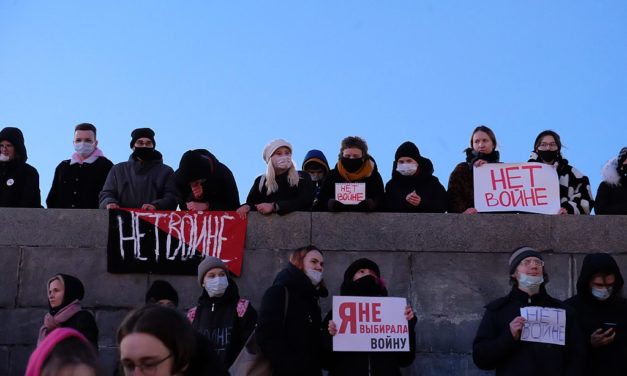
“I’m not sure that OpenSea tried to hide their location,” answered Domingo. “Most people knew that the CEO and other employees were based in New York.” He also added, for the record, “I don’t see OpenSea as a decentralized project at all. I think it is pretty centralized, similar to Coinbase, Binance and FTX.”Rather, what we are seeing now is that increasingly “regulators care about fraud and illegal activities committed against their citizens and businesses, and they are increasingly willing to pursue enforcement action anywhere in the world, such as in the case of BitMEX,” said Domingo.Still, many in the crypto community see betrayal in OpenSea’s actions — blockchain-based projects are supposed to be censorship-free, after all. Was it fair that an Iranian artist, who has nothing to do with his government’s action, is now denied a platform to sell his digital art?“OpenSea has to comply with U.S. sanctions rules and laws like any other centralized U.S.-based company,” said Klippsten. “By contrast, a decentralized project like Bitcoin has no leader and is truly permissionless. It’s impossible to ban users or comply with sanctions when no one can unilaterally control the project.”It doesn’t make things easier that there are different sorts of sanctions regimes. The sanctions imposed by the U.S. against Russia, for example, are targeted. That is, they don’t apply to most ordinary Russians but rather financial concerns and Russian elites — including oligarchs. The U.S. Iranian sanctions, by contrast, affect all users based in Iran.Russians in Yekaterinburg protest the invasion of Ukraine. Source: Vladislav PostnikovParties can also differ in their interpretations of the sanctions. Iranian artist Arefeh Norouzii, who was “deplatformed” by OpenSea, for example, while an Iranian citizen “is not even domiciled in Iran,” said Hammer. “In that case, I would argue the legal basis for OpenSea’s decision to deplatform Arefeh based on their terms is not in line with the relevant sanctions.” According to Domingo, “OpenSea would be committing a crime by processing transactions from people living in Iran, and it’s as simple as that,” adding:“I know it seems unfair that people in sanctioned countries are impacted in this way since they are not responsible for their governments’ actions, but this is what the U.S. government has decided is the best way to protect its citizens and interests.”Is it fair to say, given recent events, that some entities are not as decentralized as they claim? “Some infrastructure services are more centralized than they may seem at first glance,” Fabian Schär, professor in the business and economics department at the University of Basel, told Cointelegraph, although users have other options even if projects are not fully decentralized. “They can simply run their own full node and use alternative user interfaces.” According to Hammer, many of these “somewhat decentralized” platforms didn’t even think about financial market regulations until recently. “They thought themselves in the supposedly safe ‘decentralized’ space and never considered that over time they might get caught up in market regulation of the traditional financial world.” It’s catching up with them now, however, particularly crypto exchanges with fiat ramps, he added.Will DEXs comply?What about truly decentralized projects? Are they untouchable from a regulatory/compliance standpoint? Or, given that there are some very good compliance software to identify “bad actors” on decentralized digital ledgers now, isn’t it possible for DEXs and other decentralized projects to comply if they really want to?“The tools are there and they are getting stronger and more and more effective,” said Hammer. A prime example is how Chainalysis’ forensic tools were used recently to identify the malefactor behind the famous 2016 hack of The DAO, he added.“It’s very easy for companies to comply with regulations if they want to,” agreed Domingo. “There is no lack of tools or technology and, in fact, it seems that some ‘decentralized’ projects are already doing this.”Software solutions do exist, said Schär, “and any party that bridges between traditional finance and decentralized finance is required to be compliant with Anti-Money Laundering regulation and the sanction lists.” Because their entire business model depends on access to traditional payment systems, Schär doesn’t think they will put this access at risk. By contrast, “decentralized exchanges are just smart contracts providing neutral infrastructure,” continued Schär. “A smart contract cannot run these checks. However, we also have to be aware that these decentralized exchanges have no access to traditional finance. All you can do is swap tokens.” As a result, the risks raised by DEX’s are much smaller than those presented by centralized exchanges, he said. Of course, some entities will play regulatory arbitrage for as long as they can, said Domingo. But, this is a shortsighted strategy because “even though technology moves faster than regulation, eventually regulation catches up.”Overall, however, a big question remains: Will we ever have a truly decentralized marketplace? “There are some truly decentralized marketplaces,” said Schär. A non-upgradable constant function market maker is one example, he explained:“There are no special privileges, no external dependencies and no one in charge who could even make these decisions.”Such projects are basically up and running forever — they can’t be regulated directly. For that reason, “policymakers and regulators should focus on on- and off-ramps and use indirect regulation,” added Schär. While, according to Hammer, decentralization is achievable provided an organization follows two principles: It deploys open-source code and is governed by a decentralized autonomous organization, or DAO.But, perhaps there will always be some limitations on behavior even among decentralized entities, and projects will inevitably have to compromise with centralized institutions like sovereign governments. “Yes, that is how I see it,” said Domingo. “Finance will continue to become increasingly decentralized, but adoption will require safeguards to protect investors from scams and bad actors. We will eventually reach some sort of middle ground.”

Čítaj viac

Crypto offers Russia no way out from Western sanctions

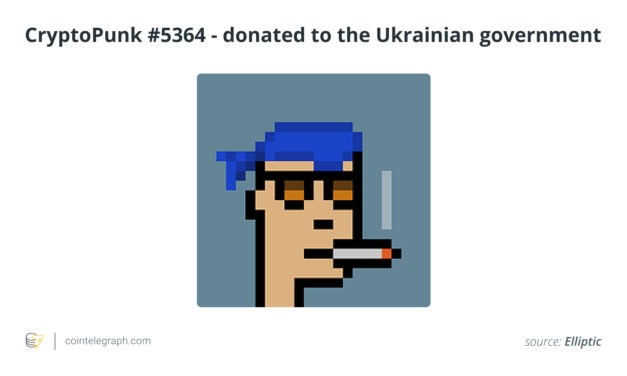
With the concerns of Janet Yellen and Hillary Clinton notwithstanding, there isn’t enough cryptocurrency in the world to bail out Russia from the economic hole which it now finds itself to be settling into. Even if there were a large enough supply, it probably wouldn’t enable the state to escape the scourge of a Western embargo.As David Carlisle, director of policy and regulatory affairs at Elliptic, told Cointelegraph: “It’s critical to keep in mind that even where nefarious actors attempt to use crypto, law enforcement can trace this activity owing to its transparency, and crypto businesses can use solutions such as blockchain analytics to comply with sanctions requirements.”Despite Clinton’s worries that the largest crypto exchanges aren’t doing enough to shut Russia’s possible escape hatch, it isn’t even clear that Russia’s political and business elite are actually even looking for a cryptocurrency solution. “Will Russia try to work around sanctions? Yes,” Matthew Le Merle, cofounder and managing partner of Blockchain Coinvestors, told Cointelegraph, but they won’t use crypto to do it. They’ll find other means through the already established (incumbent) global financial system — like the offshore entities and tax havens revealed in the 2016 Panama Papers.Digital currencies are simply not a good way for Russian oligarchs and sanctions-evading institutions to move money. “You’d be a fool to use Bitcoin if you were a bad actor,” added Le Merle. With the clustering technologies and analytics capacity that the U.S. government and other enforcement agencies have today, “They know how to come after you.”Recent events raised a slew of crypto-related questions — albeit overshadowed by the immense human tragedy unfolding in Europe, its most dire since the Bosnian War, if not WWII. Would the Russian government, along with its financial institutions, high officials and oligarchs, seek relief from Western sanctions relief in crypto and, if so, would it work?If Russia’s ruling elites were to find haven in decentralized digital currencies — another black eye for crypto’s already-challenged reputation in some quarters — could that still be offset by the fact that crypto funds were flowing into Ukraine from individual (non-government) supporters abroad? Donations have been around $55 million since the start of the conflict, according to Elliptic. In other words, was the real lesson to be drawn that crypto is just a tool to work for victims and victimizers alike while being politically “neutral?”Finally, what about the war’s billions of onlookers? What conclusions could be draw from the devastation and refugee flight of one million people already, according to the United Nations? Maybe something about the fragility of human society and institutions generally? And, if so, would they gravitate to decentralized digital currencies as part of an offshore wealth diversification strategy?Russia may try to raise the escape hatch, but…To be sure, it is no surprise that sanctioned Russians would reach for crypto under these circumstances. “It is highly likely sanctioned Russian individuals and entities will look to crypto as one avenue for skirting restrictions,” said Carlisle, a view shared by others including the U.S. Treasury. More surprising, however, is how ineffective this might prove. “I don’t believe that the Russian government can rely on cryptocurrencies to offset sanctions’ impact,” Max Dilendorf, partner at the Dilendorf Law Firm, told Cointelegraph. “The economic impact caused by sanctions could run into hundreds of billions of dollars.” There probably isn’t enough Bitcoin (BTC) or crypto in the world to mitigate economic damage of that magnitude, he said. Meanwhile, Carlisle added:“Crypto alone can’t sustain Russia’s needs now. Russia’s total annual imports are more than $200 billion and its banking sector’s total assets are $1.4 trillion. There is simply no way crypto can fill the gap Russia requires.”Michael Parker, counsel and head of the Anti-Money Laundering and sanctions practice at Ferrari & Associates, agreed that there basically isn’t enough crypto in the world to rescue Russia from its sanctions grip — though crypto could play some role at the margins by plugging holes. Moreover, the idea that Russia suddenly could move out of USD into crypto for international transactions is “far fetched” for other reasons too, Parker, a former enforcement section chief at the U.S. Office of Foreign Assets Control (OFAC), told Cointelegraph. There is the matter of anonymity — or lack thereof, for instance. Moving commodities on a large global scale is bound to be noticed, said Parker. Then, too, there is crypto’s volatility. Are commodities traders prepared to lose 10% within hours (potentially) in a commodities transaction because of crypto’s price gyrations? USD is the world’s de facto reserve currency for a reason — it is exceptionally stable. Meanwhile, OFAC has been homing in on individuals or entities for violating its sanctions rules in the past year, and “the minute the U.S. government learns which wallet belongs to the Russian government or its supporting groups, these blockchain wallets will be immediately added to OFAC’s SDN list,” added Dilendorf.Fact:Banks (most of them I hope) follow sanction rules.Crypto exchanges (at least Binance) follow sanction rules.Media:Crypto exchanges don’t sanction Russia normal people.Crypto exchanges don’t follow sanction rules.‍♂️— CZ Binance (@cz_binance) March 3, 2022Centralized crypto exchanges, too, now have the means to identify malefactors, given the rapid advances in analytics techniques and screening software. It’s more a question: “Do they have the will to go after them,” said Parker. If they do, “they now have the tools.”One exception may be decentralized exchanges (DEXs), however. According to Dilendorf: “The question is how well individual decentralized finance traders are equipped in spotting sanctioned wallets in peer-to-peer transactions” or completing necessary compliance checks. These decentralized protocols have allowed wallets based not just in Russia but also sanctioned countries like Iran and North Korea to trade on their platforms, said Dilendorf, adding: “U.S. regulators must work with the international community and private actors to increase AML/CFT controls of DeFi networks to ensure that nefarious actors are not using these platforms to evade regulations and sanctions.”What about Bitcoin mining? Russia is now the world’s third-largest BTC mining country — couldn’t it exploit that process to evade sanctions, as Iran has done to some degree? “Bitcoin mining could technically only help mini oligarchs and small businesses,” answered Dilendorf. “There’s not enough muscle there to offset sanctions.”Ordinary Russians have not been sanctionedIn the latest discussions, it’s sometimes overlooked that the sanctions levied by the U.S and its Western partners against Russia are not broadly based. They only target Russia’s ten largest financial institutions like Sberbank and some 90 other designated entities, as well as “Russian elites and their family members,” according to the U.S. Treasury. Significantly, they aren’t being applied to ordinary Russian citizens and most businesses, as Parker explains.Say a U.S. business has been using the services of a Russian software developer. The U.S. firm had been paying the developer through a series of bank transfers ending with Sberbank. Sberbank can no longer be used under the new sanctions regime, but the U.S. firm can still employ the Russian developer and pay that person in crypto. Parker further told Cointelegraph:“Using crypto to transact in place of designated Russian banks is not sanctions evasion — it’s sanctions compliance.” That is, crypto provides a legal alternative to keep doing business with Russian workers, as long as that individual is not on the list of designated businesses covered by U.S. sanctions or otherwise subject to U.S. sanctions. Not all sanctions regimes such as Iran or North Korea are so fine-grained as this one. “Russian citizens have not been sanctioned,” emphasized Parker.The power of a decentralized technologyOn the other side of the border, cryptocurrencies have already played a minor supporting role in the Ukrainian resistance story. The Ukrainian government and NGOs providing support to the military raised around $55 million through more than 102,000 crypto-asset donations, as of March 2. “This includes a $5.8 million donation by Polkadot founder Gavin Wood and a CryptoPunk NFT worth over $200,000.”“The ability of the Ukrainian government to crowdfund with crypto in a time of desperation demonstrates the power of this open decentralized technology,” Carlisle told Cointelegraph. Crypto use is likely to grow among the general populace in both nations, some believe. As Le Merle noted in a press release made available to Cointelegraph: “Russian and Ukrainian citizens need to find a reliable store of value right now and it appears that bitcoin is an option outside the oversight of their respective governments — the price has been going up this week in light of this.”But, the even bigger story may be the millions (potentially) of Ukrainians and Russians in flight, leaving their respective countries and, in some instances, carrying everything they own including their jewels and gold. Many can expect to lose these valuables on the road before they reach their destinations.“A guy with a gun will take it,” said Le Merle. That’s the history of fleeing refugees, whether from France in WWII or Syria in more recent times. “Ukrainians are already buying Bitcoin,” which is an answer to this problem. Le Merle continued, “but, you can’t use it in Ukraine now,” because it requires electricity and internet access and these are no longer a given.What they really needed to do was buy crypto and send their seed codes to extended families or trusted parties outside the country — safeguarding at least part of their wealth, Le Merle told Cointelegraph.This lesson won’t be lost on the four billion souls that Le Merle estimates live in jurisdictions that can’t trust their governments not to confiscate their wealth, whether directly or indirectly, by mismanaging and hyper-inflating their economies. “Don’t wait until the last minute to get your wealth offshore,” Le Merle said.

Čítaj viac

Získaj BONUS 8 € v Bitcoinoch

nakup bitcoin z karty

Registrácia Binance

Burza Binance

Aktuálne kurzy