Autor Cointelegraph By Andrew Levine

Inside the blockchain developers’ mind: Can EOS deliver a killer social DApp?

Cointelegraph is following the development of an entirely new blockchain from inception to mainnet and beyond through its series, Inside the Blockchain Developer’s Mind, written by Andrew Levine of Koinos Group.In my first article in this series, I explained why Ethereum and Steem haven’t been able to deliver a mainstream social decentralized application (DApp), despite taking two very different approaches and how this makes the solution seem. Therefore, why not combine the fee-less system developed for Steem with the flexibility of a blockchain with smart contracts like Ethereum? Then, we could give developers the best of both worlds, enabling them to create free-to-use applications with the freedom to add new features whenever they want.One could argue that this is exactly what Dan Larimer was trying to do when he left Steem and began work on EOS. Now, four years after the release of EOS, Larimer is planning to release “Fractally,” a new social application built on EOS. But, this begs the question: Why has no one been able to build a successful social media application on EOS? After all, it’s not like no one has tried.Remember Voice?Block.one, the company Larimer founded and led as the chief technology officer, invested $150 million into their own social application Voice, which they then released not on the EOS mainnet but on its own dedicated blockchain.This was odd because the entire purpose of a general-purpose blockchain is that it should be possible to launch any application on top of it. As I explained in my previous article, the whole problem with Steem was that it was its own separate blockchain and so it didn’t benefit from the kind of developer and user adoption that Ethereum did. It should come as no surprise then that Voice has simply failed to deliver. Related: Social applications are the next big trend in cryptoFractally: Larimer’s new big thingLarimer is now at it again with Fractally, which he says will “bring incentivized content creation to EOS.” The secret, he claims, is a “fractal governance” system, but this doesn’t explain why no one has been able to build a social application on EOS with mainstream adoption. In fact, even if Larimer can launch a great social application on EOS, what does it say about that platform that the only person able to build a great application is the literal inventor of that platform. So, what happened?Steem x Ethereum = EOSIn a way, what Larimer was trying to do with EOS was exactly what I had described at the end of the last article. Combining the best of Steem (now Hive) and the best of Ethereum. But, therein “lies the rub.” There are three things Larimer took from Steem that might seem small, but have incredible consequences that EOS is still grappling with to this day.On Ethereum, users have just addressed similar to Bitcoin addresses, which are a long string of numbers and letters that are free to create because they don’t take up any network storage. This is critical because anything that takes up network storage or uses some of the network’s computational resources has a real-world cost that must be paid by someone.Steem wanted to be a social blockchain and so, the theory went. They needed a centralized account that would be easy to remember which they would use to manage their frequent interactions. So, it made perfect sense for these accounts to have human-readable names that were easy to remember, but that also meant that they took up network storage. But, this centralized account also makes you a target. If you have a single private key that you regularly use to access an account and that account holds valuable tokens, then hackers are going to do their best to gain access to your computer so that they can steal your money and anything else of value you might have on there. Related: An inside look at the moral and technical considerations of crypto social mediaTo solve that problem, every account name also had multiple addresses associated with it each with different authority levels so that the user wasn’t always exposing the private key for the address holding all their tokens. All of this stuff is taking up valuable network storage which is why, despite having fee-less transactions, Steem had an account creation fee. Expensive storageLarimer obviously liked this design because he implemented a very similar system on EOS — account creation fee and all. To make matters worse, the EOS database is built on something called “memory-mapped files,” another vestige of the Steem design, an important consequence of which is that it is designed to use the most expensive form of storage possible: random-access memory (RAM). This means that EOS users don’t just need to buy accounts, but those accounts are going to be inherently expensive because what you’re really buying is the RAM needed to store that information. Fee-less BUTWhat this really highlights is that fee-lessness is clearly not a binary. EOS is fee-less, to a degree. It is fee-less, except for accounts. And, since smart contracts also consume network storage, well you’re going to have to buy some more RAM for those too. But, EOS is by no means the only blockchain that takes this approach to fees, in fact, when we left Steem and evaluated all the options, we couldn’t find a single blockchain that didn’t introduce fees at some point in the user experience. That is one of the major reasons why we decided to build an entirely new blockchain framework from scratch because all of these blockchains design fees into their very foundations. We needed to build an entirely new foundation around the idea of true fee-lessness, no exceptions.Related: Gas-free transactions will revolutionize Web3Fee-less manaThat solution was a system where simply holding a Koinos Network’s native token KOIN allows you to use the blockchain without introducing any friction at all. The system we outlined in our mana whitepaper does just that, and a prototype of that system is already running on the Koinos testnet.As we explain in the white paper, mana is a fee-less alternative to Ethereum’s gas. Just like gas on Ethereum, everything a user does consumes mana. Unlike gas, however, users don’t have to spend their crypto on gas every time they want to do anything — that’s a fee. Instead, every liquid token is “born” with mana inside of it that is consumed down when the user transacts, but which regenerates over time. Once any of the mana in a token is consumed, the token becomes locked until the mana regenerates. In this way, doing anything on the blockchain has an opportunity cost, but does not cost the user any actual tokens. In other words, it is truly fee-less. Free-to-use DAppsBut, doesn’t this mean that users still have to buy tokens in order to use the blockchain? Isn’t that basically a fee? This is why mana is designed to allow developers to pay the mana consumed by a given contract, or simply delegate their mana to their users. In this way, people can use mana-powered blockchains without ever having to acquire any tokens at all. It is this kind of frictionless user experience that we believe is critical to delivering social applications with the kind of user experiences that allow for viral adoption. Fee-less “except,” is simply not fee-less enough. I’m sure a lot of things have changed since the launch of EOS and will continue to change as that ecosystem matures. Every software product has its strengths and weaknesses. My goal isn’t to criticize EOS but to explain why the DApp landscape is the way it is and how the architectural evolution of blockchain technology (Ethereum to Steem/Graphene to EOS) resulted in the limitations that are preventing mainstream adoption. “Those who do not understand history are doomed to repeat it,” said Edmond Burke.This article does not contain investment advice or recommendations. Every investment and trading move involves risk and readers should conduct their own research when making a decision.The views, thoughts and opinions expressed here are the author’s alone and do not necessarily reflect or represent the views and opinions of Cointelegraph.Andrew Levine is the CEO of Koinos Group, a team of industry veterans accelerating decentralization through accessible blockchain technology. Their foundational product is Koinos, a fee-less and infinitely upgradeable blockchain with universal language support.

Čítaj viac
Inside the blockchain developers’ mind: How to build the next big social DApp

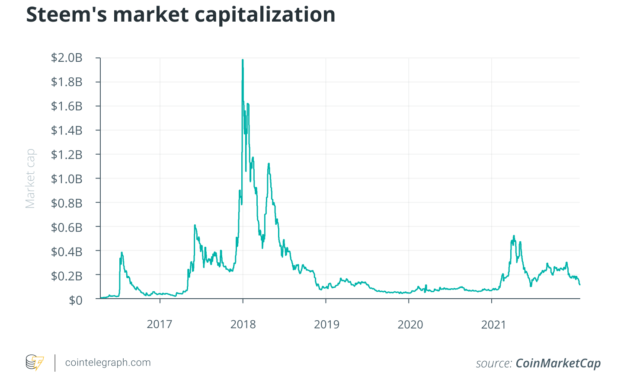
Cointelegraph is following the development of an entirely new blockchain from inception to mainnet and beyond through its series, Inside the Blockchain Developer’s Mind, written by Andrew Levine of Koinos Group.People use social applications daily, but despite all the hype around supposedly “next-gen” blockchains, none of those social applications are decentralized. Let’s unpack why, using two blockchains as a reference: Ethereum and Steem. Ethereum has far more developers than any other general purpose blockchain, and yet none of those developers have managed to build a social application with mainstream adoption. At one time, Steem was one the most widely used blockchains of any kind in the world, making it also one of the most used social DApps in the world, with a market capitalization that reflected this with an all-time high of about $2 billion. Steem was able to grow extremely fast and onboard hundreds of thousands of ordinary users, but never received the level of developer adoption that Ethereum did, and ultimately failed to live up to its potential. How and why this happened is a valuable lesson about building both DApps and blockchains.Related: The future of DeFi is spread across multiple blockchainsEthereum: A general purpose blockchainWhen Steem was being built, Ethereum was the only viable blockchain that a developer could use to build their DApp without forking and modifying the code of an existing blockchain like Bitcoin. Thanks to Ethereum, instead of having to build a blockchain from scratch just to support some specific application (like a social network), the developer could just write up the code needed for their application and upload it to the Ethereum blockchain as a “smart contract.” This would enable the developer to piggyback off of all the hard work already done by the Ethereum blockchain developers and focus on their application. Allowing developers to upload code to the blockchain created infinite possibilities, including the possibility to upload code that uses up all the network resources making it useless. Some limit had to be imposed on this “limitlessness.” To solve this problem, Vitalik Buterin invented “gas” — a decentralized system for charging a fee to execute code on a blockchain (Ethereum).Related: Ethereum fees are skyrocketing — But traders have alternativesBlockchain feesThe fee-based design of Ethereum was brilliant and set the direction of general purpose blockchain design for a decade with nearly every subsequent blockchain implementing some variant of gas. The genius of Ethereum is that it gave developers access to a limitless (“Turing complete”) programming language. The genius of gas is that it created a decentralized limitation on what developers could do with that language. It is this underlying conflict (limitless v. limited) that explains why there are still no mainstream social DApps on Ethereum.Fee-less blockchainsThe Steem developers took a fundamentally different approach than Ethereum. They built a very basic blockchain (a “framework”) named Graphene that they could easily transform into a specific social blockchain (an “application-specific” blockchain).In addition to social features, the Steem developers experimented with a system for regulating network usage that was fundamentally different from gas. In short, it was fee-less. When Steem first launched, a lot of people said it was a scam precisely because of its fee-less “bandwidth” system. They believed that since Bitcoin and Ethereum had fees, a blockchain without fees was bound to fail. Related: Which blockchain is the most decentralized? Experts answerWhile the bandwidth system Steem launched with was far from perfect, by offering social features and allowing users to transact for free, Steem quickly became one of the most valuable blockchains in the world, and by far the most used … but it ultimately never really competed with Ethereum. Smart contracts ruleThe reason Steem was never able to rival Ethereum, to many people’s surprise, had nothing to do with its fee-less model, which the core developers continued to refine over the years and which is still in operation to this day.[embedded content]Steem never rivaled Ethereum for the simple reason that Graphene (the blockchain framework it was built on) lacked smart contracts. Graphene made it easier to launch blockchains with specific features, but it was by no means “easy” and changing those features or adding new features was incredibly difficult, unlike Ethereum, which allows any developer to upload any code they want, whenever they want. From this perspective, the solution becomes obvious. If we could combine the fee-less system developed for Steem with the flexibility of a blockchain with smart contracts like Ethereum, we could give developers the best of both worlds enabling them to create free-to-use applications with the freedom to add new features whenever they want! Simple, right? Stay tuned for the next article in the series to find out more! This article does not contain investment advice or recommendations. Every investment and trading move involves risk, and readers should conduct their own research when making a decision.The views, thoughts and opinions expressed here are the author’s alone and do not necessarily reflect or represent the views and opinions of Cointelegraph.Andrew Levine is the CEO of Koinos Group, a team of industry veterans accelerating decentralization through accessible blockchain technology. Their foundational product is Koinos, a fee-less and infinitely upgradeable blockchain with universal language support.

Čítaj viac
Inside the blockchain developer’s mind: Proof-of-burn blockchain consensus

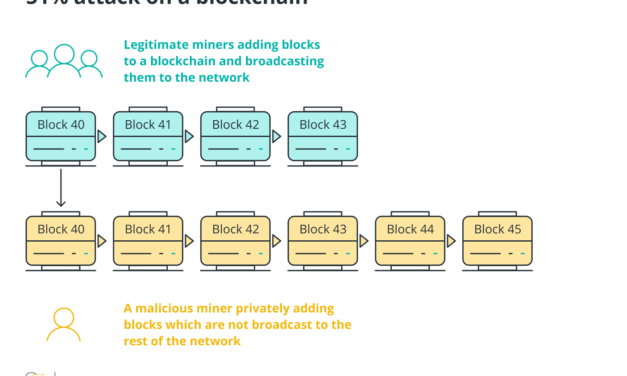
Cointelegraph is following the development of an entirely new blockchain from inception to mainnet and beyond through its series, Inside the Blockchain Developer’s Mind. In previous parts, Andrew Levine of Koinos Group discussed some of the challenges the team has faced since identifying the key issues they intend to solve, and outlined three of the “crises” that are holding back blockchain adoption: upgradeability, scalability and governance. This series is focused on the consensus algorithm: Part one is about proof-of-work, part two is about proof-of-stake and part three is about proof-of-burn. In the first article in the series, I explored proof-of-work (PoW) — the OG consensus algorithm — and explained how it works to bootstrap decentralization but also why it is inefficient. In the second article, I explored proof-of-stake (PoS) and how it is good for lowering the operating costs of a decentralized network relative to proof-of-work, but also why it further entrenches miners, requires complex and ethically questionable slashing conditions and fails to prevent “exchange attacks.”In this article, I will explain the third consensus algorithm that was proposed about a year after proof-of-stake but, for reasons that should become clear, has never actually been implemented as a consensus algorithm on a general purpose blockchain. At least, not until now.Proof-of-workAs I explained in the first article, from a game-theoretical perspective blockchains are a game in which players compete to validate transactions by grouping them into blocks that match the blocks of transactions being created by other players. Bitcoin (BTC) works by assigning more weight to blocks produced by people who have probably sacrificed more capital which they “prove” through “work.”Since these people have already spent their money to acquire hardware and run it to produce blocks, their punishment is easy because they’ve already been punished. Proof-of-stake, however, operates in a fundamentally different way that has important game-theoretical consequences.Proof-of-stakeInstead of forcing block producers to sacrifice capital to acquire and run hardware in order to gain the ability to earn block rewards, in proof-of-stake, the token holders need only sacrifice the liquidity of their capital in order to earn block rewards. The problem is it decreases network security because the attacker need only acquire 51% of the base currency of the platform and stake it to take control of the network.To thwart this attack, PoS systems that must implement complicated systems designed to “slash” block rewards from user accounts, which adds to the computational overhead of the network, raises legitimate ethical concerns and only work if the attacker fails to acquire 51% of the token supply. Implementing these slashing conditions is by no means trivial, which is why so many proof-of-stake projects like Solana have, by their own admission, launched with centralized solutions in place, and why so many other projects like Ethereum 2.0 (Eth2) are taking so long to implement PoS. The typical solution is to give a foundation a large enough stake so that it alone has the power to determine who is a malicious actor and slash their rewards.This is especially problematic in a world with centralized exchanges that feature custodial staking which means it can find itself in control of over 51% of a given token supply without having incurred any risk, making the cost of an attack deminimus. In fact, this has already happened in recent history on one of the most used blockchains in the world, at one time valued at nearly $2 billion: Steem.Related: Proof-of-stake vs. proof-of-work: Differences explainedHoly Grail consensusAs I said at the end of my last article, what we will be discussing in this article is the hypothetical question of whether there is a “best-of-both-worlds” solution that delivers the decentralization and security of proof-of-work with the efficiency of proof-of-stake. Today, we are excited to announce the release of our white paper on proof-of-burn. In that white paper, we argue that proof-of-burn is exactly that best of both worlds solution. Iain Stewart proposed proof-of-burn in 2012 — a year after proof-of-stake — as a thought experiment designed to contrast the differences between proof-of-work and proof-of-stake. We believe that he unwittingly discovered the “holy grail” of consensus algorithms that got lost in the sands of time due largely to historical accidents. As Iain Stewart noted: “I thought it would be interesting to invent a task that is absolutely, nakedly, unambiguously an example of the contrast between the two viewpoints. And yes, there is one: burning the currency!”The exchange attackAs the former core development team behind the Steem blockchain, we have intimate experience with exchange attacks. This is why mitigating this attack vector was of the utmost importance and inspired blockchain architect Steve Gerbino to explore alternative consensus algorithms in search of a solution that would still give us the performance and efficiency necessary for a high performance world computer, all while mitigating this important attack vector.Proof-of-burn as a consensus algorithm is remarkably simple and its unique value is easy to understand. Like proof-of-work, it requires that the cost of attacking the network be paid “upfront.” Like proof-of-stake, no actual hardware has to be purchased and run aside from the hardware required to produce blocks. Like proof-of-work, the exchange attack is thwarted because the block producer has already lost their money, as they are simply trying to get it back by maintaining a correct ledger.In order to mount a 51% attack, the malicious actor doesn’t just need to acquire 51% of the token supply, they need to provably dispose of it by acquiring virtual mining hardware. The only way to recoup that loss is by producing blocks on the chain that ultimately wins. It’s a remarkably simple and elegant solution to the problem. There is no need for slashing conditions because the block producer effectively slashed their own stake at the very beginning.Proof-of-burnIain Stewart proposed proof-of-burn for Bitcoin a year before a general purpose blockchain was even conceived of by Vitalik Buterin. Perhaps that is why it has taken this long for people to realize that these two things work together incredibly well. General purpose blockchains place a high premium on efficiency while allowing for token economic designs without max supply caps, a requirement for proof-of-burn implementations. Part of the problem might also have been that several innovative concepts like nonfungible tokens (NFTs) and market makers, and solutions such as upgradeable smart contracts are extremely beneficial to the implementation and only emerged after the proposal.NFT minersKeeping track of which accounts have burned what amounts and when they were burned can be a computationally demanding task and this increased load on the network could be one of the reasons why people have avoided this implementation.Fortunately, nonfungible tokens provide us with a powerful primitive which the system can use to efficiently keep track of all of this information for the purpose of distributing block rewards to valid block producers. The end result is an NFT that effectively functions as a virtual miner, but also one that is infinitely and precisely customizable.Blockchain developers can precisely regulate the accessibility of their platforms based on how they price their miner NFTs. Pricing the miners high would be like requiring the purchasing of ASICs (miner machines) in order to participate in block production. Pricing the miners low would be like allowing anyone to mine on commodity hardware. But, the best part is that no actual hardware is required either way.Since Koinos is all about accessibility, miner NFTs will likely have a low price, which is effectively like having the ultimate GPU and ASIC resistant algorithm possible. But, this begs the question: “What if you pick the wrong number?” This highlights the importance of modular upgradeability. On Koinos, all business logic is implemented as smart contract modules which are individually upgradeable without a hard fork. This means that if, for example, the price of KOIN were to explode to the degree that the fixed cost of miners was no longer sufficiently accessible, governance could simply vote to lower that cost and the number would be updated the moment there was a consensus.Centralization resistanceFixing the cost of miner NFTs is like building the most GPU- and ASIC-resistant algorithm possible because no one can gain an advantage by acquiring specialized hardware. Better yet, it makes the miner NFTs more uniform and therefore easier to sell (more fungible) on a decentralized exchange, meaning that block producers are taking on less risk because they can always liquidate their miners.The power of proof-of-burn ultimately stems from the fact that we are internalizing the mining hardware to the system. It is virtual hardware, which means that it is infinitely customizable by the system designers to maximize the performance of the network. One consequence of this is that the system can be designed to ensure that the miner will earn back their burn plus some additional tokens — a guarantee that cannot be made by proof-of-work systems.This customizability also allows us to mitigate 51% attacks by designing the system so that as the demand for miners increases, the payback period gets extended.Now, imagine that someone (like an exchange) wants to take over block production. First, they would need to burn more tokens than everyone else combined. Even then, they will have gotten nothing for it. They will need to begin producing blocks on the winning chain to begin to earn back their rewards. During that time, other network participants would be able to see what is happening and respond accordingly. If they feel that the actor is attempting to take control of governance, they can simply purchase more miners, pushing back the payback window for the malicious actor until they “get in line.”Token economicsProof-of-burn also has interesting economic properties that separate it from both PoW and PoS. For example, if you were to fix the rate of new token creation (aka “inflation”), then, at a certain point, if too many people were to participate in block production, then the token economy would turn deflationary because rewards would be getting pushed back faster than new tokens were being created. This could provide performance benefits to the network, if necessary.Many people producing blocks can negatively impact latency. This deflationary component would serve to dynamically disincentivize excessive block production, while also providing the ecosystem with an important economic lever, or deflation.It was my goal with this series to give the reader an insanely deep understanding of the topic of consensus algorithms in a way that was still accessible and, hopefully, interesting. We’ve covered the historical arc of the major consensus algorithms and what I think is the next evolution: proof-of-burn. I hope that you are now equipped to evaluate different consensus implementations for yourself and come to your own conclusions about what is innovating and what is not. The views, thoughts and opinions expressed here are the author’s alone and do not necessarily reflect or represent the views and opinions of Cointelegraph.Andrew Levine is the CEO of Koinos Group, a team of industry veterans accelerating decentralization through accessible blockchain technology. Their foundational product is Koinos, a fee-less and infinitely upgradeable blockchain with universal language support.

Čítaj viac

Inside the blockchain developer’s mind: Proof-of-stake blockchain consensus

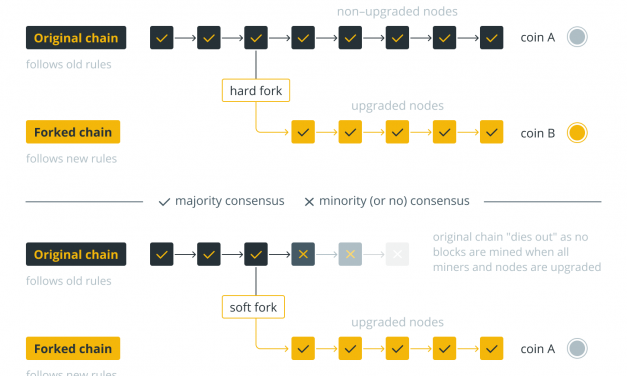
Cointelegraph is following the development of an entirely new blockchain from inception to mainnet and beyond through its series Inside the Blockchain Developer’s Mind. In previous parts, Andrew Levine of Koinos Group discussed some of the challenges the team has faced since identifying the key issues they intend to solve and outlined three of the “crises” that are holding back blockchain adoption: upgradeability, scalability and governance. This series is focused on the consensus algorithm: Part 1 is about proof-of-work, Part 2 is about proof-of-stake and Part 3 is about proof-of-burn. This article is the second in my series about consensus algorithms, in which I leverage my unique perspective to help the reader gain a deeper understanding of this often misunderstood concept. In the first article in the series, I explored proof-of-work (the OG consensus algorithm) and, in this article, I’ll be exploring proof-of-stake.As I explained in the last article, from a game theoretical perspective, blockchains are a game in which players compete to validate transactions by grouping them into blocks that match the blocks of transactions being created by other players. Cryptography is used to hide the data that would allow these people to cheat, and then a random process is used to distribute digital tokens to people who play by the rules and produce blocks that match the blocks submitted by other people. These blocks are then chained together to create a verifiable record of all the transactions that were ever performed on the network.When people produce new blocks with different transactions in them, we call this a “fork,” because the chain is now forking off into two different directions, and what ensures that everyone updates their database to match one another is how they are punished when they do not.The real innovation in Bitcoin (BTC) was the creation of an elegant system for combining cryptography with economics to leverage electronic coins (now called “cryptocurrencies”) to use incentives to solve problems that algorithms alone cannot solve. People were forced to perform meaningless work to mine blocks, but the security stems not from the performance of work, but the knowledge that this work could not have been achieved without the sacrifice of capital. Were this not the case, then there would be no economic component to the system. The work is a verifiable proxy for sacrificed capital. Because the network has no means of “understanding” money that is external to it, a system needed to be implemented that converted the external incentive (fiat currency) into something the network can understand — hashes. The more hashes an account creates, the more capital it must have sacrificed, and the more incentivized it is to produce blocks on the correct fork.Since these people have already spent their money to acquire hardware and run it to produce blocks, their incentivizing punishment is easy because they’ve already been punished! They spent their money, so if they want to continue producing blocks on the wrong chain, that’s fine. They won’t earn any rewards and they won’t make their money back. They will have sacrificed that money for nothing. Their blocks won’t get accepted by the network and they won’t earn any tokens.This proof-of-work system ensures that the only way someone who does not want to play by the rules (a.k.a. a malicious actor) is to acquire and run more hardware than everyone else combined (i.e., mounting a 51% attack). This is the elegance behind proof-of-work. The system can’t not work without sacrificing ever increasing amounts of capital. Proof-of-stake, however, operates in a fundamentally different way that has important game theoretical consequences.Related: Proof-of-stake vs. proof-of-work: Differences explainedProof-of-stakeProof-of-stake (PoS) was first proposed in 2011 by Bitcointalk forum member QuantumMechanic as a less costly (for the miner) alternative to proof-of-work:“I’m wondering if as bitcoins become more widely distributed, whether a transition from a proof of work based system to a proof of stake one might happen. What I mean by proof of stake is that instead of your ‘vote’ on the accepted transaction history being weighted by the share of computing resources you bring to the network, it’s weighted by the number of bitcoins you can prove you own, using your private keys.”Instead of forcing block producers to sacrifice capital to acquire and run hardware in order to gain the ability to earn block rewards, in proof-of-stake, the token holders need only sacrifice the liquidity of their capital in order to earn block rewards. People who already hold the token of a network are able to earn even more of that token if they give up the right to transfer those tokens for some period of time.This is an attractive offer to people who are used to sacrificing money to purchase and run hardware in order to earn block rewards. Proof-of-work is great for the bootstrapping of a cryptocurrency bu, once that phase is over, the holders of this valuable currency find themselves having to exchange the fruits of their labor — that valuable currency — for an external currency (frequently, the fiat currency they are ostensibly competing with) to purchase capital equipment and energy just to maintain their system.Related: Proof-of-stake vs. proof-of-work: Which one is ‘fairer’?Proof-of-stake is great for enabling these people to increase their profit margins while allowing them to maintain control of the network. The problem is that it decreases network security because the malicious actor no longer needs to sacrifice their money on a large amount of hardware and run it to mount an attack. The attacker need only acquire 51% of the base currency of the platform and stake it to take control of the network.To thwart this attack, PoS systems must implement additional systems to “slash” the block rewards of a validator who is found to have produced irreversible blocks on a “losing” chain (“slashing conditions”). The idea being that, if someone acquires 49% of the token supply and uses that stake to produce blocks on a losing fork, they will lose their staked tokens on the main chain.These are complicated systems designed to “claw back” block rewards from user accounts, which adds to the computational overhead of the network while raising legitimate ethical concerns (“Is it my money if it can be slashed?”). They also only work if the attacker fails to acquire 51% of the token supply. This is especially problematic in a world with centralized exchanges that feature custodial staking. This means it is entirely possible for an exchange to find itself in control of over 51% of a given token supply without having incurred any risk, making the cost of an attack de minimis. In fact, this has already happened in recent history on one of the most used blockchains in the world, at one time valued at nearly $2 billion: Steem.An excellent history of that event can be found here. The important details for our purposes, according to that account, are that the funds held by three exchanges were successfully used to acquire 51% control of a major blockchain. Taking the most charitable perspective of all participants, it simply “cost” all of these entities very little to take control of the chain because they had acquired large stakes at very low cost. In fact, centralized exchanges are literally paid to accumulate large stakes because their purpose is to function as centralized custodians of tokens.Related: How the Steem saga exposes the dangers of staking poolsImplementing these slashing conditions is by no means trivial, which is why so many proof-of-stake projects like Solana have, by their own admission, launched with centralized solutions in place and why so many other projects (like ETH 2.0) are taking so long to implement PoS. The typical solution is to give a foundation a large enough stake so that it alone has the power to determine who is a malicious actor and slash their rewards.To sum up, proof-of-work is good for bootstrapping decentralization, but it is inefficient. Proof-of-stake is good for lowering the operating costs of a decentralized network relative to proof-of-work, but it further entrenches miners, requires complex and ethically questionable slashing conditions, and fails to prevent “exchange attacks.”What I will discuss in my next article is the hypothetical question of whether there is a “best of both worlds” solution that delivers the decentralization and security of proof-of-work with the efficiency of proof-of-stake. So, stay tuned!The views, thoughts and opinions expressed here are the author’s alone and do not necessarily reflect or represent the views and opinions of Cointelegraph.Andrew Levine is the CEO of Koinos Group, a team of industry veterans accelerating decentralization through accessible blockchain technology. Their foundational product is Koinos, a fee-less and infinitely upgradeable blockchain with universal language support.

Čítaj viac
Inside the blockchain developer’s mind: Blockchain consensus, Part 1

Cointelegraph is following the development of an entirely new blockchain from inception to mainnet and beyond through its series, Inside the Blockchain Developer’s Mind. In previous parts, Andrew Levine of Koinos Group discussed some of the challenges the team has faced since identifying the key issues they intend to solve and outlined three of the “crises” that are holding back blockchain adoption: upgradeability, scalability, and governance. This series is focused on the consensus algorithm: part one is about proof-of-work, part two is about proof-of-stake and part three is about proof-of-burn. In this article, I want to leverage my unique perspective to help the reader gain a deeper understanding of a popular concept in blockchain technology, but also one that is woefully misunderstood: the consensus algorithm.In order to gain a deep understanding of this component of a blockchain, one of the things I always like to do in these articles is begun by taking a step back and looking at the big picture because the consensus algorithm is just one small part of a much larger system.Blockchains are a game in which players compete to validate transactions by grouping them into blocks that match the blocks of transactions being created by other players. Cryptography is used to hide the data that would allow these people to cheat. A random process is used to distribute digital tokens to people who play by the rules and produce blocks that match the blocks submitted by other people. These blocks are then chained together to create a verifiable record of all the transactions that were ever performed on the network.When people produce new blocks with different transactions in them, we call this a “fork” because the chain is now forking off into two different directions. This is the exact opposite of what we want to happen. The whole value of a blockchain stems from the fact that everyone agrees — has come to a consensus — on what transactions happened when. Consensus algorithms are therefore intended to resolve forks.Satoshi’s real innovationAt the end of the day, what ensures that everyone updates their database to match one another boils down to how they are punished when they do not. The protocols contain rules for the proper ordering of transactions, but if there is no repercussion for violating those rules, they will be ineffective. The real innovation that Satoshi Nakamoto delivered in the Bitcoin (BTC) white paper was his elegant use of economic incentives.Satoshi Nakamoto did not invent the idea of the “electronic coin.” He created an elegant system for combining cryptography with economics to leverage electronic coins, now called cryptocurrencies, to use incentives to solve problems that algorithms alone cannot solve. His design forced people to sacrifice money in order to mine blocks of transactions. People would have to sacrifice this money over and over and over by playing by the system’s rules and trying to organize transactions into blocks that would be accepted by everyone else in the network. If they did this long enough, they would receive a reward in the currency of the platform.Of course, there’s no way for the blockchain to know that money was spent in the form of USD, yen, or euro, which is why he used a proxy in the form of meaningless work. He made the mining of blocks unnecessarily hard so that anyone who successfully mined a block necessarily must have spent money on hardware and the energy to run that hardware. So every block successfully mined is backed by money that had been sacrificed not just on the hardware, but on the energy required to run that hardware and produce that block. Whenever there are forks, proof-of-work (PoW) consensus algorithms are an automated system whereby the fork backed by the most work is the “right” fork.Related: Proof-of-stake vs. proof-of-work: Differences explainedThis means that everyone who continues producing blocks on that fork will continue to earn rewards and that everyone who continues producing blocks on the other fork will not earn rewards. Since these people have already spent their money to acquire hardware and run it to produce blocks, the punishment is easy because they’ve already been punished monetarily. They spent their money so if they want to continue producing blocks on the wrong chain, that’s fine. They won’t earn any rewards and they won’t make their money back. They will have sacrificed that money for nothing. Their blocks won’t get accepted by the network and they won’t earn any tokens.This proof-of-work system ensures that the only way someone who does not want to play by the rules, a malicious actor, is to acquire and run more hardware than everyone else combined, such as by mounting a 51% attack. This is the elegance behind proof-of-work. The system cannot work without sacrificing ever-increasing amounts of capital. Satoshi combined cryptography and economics to create a ledger of transactions that is so trustworthy, it is trustless.There are, however, different consensus algorithms that operate in slightly different ways. The most well-known of which is proof-of-stake (PoS), which I’ll be discussing in the next article in this series. After that, I’ll be discussing the algorithm we’ll be using in Koinos which is a first-of-its-kind in a general purpose blockchain.The views, thoughts and opinions expressed here are the author’s alone and do not necessarily reflect or represent the views and opinions of Cointelegraph.Andrew Levine is the CEO of Koinos Group, where he and the former development team behind the Steem blockchain build blockchain-based solutions that empower people to take ownership and control over their digital selves. Their foundational product is Koinos, a high-performance blockchain built on an entirely new framework architected to give developers the features they need in order to deliver the user experiences necessary to spread blockchain adoption to the masses.

Čítaj viac

Získaj BONUS 8 € v Bitcoinoch

nakup bitcoin z karty

Registrácia Binance

Burza Binance

Aktuálne kurzy