

Autor Cointelegraph by Amin Haqshanas

Market conditions force 1 in 3 crypto traders to cut everyday spending: Survey

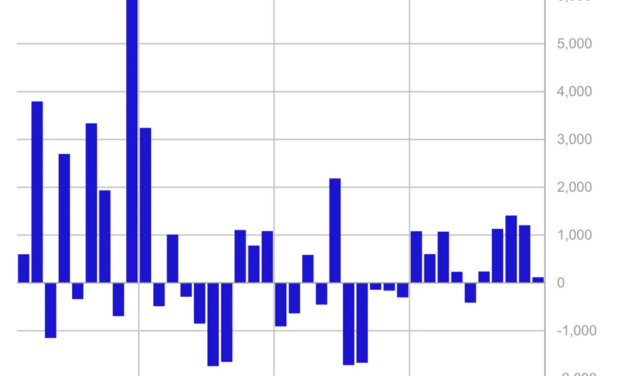
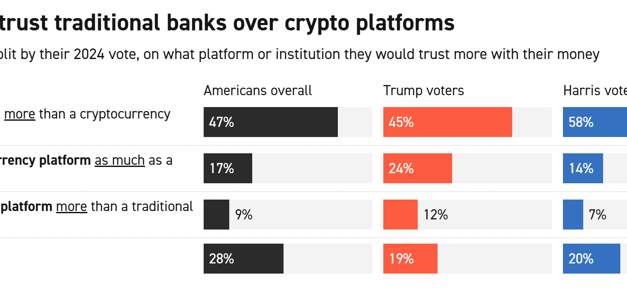
The recent crypto market downturn has forced more than one in three crypto traders to cut everyday spending, according to a new survey by CEX.IO.The survey, conducted among 1,100 US-based active CEX.IO users, shows the current market slump is straining household finances, though it remains less severe than 2022, when Bitcoin fell by roughly 75% from its peak. Bitcoin is still about 40% below its October 2025 high, leaving many retail investors sitting on unrealised losses.36% of respondents said they reduced everyday spending as a direct result of market conditions, with 10% describing those cuts as significant sacrifices made to maintain their positions. 37% also reported delaying or cancelling purchases due to crypto losses, including 21% who postponed major financial commitments such as buying a home, car or undertaking renovations.Source: CEX.IO“The 2025–2026 bear market has not produced the kind of systemic shock seen in past cycles (at least for now), but its effects appear to be showing up in quieter ways at the household level,” CEX.IO wrote.Related: Crypto Market Sentiment Reaches 3-Month HighCrypto traders navigate downturn aloneThe survey revealed that many traders are managing the downturn in relative isolation. Only 5% said someone else knows the full extent and value of their holdings, while the majority either share limited information or keep their positions entirely private.Financial strain is also evident in cash flow trends. While 77% said they did not take on debt tied to crypto, 38% reported some form of financial disruption since October 2025. A quarter said they relied on savings to maintain stability, and 12% admitted to missing or delaying payments.Source: CEX.IOEven so, most respondents have not changed plans dramatically. Nearly half reported that crypto makes up more than 30% of their investable assets, yet 73% said their approach to earning income remains unchanged.Looking ahead, a combined 79% said they plan to either hold or increase their positions over the next six months.Related: Bitcoin Price May Go Under $70K Despite Strategy’s Latest Big BTC BuyCrypto offerings shape bank choiceAnother survey by Börse Stuttgart Digital earlier this week found that cryptocurrency services are starting to influence how European investors choose their banks, with 35% saying they would consider switching institutions for better crypto offerings.The poll of around 6,000 investors across Germany, Italy, Spain and France also found that nearly one in five expects their primary bank to provide crypto access within three years, pointing to a gradual shift toward integrating digital assets into mainstream banking.Magazine: How to fix suspected insider trading on Polymarket and KalshiCointelegraph is committed to independent, transparent journalism. This news article is produced in accordance with Cointelegraph’s Editorial Policy and aims to provide accurate and timely information. Readers are encouraged to verify information independently.

Čítaj viac

Ethereum Foundation unstakes 17K ETH after nearing 70K staked ETH milestone

The Ethereum Foundation has moved to unwind part of its staking position shortly after nearing its stated goal of 70,000 staked ETH.On Saturday, the Ethereum Foundation unstaked 17,035.326 ETH, worth roughly $40 million, according to Arkham data. The move involved depositing wrapped staked ETH (wstETH) into Lido’s unstETH contract, with ETH expected to be returned once the withdrawal queue completes.In Ethereum, unstaking is the process of withdrawing ETH that was previously locked to help secure the network through validators. When ETH is staked, it’s deposited into the Ethereum Beacon Chain, where it remains locked while earning rewards. To unstake, a withdrawal request is initiated, and the funds enter a queue period after which the funds are released.Source: ArkhamSource: ArkhamThe Ethereum Foundation has not yet revealed why it unstaked 17,000 ETH, prompting some users to speculate it could be preparing to sell. “The biggest seller of ETH continues to be the people who created ETH,” one user wrote.Related: Another DeFi protocol hacked as Sui-based Volo hit by $3.5M exploitEthereum Foundation nears 70K staked ETH goalThe EF started staking ETH after updating its policy in June 2025. At the time, the foundation said that staking and decentralized finance participation would help fund protocol research, development and ecosystem grants.Since February, the foundation has steadily expanded its position, staking 2,016 ETH initially, followed by 22,517 ETH in March. Earlier this month, the foundation staked more than 45,000 ETH in a series of transactions, bringing the total to around 69,500 ETH, just shy of its internal 70,000 ETH staking target.However, concerns remain over governance risks. Ethereum co-founder Vitalik Buterin has cautioned that large-scale staking by the foundation could complicate neutrality during potential contentious hard forks, where competing chains may emerge.Related: Ethereum Risks 10% Dip Versus Bitcoin Despite ETH Staking MilestoneDeFi protocols unite to back rsETHAs Cointelegraph reported, decentralized finance protocols have joined forces to stabilize rsETH after a $293 million exploit on the Kelp restaking platform triggered market disruption. The incident involved hackers stealing over 116,000 restaked ETH tokens and using them as collateral to borrow funds, leaving roughly $195 million in bad debt on Aave and straining the broader DeFi lending market.Backers have pledged over 43,500 ETH (around $101 million) in a coordinated “DeFi United” effort led by Aave, with participation from Lido DAO, Golem Foundation and major contributions from EtherFi Foundation and Mantle.Magazine: Ethereum’s Fusaka fork explained for dummies: What the hell is PeerDAS?Cointelegraph is committed to independent, transparent journalism. This news article is produced in accordance with Cointelegraph’s Editorial Policy and aims to provide accurate and timely information. Readers are encouraged to verify information independently.

Čítaj viac
CFTC sues New York over bid to apply gambling laws to prediction markets

The Commodity Futures Trading Commission (CFTC) has filed a lawsuit against New York to stop the state from applying its gambling laws to federally regulated prediction market platforms, escalating a growing clash over who has authority to oversee these products.In a complaint lodged in the US District Court for the Southern District of New York, the CFTC argued that federal law gives it exclusive authority over these markets, asking the court for a declaratory judgment and a permanent injunction against New York’s enforcement actions.“CFTC-registered exchanges have faced an onslaught of state lawsuits seeking to limit Americans’ access to event contracts and undermine the CFTC’s sole regulatory jurisdiction over prediction markets,” CFTC Chair Michael Selig said.Earlier this week, New York filed suits against Coinbase and Gemini, claiming their offerings violated state gambling rules. The state had also previously targeted Kalshi, ordering it to halt parts of its sports-related contracts.Related: Kalshi, Polymarket among 27 prediction platforms banned in BrazilStates say federal law doesn’t legalize sports bettingOn Friday, a coalition of 37 states and Washington, D.C. filed an amicus brief supporting Massachusetts in its case against Kalshi, urging Massachusetts’ highest court to reject Kalshi’s argument that federal law allows it to offer sports betting nationwide without following state rules.Kalshi argues its betting products are “swaps” regulated by a federal agency under a 2010 financial law. The states say that law was never meant to legalize or control sports betting and does not clearly override state authority, which has historically governed gambling.37 states back Massachusetts in amicus brief. Source: New York Gov37 states back Massachusetts in amicus brief. Source: New York GovThe states also argue that removing state oversight would weaken protections. State laws currently handle licensing, age limits, fraud prevention, and gambling addiction, which are areas not covered by federal financial regulation.Related: US appeals court upholds preventing New Jersey enforcement against KalshiStates ramp up crackdown on prediction marketsState officials have taken a more aggressive stance against prediction markets in recent months, issuing cease-and-desist letters and pursuing legal action against firms offering prediction contracts.States like Arizona, Connecticut and Illinois are seeking to enforce gambling laws against prediction platforms. Earlier this month, a Nevada judge extended a ban preventing Kalshi from offering event-based contracts in the state, siding with regulators who argue the products amount to unlicensed gambling.Magazine: How to fix suspected insider trading on Polymarket and KalshiCointelegraph is committed to independent, transparent journalism. This news article is produced in accordance with Cointelegraph’s Editorial Policy and aims to provide accurate and timely information. Readers are encouraged to verify information independently.

Čítaj viac
Kalshi, Polymarket among 27 prediction platforms banned in Brazil

Brazilian authorities have moved to shut down 27 prediction market platforms, including Kalshi and Polymarket.The decision, announced Friday, follows a directive from the Ministry of Finance and enforcement by the National Telecommunications Agency (Anatel), according to state-owned news outlet Agência Brasil. Authorities claimed that such services fall outside Brazil’s current legal framework and therefore operate illegally.“We have been monitoring the evolution of this sector in Brazil, which suffered a period of anarchy because there were no rules, no oversight, from 2018 to 2022,” Finance Ministry executive secretary Dario Durigan reportedly said during a press conference at the Palácio do Planalto.The crackdown follows Resolution 5.298 issued by Brazil’s National Monetary Council (CMN) on Friday, which takes effect in early May and sharply limits what prediction market platforms can offer. Under the new rules, contracts tied to sports, politics, entertainment, or social events are banned, as authorities consider them closer to gambling than financial investments.Only contracts linked to economic indicators, such as inflation, interest rates, exchange rates, or commodity prices, will remain allowed and fall under financial market oversight.Related: Kalshi bans 3 US politicians for betting on their own election racesBrazil flags prediction platforms as debt riskDurigan claimed that prediction markets could deepen household debt and expose users to financial harm. “At a time when we are working to reduce debt levels among families, small businesses, and students, we must also prevent new forms of harmful indebtedness,” he said.The blocked platforms include a mix of international and Brazil-focused services, with major names including Kalshi, Polymarket, PredictIt, Robinhood (via its forecasting feature) and Fanatics Markets.Banned prediction markets in Brazil. Source: Agência BrasilBanned prediction markets in Brazil. Source: Agência BrasilOther affected platforms include ProphetX, Hedgehog Markets, Novig, Polyswipe, PRED Exchange and Stride, alongside several Brazil-focused services such as Palpita, Cravei, Previsao, and MercadoPred.Related: Prediction market battle gets closer to Supreme CourtMore countries ban prediction marketsA growing number of jurisdictions have moved to ban prediction markets, often folding them into gambling or financial regulations. Several European nations, including France, Belgium and the Netherlands, have blocked or penalized platforms operating without authorization.In the United States, the situation is more fragmented, with an ongoing tug-of-war between federal regulators and individual states over prediction markets.Magazine: How to fix suspected insider trading on Polymarket and KalshiCointelegraph is committed to independent, transparent journalism. This news article is produced in accordance with Cointelegraph’s Editorial Policy and aims to provide accurate and timely information. Readers are encouraged to verify information independently.

Čítaj viac

Spot Bitcoin ETFs see 9-day inflow streak as investors show resilience

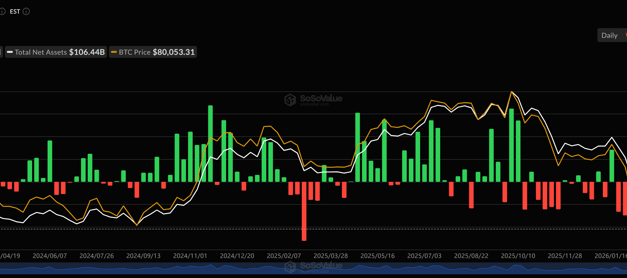
US spot Bitcoin exchange-traded funds (ETFs) have extended their inflow momentum through late April, notching a nine-day streak amid growing investor conviction.During the period, which spanned April 14 and April 24, total net inflows reached roughly $2.12 billion, with the strongest single-day performance on April 17, when funds attracted $663.91 million. April 14 and April 22 also posted robust gains of $411.50 million and $335.82 million, respectively.The weakest day came on Friday, with a more modest $14.45 million in net inflows. BlackRock’s IBIT led the day with $22.88 million in inflows. In contrast, Fidelity’s FBTC recorded outflows of $1.69 million, while Bitwise’s BITB and ARK 21Shares’ ARKB saw withdrawals of $8.85 million and $9.02 million, respectively. Other funds, including Grayscale’s GBTC and smaller products, reported largely flat flows.The April streak is the first nine-day run for spot Bitcoin (BTC) ETFs since a similar run in October, when inflows surged, including $1.21 billion on Oct. 6 and $875.6 million on Oct. 7.Spot Bitcoin ETFs see 9-day inflow streak. Source: SoSoValueSpot Bitcoin ETFs see 9-day inflow streak. Source: SoSoValueThe sustained inflows also come alongside a strengthening Bitcoin market, with BTC currently trading at $77,516.55, up 10.73% over the past month, according to data from CoinMarketCap.Related: Bitcoin ETFs Surpass March Inflow Streak With $1.9BBitcoin ETF investors hold firmThe recent steady stream of capital has pushed flows back into positive territory for 2026, with cumulative total net inflows reaching $58.23 billion.This trend comes even as Bitcoin remains about 35% below its record high reached in early October, ETF analyst Nate Geraci wrote in a recent post on X. He said this pattern suggests that ETF investors are taking a longer-term approach rather than reacting to short-term volatility. The continued inflows during a market drawdown point to a more resilient investor base, often described as “diamond hands” in crypto circles.“ETF investors proving to be longer-term allocators,” he wrote.Related: Spot Bitcoin ETFs Gain $411M as Goldman Files ETF PlanEther ETFs see strong inflowsUS spot Ether (ETH) ETFs also maintained a strong inflow streak from April 14 through April 22, posting nine consecutive days of net positive flows. However, the streak was broken on April 23, when funds recorded net outflows of $75.94 million.During the nine-day run from April 14 to April 22, total inflows were consistently solid, with the strongest single-day performance on April 17, when Ether ETFs attracted $127.49 million. Other standout sessions included April 22 with $96.44 million and April 20 with $67.77 million.Magazine: AI-driven hacks could kill DeFi — unless projects act nowCointelegraph is committed to independent, transparent journalism. This news article is produced in accordance with Cointelegraph’s Editorial Policy and aims to provide accurate and timely information. Readers are encouraged to verify information independently.

Čítaj viac

Získaj BONUS 8 € v Bitcoinoch

nakup bitcoin z karty

Registrácia Binance

Burza Binance

Aktuálne kurzy