
Autor Cointelegraph by Amin Haqshanas

Stratiphy reopens tax-free route to crypto ETNs for UK investors

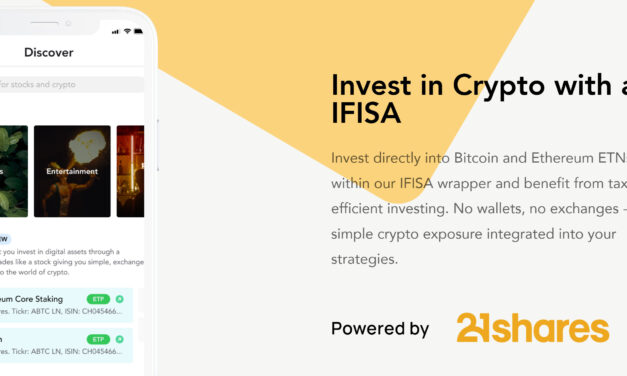
UK fintech platform Stratiphy has launched a new offering that gives investors a practical tax-free route back into crypto exchange-traded notes (ETNs) for UK investors after a series of regulatory shifts effectively shut investors out.In October 2025, the Financial Conduct Authority lifted its four-year ban on retail access to crypto ETNs tied to assets like Bitcoin (BTC) and Ether (ETH). These products could initially be held in standard stocks-and-shares Individual Savings Accounts (ISAs), offering tax-free exposure.However, that changed at the start of the new tax year, when HM Revenue & Customs ruled that new purchases of crypto ETNs would no longer qualify for those ISAs. Instead, eligibility was limited to Innovative Finance (IF) ISAs, a niche wrapper typically used for peer-to-peer lending, and no platform offered both, resulting in a dead end for investors seeking access.Stratiphy’s launch now reopens that route by offering three ETNs issued by 21Shares, covering Bitcoin, Ether and a blended Bitcoin-gold product, according to the Financial Times.Source: Stratiphy’s websiteCointelegraph reached out to Stratiphy for comment, but had not received a response by publication.Related: Coinbase rolls out UK crypto-backed loans as FCA shapes rulesUK platforms offer crypto ETNsCrypto ETNs are already available through platforms such as Interactive Investor, Freetrade and Revolut. However, none currently offer IF ISAs, and those accounts fall outside the UK’s Financial Services Compensation Scheme, per the FT.Trading 212, one of Europe’s largest online investment platforms, also reportedly allowed UK retail customers to trade crypto ETNs without the required regulatory permission. The company later sought the proper authorization after being contacted by regulators.An October 2025 research report by IG Group predicted that the UK crypto market could expand by up to 20% following the relaunch of crypto ETNs. The study found that around 30% of UK adults would consider investing in crypto through ETNs, largely due to the perceived safety and regulatory oversight these products offer.Related: UK plans payments rule changes for stablecoins, tokenized depositsUK FCA opens consultation on crypto rulesAs Cointelegraph reported, the UK’s Financial Conduct Authority (FCA) has launched a consultation on guidance for its upcoming crypto regulatory framework, which is expected to take full effect on October 25, 2027. The regulator is seeking industry input on rules covering areas such as stablecoin issuance, trading, custody and staking.The guidance is part of a wider set of consultations released since late 2025 and aims to prepare firms for the new regime, under which crypto companies will need FCA authorization.Magazine: Bitcoin will not hit $1M by 2030, says veteran trader Peter BrandtCointelegraph is committed to independent, transparent journalism. This news article is produced in accordance with Cointelegraph’s Editorial Policy and aims to provide accurate and timely information. Readers are encouraged to verify information independently. Read our Editorial Policy https://cointelegraph.com/editorial-policy

Čítaj viac
Scammers demand crypto from stranded ships in Strait of Hormuz: Report

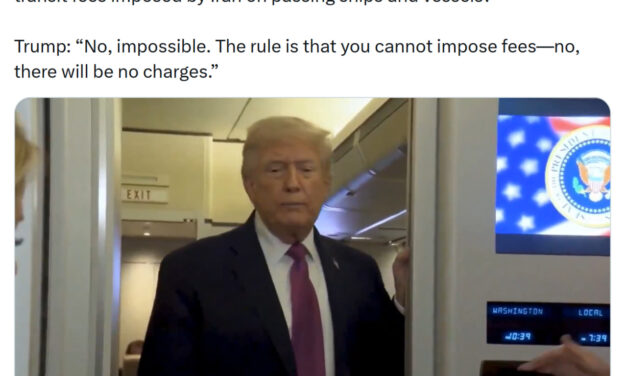
Fraudulent actors posing as Iranian authorities have reportedly sent messages to shipping companies whose vessels remain stranded west of the Strait of Hormuz, demanding payment in cryptocurrency for safe passage.On Monday, maritime risk company Marisks issued a warning saying unknown groups had contacted shipowners claiming to represent Iranian security services and requesting transit “fees” in Bitcoin (BTC) or USDt (USDT) in exchange for clearance through the strait, according to Reuters.“These specific messages are a scam,” Marisks reportedly said, adding that they do not originate from Iranian authorities. Tehran has not publicly commented on the claims.The alerts come as the strategic waterway remains largely closed following the outbreak of conflict in the Middle East. The Strait of Hormuz, a critical chokepoint for global energy flows, previously handled around one-fifth of the world’s oil and liquefied natural gas exports before hostilities escalated in the region.Earlier this month, reports said Iran was considering charging ships passing through the Strait of Hormuz a tariff payable in Bitcoin, with empty tankers allowed free passage while others could be charged around $1 per barrel of oil.Related: Iran views BTC as strategic asset, but USDt still dominates oil tolls: BPICrypto “transit fee” scam demands verification docsThe reported scam messages instruct recipients to submit documentation for verification before being assigned a “fee” payable in cryptocurrency, after which safe transit would allegedly be granted at a pre-agreed time.In one example cited by Marisks, the message stated that Iranian security services would assess eligibility before determining payment in BTC or USDt, framing crypto transfers as a condition for unimpeded passage.Trump says he won’t allow Iran to impose tolls on ships. Source: The Middle EastThe company also suggested that at least one vessel recently targeted by gunfire while attempting to exit the strait may have received such fraudulent instructions, though the information has not been independently verified.Cointelegraph reached out to Marisks for comment but did not receive an immediate response.Related: Bitcoin community weighs in on reports of Iran’s crypto toll for oil shipsCrypto payments to Iran could trigger sanctions risks: ChainalysisShipping companies considering paying transit fees in cryptocurrency to Iran could face serious sanctions exposure, according to Chainalysis senior intelligence analyst Kaitlin Martin.She told Cointelegraph that any payments linked to Iranian-controlled waterways could be treated as “material support,” potentially violating US and international sanctions targeting entities such as the Islamic Revolutionary Guard Corps.Magazine: Bitcoin will not hit $1M by 2030, says veteran trader Peter BrandtCointelegraph is committed to independent, transparent journalism. This news article is produced in accordance with Cointelegraph’s Editorial Policy and aims to provide accurate and timely information. Readers are encouraged to verify information independently. Read our Editorial Policy https://cointelegraph.com/editorial-policy

Čítaj viac

Bank of Korea governor backs CBDCs, deposit tokens in first address

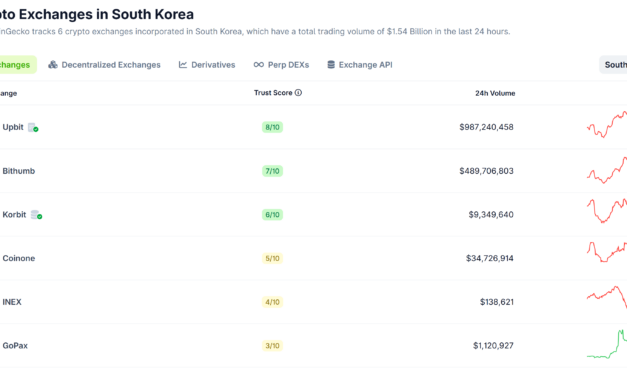
The newly appointed Governor of the Bank of Korea, Shin Hyun-song, has voiced support for central bank digital currencies (CBDCs) and tokenized deposits in his first public address.Shin, who began his four-year term after an inauguration ceremony in Seoul on Tuesday, said the central bank will advance the second phase of “Project Hangang,” a Bank of Korea-led pilot project to test a blockchain-based, wholesale CBDC system.He also pointed to international cooperation efforts, including the “Agora Project,” an international collaborative initiative launched in April 2024 by the Bank for International Settlements (BIS) and seven central banks to explore the tokenization of cross-border payments. Shin said these initiatives “will elevate the status of the Korean won in the digital payment environment.”While previous reports had suggested Shin was open to won-based stablecoins, he did not mention stablecoins in his inaugural speech.South Korea’s stablecoin bill remains stalled, with regulators and lawmakers split over whether issuance of won-pegged tokens should be limited to commercial banks or opened up to non-bank players such as fintech and tech firms.Related: South Korea draft bill puts stablecoins, RWAs under finance laws: ReportShin flags geopolitical risksShin also mentioned rising tensions in the Middle East and its effect on oil prices, saying that the Bank of Korea must adapt to rising uncertainty driven by geopolitical shocks, inflation pressures and shifts in the global economy.“We must strive for price and financial stability through the operation of prudent and flexible monetary policy,” he said.Top Korean crypto exchanges. Source: CoinGeckoShin was the BIS economic adviser from May 2014 to March 2026 and also served as head of the Monetary and Economic Department from January 2025, according to the BIS website.Last month, he published an academic paper arguing that stablecoins fail to meet a core property of money, “unity,” because blockchain networks are inherently fragmented across different chains with varying fees, security and decentralisation levels.Related: Naver-Dunamu filing sets IPO committee, listing timeline for fintech groupSouth Korea to test tokenized deposits for government spendingSouth Korea’s Ministry of Economy and Finance is preparing to test blockchain-based payments for selected government expenses as part of a regulatory sandbox exploring distributed ledger technology in public finance.The pilot will use tokenized deposits to execute government operational spending, with a full rollout targeted for the fourth quarter of 2026. The initial phase will be launched in Sejong City and will include conditions such as limits on timing and spending categories.Magazine: Will the CLARITY Act be good — or bad — for DeFi?Cointelegraph is committed to independent, transparent journalism. This news article is produced in accordance with Cointelegraph’s Editorial Policy and aims to provide accurate and timely information. Readers are encouraged to verify information independently. Read our Editorial Policy https://cointelegraph.com/editorial-policy

Čítaj viac

Získaj BONUS 8 € v Bitcoinoch

nakup bitcoin z karty

Registrácia Binance

Burza Binance

Aktuálne kurzy