Autor Cointelegraph By Alyssa Exposito

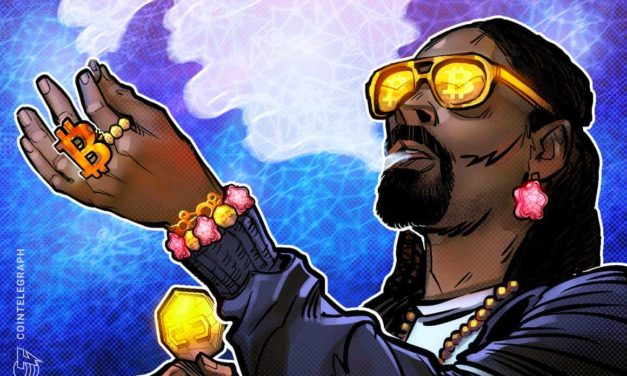
Snoop Dogg may be the face of Web3 and NFTs, but what does that mean for the industry?

Described by many users and outsiders as the Wild West, Web3 is open-source and decentralized, and it has been prompting many to look for ways to profit from its features, especially with the growing Metaverse.While some companies and investors are sorting out where to place their best bets, popular rapper and nonfungible token collector Snoop Dogg seems to have found his rhythm and is beating many to the market. The cannabis and NFT connoisseur announced he had joined the digitally native lifestyle and gaming platform FaZe Clan on March 7, with the intention of strengthening the cultural connection between music and gaming. Through his participation with digital collectibles, Snoop Dogg has elevated his credentials in the Web3 sector and is considered by pundits to be a prominent voice. Joined @FaZeClan. pic.twitter.com/jQWWpsHO5L— Snoop Dogg (@SnoopDogg) March 7, 2022From building Snoopverse in The Sandbox to creating the pseudonymous online persona “Cozomo de’ Medici,” Snoop Dogg’s digital footprint is hard to ignore. The impact and influence the rapper has had in the sector are undeniable, with at least one investor spending upward of $450,000 for a plot of digital land adjacent to the rapper’s virtual estate.Snoop’s participation in Web3 highlights innovation, content creation and development, and ownership. The rapper does not shy away from dropping it like it’s hot at every turn in the sector, leaving some to conclude that he could be the current face of Web3 and is leading the way for other creatorsNew avenues are opening up for music NFTsMusic NFTs are coming after the popularity seen by visual art NFTs, and there are currently some strategic partnerships underway. For example, Snoop Dogg recently acquired Death Row Records and intends to turn it into the first NFT recording label in the Metaverse. Others are finding impact in partnering with other artists.Royal, an NFT royalty platform founded by DJ and music producer 3lau, partnered with rapper Nas to bring awareness to the various ways artists can connect with their fans while directly generating revenue streams from their creations. However, it’s not just the big names in the industry who are turning their heads to the technology and sector. music NFTs are gunna have their PFP moment soon enough so consider yourself not only early, but lucky!“ford or a hemi” is now available on @catalogworks (you can listen for free, check it out!)https://t.co/lcKnleIUZk— ✨Freddy Got Magic✨ (@SupaBwe) March 12, 2022

Web3 pundits are excited about the creative freedom in the Metaverse and are coming to realize that NFTs can provide a means for artists to be equitably compensated. Speaking to this trend, Iman Europe, a musician and the head of artist relations at NFT music startup Sound, highlighted to Bloomberg just how much artists are undercut in the traditional music industry, saying: “I had one person buy my song for the amount it would have taken a million streams to get.” On March 14, Snoop Dogg dropped a music NFT via Sound that sold out and raised 100 Ether (ETH) ($271,399).After navigating Web2 streaming models, creators are building better structures within music NFTs to make a livelihood. Latashá, an artist and the head of community programming at NFT marketplace protocol Zora, has sold over 50 music and multimedia nonfungible tokens, telling NFT-focused blockchain platform Palm that they sell for an average of $20,000 per 1/1 artwork.In contrast with the Web2 model wherein artists need to hit hundreds of streams before they make even $1, Web3’s infrastructure introduces ownership to the mix.Just so you know…… pic.twitter.com/t8m3PerxT9— T-Pain (@TPAIN) December 29, 2021

Platforms such as Sound, Audius, Zora, Royal and Catalog focus on artists retaining ownership rights to their music NFTs, allowing them to receive royalties every time they are resold. Since music NFTs are minted on a blockchain and backed by metadata, issues of relinquishing intellectual property rights are mitigated. Blockchains also facilitate tracking where the content is used and distributed. This change allows artists to be compensated directly.Snoop Dogg could be carrying the torch for what is possible when independent musicians hit major labels. He and other Web3 denizens have brought awareness to how creators and owners can benefit in the ecosystem with future listen-and-earn rewards through music NFTs. Although music NFTs have not seen the same rise as proof-of-profile (PFP) NFTs, there have been increased developments in their utility and functionality beyond just serving as audio files. The infrastructure of Web3 and blockchain has unlocked and revolutionized the industry of the creator economy. Creator economies are built for Web3Web3 is the next iteration of the internet, and while it may be hard to define, the sector favors creatives and creators. Since the infrastructure of Web3 is built on the blockchain, artists desire a certain level of autonomy and transparency. Web3 strays away from the Web2 ideals of Big Tech platforms governing, managing and owning data. It also enables users to own and potentially profit from their creations. “What I found in my pursuit of continued creative autonomy in web3 last year was freedom and the ability to exhale for the first time in a long time. It’s been a nonstop rollercoaster of ideation, creation and execution.”— cdixon.eth (@cdixon) January 7, 2022

While YouTube pioneered a new way for users to create, present and distribute content, platforms are now integrating Web3 features of ownership into their models. Web3 aims to democratize data creation and distribution through smart contracts, royalties and various revenue streams. The notion of ownership in Web3 benefits both the creator and their communities because of provenance. Given that content licensing can be captured on blockchain networks, the goal is for the days when creative works would get persistently pirated to be long behind us.Music industry’s anti-piracy operations putting the focus on NFTs and the metaverse https://t.co/akSkAr9IsC @CMU pic.twitter.com/gvqAIyTm7b— Adrian Fusiarski (@Buzzsonic) February 16, 2022

Web3 began rearing its head with the boom of NFTs and impacted numerous sectors. Beyond visual arts and music, blockchain and Web3 have found their way into gaming, influencing its key players. Ryan Watt resigned as head of gaming at YouTube and has transitioned into blockchain gaming and Web3, currently working as CEO of Polygon Studios. As blockchain gaming becomes widely more adopted, the convergence of the creator and streamer will become more prevalent. With more projects in development, there is an increased need for content to be created and developed to draw in new users and keep existing members engaged. Web3 is steadily beginning to change not only who is engaging and participating with content but how content creation itself is made possible. Creators are no longer pinned down in one sector in Web3, as made evident by Snoop Dogg and his partnership with FaZe Clan. Creators, streamers and gamers will no longer rely on platforms like YouTube or Twitch to monetize their content; instead, they can be supported directly on decentralized, Web3 native platforms. Artists are taking advantage of the decentralized element of Web3, beyond its monetary benefit, and utilizing the technology for the greater good. Take, for example, Russian activist group Pussy Riot, which is using its platform for philanthropic efforts via UkraineDAO. In this way, Web3 can facilitate civic engagement and action without the usual red tape. Web3 has only recently reached the media’s vernacular and is already leading to drastic pivots in various industries. As one of the earlier adopters of Web3, Snoop Dogg could very well be trailblazing the way for other creators to follow.The views and opinions expressed here are solely those of the author and do not necessarily reflect the views of Cointelegraph.com. Every investment and trading move involves risk, you should conduct your own research when making a decision.

Čítaj viac
Blockchain play-and-earn games focus on building even as NFT prices fall

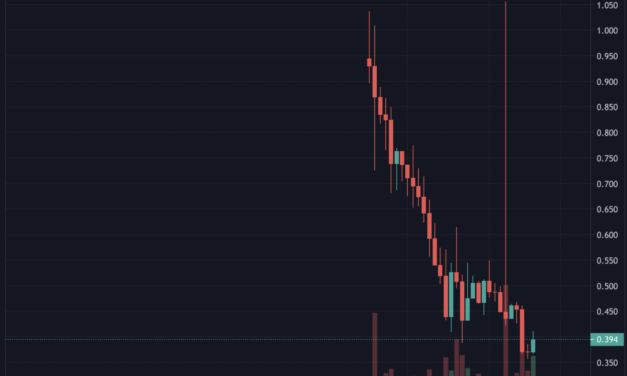
Nonfungible tokens (NFTs) were in a strong bull run from Jan. 1 to mid-February. During this time, OpenSea volumes topped $5 billion and then fell to $3.6 billion toward the end of February. This could have been a sign that the overall sentiment of the crypto and NFT market was correcting. As Q2 approaches, the total volumes and sales for NFTs have been in decline, leading new entrants and investors to wonder whether the sector is dying. According to data from DappRadar, OpenSea trading volumes have dropped nearly 11% in the last week and so far, the total volume on the marketplace continues to cool off as the number of users dropped by 13% in the last 30 days. It seems the NFT community has realized that it has exhausted options for blue-chip derivatives and investors are looking toward a more sustainable and less speculative placement of value. Regardless of where the proof of profile movement (PFP) goes, blockchain game developers and communities are steadily building. For example, play-to-earn (P2E) blockchain game Axie Infinity topped $4 billion in all-time NFT sales for the month of February. This marks it as the third largest NFT platform in terms of sales and the first NFT collection to do so.The @AxieInfinity has become the first #NFT series to exceed $4B in all-time sales. #CryptoPunks is the next collection to make impressive gains, reaching $2B as all-time sales volume.https://t.co/az7S9bV6aW#ethereum #gamefi #playtoearn $AXIE #NFTs pic.twitter.com/1Rl5B1atpC— Ethereum Daily (@ETH_Daily) February 23, 2022Axie Infinity was created in 2018 and the game is a clear testament to what is possible in a bear market. Axie Infinity built out a minimal viable product (MVP) that onboarded millions to Web3, blockchain and cryptocurrency.Blockchain games are focused on developing and are bunkering down this bearish market to resist the negative trend. These three blockchain games are focused on increasing capital flows, expanding their infrastructure and establishing stable user-bases.New funding could jumpstart growth in Guild of GuardiansBlockchain games are situating their positions through strategic partnerships to further develop their products. As made evident by NFT game developer, Immutable X in its recent close of a $200 million funding round. In light of this news, a “large portion” of its funding will go to current projects, including Guild of Guardians. According to the Guild of Guardians discord, this news comes at a difficult time where the war in Ukraine has created development setbacks. Since Guild of Guardians is partially developed by Ukrainian development studio Stepico Games, overall game development has inevitably faced delays. Much like the crypto market, the Guild of Guardians‘ in-game native GOG token has collapsed and is currently valued at $0.37, nearly 87% down from its all-time high of $2.81.Guild of Guardians GOG/USD 24-hour price chart. Source: CoinGeckoThe Guild of Guardians will allocate the newly raised funds toward marketing initiatives and scaling solutions for the game and community. The fresh funding should ensure the project‘s sustainability through a bear market and focus on the projects’ ambitious goal of hiring 200 employees in the next 12 months.Guild of Guardians has set out and placed applications for its pre-alpha game demo as a testament and commitment to community insights. Other NFT projects are also transitioning their communities to a gaming ecosystem by partnering with other networks to facilitate the change. CyberKongz pushes forward “Play & Kollect” on PolygonThe NFT CyberKongz collection began as a traditional PFP on the Ethereum network and while it still functions as such, it has bridged over to the Polygon network for its Play & Kollect gamification feature. While deployment has faced some minor delays, the team is currently preparing the community with a soft launch with a bridge to the Polygon network. CyberKongz has also announced its integration with decentralized oracle network ChainLink and its verifiable random function (VRF) to the Play & Kollect ecosystem. @CyberKongz Integrates @chainlink VRF to Randomize In-Game Features on @0xPolygon #CyberKongz now has access to a tamper-proof & auditable source of randomness to support randomized in-game features in their upcoming adventure game.More details: https://t.co/PhuPaVo6N1 pic.twitter.com/bU7VflEYsC— Polygon Daily (@PolygonDaily) March 8, 2022

The VRF function will randomize in-game features through the oracle node’s pre-committed private key, generating a random number and a cryptographic proof in combination with unknown block data. This collaboration has increased the integration of sophisticated technological features while prioritizing security. Currently, the in-game characters that are needed to play CyberKongz VX are 2.59 Ether (ETH), or $6,674.09, on the Polygon network through OpenSea. Interestingly enough, the assets on the Ethereum network that are not yet bridged are cheaper at 1.95 ETH, or $5,024.90. Related: 5 NFT-based blockchain games that could soar in 2022Galaxy Fight Club is zoning in on gaming and Web3 developmentIn its latest update, P2E game Galaxy Fight Club announced a partnership with Vaynerchuk Sports and Gary Vee’s brother, AJ Vaynerchuk, to introduce the game to the athletes in the Ultimate Fighting Championship (UFC). GFC’s native token GCOIN is also slated to launch on Huobi exchange, potentially giving it the boost it needs to reverse the current downtrend. In the last week, GCOIN fell 11% and the token is nearly 85% from its all-time-high at $2.16. Galaxy Fight Club GCOIN/USD 24-hour price chart. Source: CoinGeckoSimilar to both Guild of Guardians and CyberKongz, GFC has also faced some setbacks due to a discord exploit. However, it seems to meet adversity by staying focused on deliverables. The team has developed new features to its beta version and there are plans to integrate the play-to-earn mechanics within the next two weeks. To unlock GCOIN earning in-game, players must own genesis Galaxy Fighters. The cheaper fighters and the lowest-earning tier are currently priced at 0.47 ETH, or $1,271.60, and the floor price for the highest earning tier is 3.99 ETH, or $10,795.10. Despite the uncontrollable setbacks and challenges, blockchain games seem to understand that growing pains are inevitable but to be successful, they must keep one thing in mind: The development of a fun game. As the market steadily approaches Q2, investors will be closely watching to see who used this lull time wisely.The views and opinions expressed here are solely those of the author and do not necessarily reflect the views of Cointelegraph.com. Every investment and trading move involves risk, you should conduct your own research when making a decision.

Čítaj viac
Here’s how DAOs are making digital land more accessible to Metaverse denizens

Decentralized autonomous organizations (DAOs) are individuals that collectively organize in social applications and blockchains to pursue common goals and interests.As the direction of the Metaverse keeps maturing, DAOs are rallying around the prospect of utilizing and investing in the Metaverse. Seeing that Goldman Sachs placed an $8 trillion valuation on the sector, eyes and ears have peeled into the possibility of accessibility, usability and monetization of these virtual worlds. Owners of digital land in the Metaverse tout some of the most recognizable names like Adidas, Nike, Snoop Dogg and JPMorgan. These entities are investing in the digital land and aligning themselves with the movement toward Web3 to better connect with consumers. However, the biggest barrier to joining the digital landrush is cost. DAOs are searching to create more equitable means to invest in and utilize these virtual worlds. DAOs could potentially assist with onboarding new entrants to Web3 in a substantial way by making engaging with digital land more accessible. This means exploring the means to share, rent and invest in digital land in the Metaverse.NFTs are the new keys to digital landIn 2021, the two largest metaverse platforms, Decentraland and the Sandbox, made a combined total volume of approximately $460 million in digital real estate. These are not the only metaverses users are turning to. Blockchain games like Axie Infinity are building out their respective metaverses within their land gameplay in order to yield valuable resources. At the current prices of digital land across all metaverses, however, many investors are priced out. In Axie Infinity, the cheapest land plot is roughly 2.2 Ether (ETH), or $5,550, and the most expensive currently stands at 10,000 ETH, or $25,254,275. The range in prices come at the land’s speculated value based on its location. Similar to the real estate in real life, location holds a lot of value in the Metaverse, where users strategically try to position themselves to benefit. Something rarely mentioned about #AxieInfinity but with the Lunacia SDK, we could see plots of land become very popular increasing their plot value. Things i look forward to are1) Axie Kart2) Battle Royale3) Smash bros w AxiesAnyone else have ideas?https://t.co/V6MvpuoJZp— finlee.eth (@leehuachang) June 2, 2021Land in Axie Infinity is slated to not only provide means for passive revenue via its governance token, Axie Infinity Shards (AXS), but will also be a beneficial means for players to harvest resources to level up their in-game characters. Knowing that land is essential to gameplay, community members have come together to form AxieLands (AXL) nonfungible token (NFT) to enable players access to digital land. +2M @AxieInfinity players, Only 17k Land Plots.Are you going to stay out? pic.twitter.com/n3Z2ciP8wG— AxieLands NFT (@AxieLandsNFT) November 15, 2021

The premise of AXL is that it acts as an access pass of sorts to the digital land purchased by the AXL NFT team. A community member could purchase an NFT for 0.1 ETH ($252.15) to then have access to any land AxieLand NFT has purchased. The AXL NFT team intends to purchase 110 land plots in Axie Infinity, ranging from least valuable to premium plots. Although the project is still in its infancy, working through legal parameters before formalizing itself as a DAO, the AXL NFT model is best for gaming guilds. Suited specifically for land gameplay, other projects are incorporating renting strategies to provide access and monetize these digital assets. Related: The Metaverse is booming, bringing revolution to real estateInvestors can rent digital land for passive incomeBeyond gaming functionality, digital land in the metaverse has endless possibilities, especially depending on who is purchasing and building on it. As such, LandWorks, is a community-driven marketplace on the Ethereum network. It has established a model for digital landowners to rent out their respective plots, while users can take advantage of a cheaper point of entry without the long-term hold. LandWorks’ model is straightforward in creating capital efficiency in the Metaverse. Similar to lodging marketplace and platform Airbnb, LandWorks operates its community-driven marketplace for users to browse in search of land they can rent. Operated by the EnterDAO, LandWorks is governed by the native token ENTR, whereby lenders can farm the token through the Synthetix staking rewards.”You mean that I can receive rent AND get ~200% APR on my DCL Land/Estate?”@landworksxyz pic.twitter.com/HmyN1hSlL3— danielivanov.eth | (@dani__ivanov) January 26, 2022

Currently, only Decentraland landowners are supported on the platform, but that can change in the near future. The EnterDAO is all in on the Metaverse as it complements its renting marketplace with its other product, Metaportal, a hub for all games and events in the metaverse. DAOs are squadding up to turn metaverse real estate into investmentsPangeaDAO, a metaverse land cooperative, intends to create more equitable virtual worlds in the Metaverse by democratizing the ownership of digital land. PangeaDAO’s treasury, governed by its community, is the capital in which the DAO will acquire digital real-estate and assets. PangeaDAO will manage a diverse portfolio within the metaverse for members to benefit from by owning, operating and financing income-generating land. Contrary to AxieLands NFT and LandWorks, PangeaDAO is a slightly more passive way for investors to expose themselves to the Metaverse but is more encompassing by how it intends to generate revenue on digital land via its partnerships and investmentWe’ve just published the 3rd and final edition (for now) of the Virtual Land Series: Generating Revenue! In this piece, we discuss Pangea’s thoughts on strategies and technologies to generate yield on Metaverse land assets.https://t.co/dYEm2mqGYJ— pangea (@PangeaDAO) March 7, 2022

Although operations, functions and value distributions in DAOs are still in the earliest stages of development, teams of like-minded individuals are working toward the future of the Metaverse and its placement within the wider nascent ecosystem. Investors are now entering new frontiers with the next iteration of the web via DAOs as a way to sort the point of entry to the Metaverse. While DAOs and the Metaverse developments are a long way away, it seems to be prime time for investing and building toward more accessible digital worlds. Disclaimer. Cointelegraph does not endorse any content of product on this page. While we aim at providing you all important information that we could obtain, readers should do their own research before taking any actions related to the company and carry full responsibility for their decisions, nor this article can be considered as an investment advice.

Čítaj viac

NFT projects thrive even as OpenSea trading volumes take a hit

Despite a number of attempted vampire attacks, nonfungible tokens (NFTs) continue to have a strong run on OpenSea, with the number of unique users and transactions increasing. However, the NFT market’s overall volume is falling behind last month’s figure of nearly $3 billion. While there are NFT projects readying to hit the secondary market, it seems the sector, as a whole, is navigating the next move regarding utility and the integration of NFTs in the metaverse. Adding to this, global political uncertainties are also having a noticeable impact on market environments. Ether (ETH) price has decreased by nearly 16% in the last seven days, and since most NFT projects are on the Ethereum network, NFT collectors tend to remain unphased, shopping for NFTs at a bargain. For an NFT collection, Azuki made a considerable impact in the last 30-days, amassing over 80,000 Ether ($209,100,216) and have knocked blue-chip collections like Bored Ape Yacht Club (BAYC) and Crypto Punks from their top spots. Similarly, Invisible Friends’ launch on Feb. 23, has already reeled in over $23.1 million with a floor price of 8.95 Ether ($22,010.74)Azuki 30-day average price / volume. Source: OpenSeaIt is not just new entrants rotating collections from their top spots in total volume, older projects are resurging as the market environment sorts out shaky conditions. Here is the state of the current NFT market as we enter the end of Q1.3Landers NFTSurprising the market with its underwhelming yet charming appeal and relatability to Doodles meets The Simpsons, 3Landers slides into the number one spot for total volume, amassing over 11,000 Ether ($28,666,000) since hitting the secondary market on Feb.19. 3Landers all-time average price / volume. Source: OpenSea3Landers’ average sale price has increased 63% in the last seven days and is one of the few projects whose floors continue to increase post reveal, now sitting at a thin 1.55 Ether ($4.056.35.) Generated on the Ethereum blockchain, 3Landers describes itself as a “…NFT project centered around community, adventure and collaboration.” Perhaps it is the positivity collectors need in light of recent events. As a community-centered project, 3Landers will rely on the talents, commitments and unity of its community to lead where the project may expand to. While some NFT projects are community-centered in value sharing, others are exploring uncharted territory building out digital sovereign nations. NFT WorldsNFT Worlds is built with the metaverse in mind and at its center. Each of the 10,000 NFT Worlds is explorable and unique with the capacity to build on. Also, it touts being compatible with none other than the sandbox game, Minecraft. NFT Worlds saw a boost in growth in the last seven days reaching a floor price of nearly 18 Ether.NFT Worlds 7-day floor price. Source: NFT Price FloorIn the last 30-days, NFT Worlds has generated over $42.3 million in volume, bringing about half that amount in the last seven days alone at $21.3 million.NFT Worlds 7-day average price / volume. Source: OpenSeaNFT Worlds seems to attract Web3 advocates and developers granting decentralization and APIs. As digital land with a high cost of entry, NFT Worlds is integrating a rental system later this year, allowing owners to rent out their worlds in exchange for a monthly fee of its in-game currency, WRLD. Operating on the Polygon network, WRLD will have a reward faucet for creators who meet the criteria and are seeking to integrate a play-to-earn (P2E) game using the token.It seems investors are heavily valuing open-source and interoperable features as good positions for the next phase of the metaverse.MfersCreated by Sartoshi, a play on the mysterious Satoshi Nakomoto, Mfers climbed its way to the third spot for total volume. Amassing a growth of nearly 66% in total volume in the last seven days, Mfers floor prices topped 5.84 Ether ($15,330). Mfers 7 day average price / volume. Source: OpenSeaThese right-facing, slouching, stick Mfers are meme-inspired and created. The ethos of the Mfers seems to have recently triggered something within the sector, as the average sale price increased by 43% at one point in the seven days. Out of a total supply of 10,000 Mfers in the collection, there are approximately 5,100 unique holders. Currently, at 4 Ether ($10,950.08), the floor price has increased by nearly 81% in the last seven days. Investors are taking pride that their investment will provide them all the creative freedom since Mfers hold creative commons zero (CC0) meaning, no rights reserved, and owners are enabled to build upon them. CryptoPunk owners encountered blistering issues with their intellectual property (IP) rights, which is why some see the Mfers proof-of-profile (PFP) as a symbol for the cultureRelated: OpenSea monthly volumes top $5B as NFTs continue to mainstreamTubby CatsSpeaking of culture, another cat collection has made its way to the scene. Tubby Cats has entered space and reaffirmed the love people have for cats. Tubby Cats by the Tubby collective is a collection of 20,000 anime-inspired cats.Since its whitelist launch on Feb. 21, 2021, the collection has already amassed 9,000 unique holders and generated over $20.7 million in total volumeTubby Cats all-time average price and volume. Source: OpenSeaTubby Cats is not a completely randomly generated collection; instead, each tubby cat is generated from 120 various themed palettes on which the rarity is based. The Tubby Cat collection seems to have gained the attention and hearts of Crypto Twitter influencers as the collection has slid it’s way to the number four spot in total sales volume. Although it has long ways to grow before its Cool Cats status, Tubby Cats is already making an impression with collectors of other projects. Tubby Cats may be the most recent feline-inspired project to purr their way to the sector, but it isn’t the last. CatBlox Genesis CollectionIt may have clawed its way to the fifth spot, but CatBlox Genesis collection is 10,000 cute and pudgy cats living in none other than CatBlox. Launched on Feb. 17, there are already 5,400 unique holders out of 10,000 and the average sale price has increased by nearly 50% in the last seven days.CatBlox 7-day average price and volume. Source: OpenSeaCatBlox has since announced its partnership with athletic footwear brand, Puma to further itself with its health and wellness initiatives in place on its roadmap. While it still isn’t clear what the partnership with Puma entails, Puma is gearing itself for Web3. Puma has since changed its domain handle on Twitter to reflect “Puma.eth.” Apparently, the feline brand purchased other cat-like collections including CoolCats, Lazy Lions and Gutter Cat Gang. Understanding the impact of strong collaboration, CatBlox collection uniquely factors in distinct functionality with each collaboration. Generating over $15.1 million in total volume so far, CatBlox is making a statement with its stealth reveal and latest announcement.Disclaimer. Cointelegraph does not endorse any content of product on this page. While we aim at providing you all important information that we could obtain, readers should do their own research before taking any actions related to the company and carry full responsibility for their decisions, nor this article can be considered as an investment advice.

Čítaj viac

Record label CEO explains how music NFTs are set to revolutionize the industry

Music-based nonfungible tokens are an emerging frontier in the crypto and NFT space, but the first questions that come to mind are: What are they? And what are their utility?Music NFTs are relatively new to the scene and cannot be pinned down by one definition. At the most basic level, however, they are verifiable digital collectibles, with a core component being the integration of a song.One of the first collections was “Audioglyphs,” which cemented itself as revolutionizing the way users consume music, synthesizing an infinite stream of audio for each NFT. Creators and investors began to discover the novelty of music NFTs, as they lessened the barriers of access to artists and consumers.Electronic DJ and NFT collector 3LAU made history selling his record-breaking album Ultraviolet for $11.7 million. He also created the royalty sharing platform Royal, which has raised at least $71 million so far. Recently, John Legend announced the launch of his own music NFT platform, suggesting there are more artists interested in the technology. While the price and popularity of music NFTs have not surged quite like visual art NFTs, some platforms have emerged to provide a more universal user experience while giving creators methods to monetize. In an effort to gain more perspective on the matter, Cointelegraph spoke with Mike Darlington, CEO of Monstercat, about the future of music NFTs, their impact and the use cases for Monstercat’s sold-out nonfungible token collection “Relics.” Cointelegraph: How do you define music NFTs?Mike Darlington:  Music NFTs are verifiably owned collectibles that incorporate music as a major focus element of the token itself, allowing for the musician’s work to play as important a role as the visual artist’s.CT: Can you walk us through Relics and its potential impact in the Metaverse?MD: Relics is Monstercat’s debut digital collectibles platform — the first of its kind to operate within a record label. Each music collectible, also called a Relic, has the ability to integrate music seamlessly and verifiably in the Metaverse. Once you own a Relic, it has the potential to become your theme song as you travel between worlds, games and play-to-earn ecosystems, bringing a whole new community of music fans to Web3.Related: Music in the Metaverse creates social and immersive experiences for usersCT: In what ways can music NFTs shape and change the music industry?MD: One of the immediate benefits we’ve seen is the increased opportunity for artists to directly connect with their superfans. Whether it’s through rewards, exclusive access, ownership, etc., music NFTs are becoming one of the most powerful tools for community-building and engagement. They also enable a new form of perpetual royalties that can be shared with the visual artists. There’s no longer a need to reach hundreds of thousands of fans to achieve career sustainability — with just a small group of passionate collectors, artists of all sizes can make a fair living from their work.CT: In what ways can investors or collectors benefit from music NFTs?MD: Anything from access to immersive experiences, to unlockable content directly from the artist, to exclusive communications. With Relics, specifically, as the song’s performance increases in real time, so does its rarity — a benefit for both the fan and the artist. The platform also gives collectors musical access within the Metaverse and play-to-earn ecosystems, which, as a label, is something we can do with ease in an otherwise tricky landscape without the proper rights and licensing.CT: What exactly is “dynamic rarity,” and what is its implication for NFTs in general and music NFTs specifically?MD: Dynamic rarity is an evolving trait that changes based on how well the Relic’s original song is performing in the traditional music ecosystem. As a song does well on traditional platforms, the gemstone rarity will also increase on its corresponding Relic. This innovation connects Web2 and Web3 in a novel and healthy manner while not alienating the importance of either. It turns the fans into tastemakers, with the song’s history all on-chain.Music NFTs will continue to emerge and evolve as the underlying infrastructure gets developed to suit more use cases, like in-game integrations or providing royalty-sharing benefits. Just as NFTs changed how users interact and consume visual art, music NFTs are already gaining traction to revolutionize how users create, listen and use them.Disclaimer. Cointelegraph does not endorse any content of product on this page. While we aim at providing you all important information that we could obtain, readers should do their own research before taking any actions related to the company and carry full responsibility for their decisions, nor this article can be considered as an investment advice.

Čítaj viac

Získaj BONUS 8 € v Bitcoinoch

nakup bitcoin z karty

Registrácia Binance

Burza Binance

Aktuálne kurzy