
Autor Cointelegraph By Alyssa Exposito

‘Legacy’ NFT prices are soaring, but exactly what makes a collection a blue-chip?

Blue-chip NFTs is a popular buzzword one will find strewn across Twitter and various crypto media. The term, “blue chip,” is borrowed from traditional finance where stocks that are considered to be the well-established extension of corporations known for their quality, reliability and financial stability. But, exactly what are blue chip NFTs and how are they identified? Nansen research analyst Louisa Choe, comments to Cointelegraph that since NFTs are still nascent “…it is sometimes challenging to apply this criteria since NFT as an asset class is still evolving.” The general consensus is that the much sought after blue chip is the asset with the least amount of volatility, meaning it sustains its value over time. Let’s explore a few of the factors that play into determining whether or not a particular NFT project qualifies for blue-chip status.Volume is only a piece of the puzzleCollectively, NFT investors, like any trader, look at the total volume of sales and the total market cap of the collection. Typically, when an NFT collection reaches or exceeds the sought-after 10 Ether ($30,624) level, collectors consider it to have reached blue chip status. The total volume of sales is also another data point NFT traders turn to as a point of measure in determining whether the market is healthy. While high volumes are desirable, are they sustainable and reflective of blue-chip status? Nansen updates their blue-chip index every 90 days, knowing that “the market is young and fickle.” As such, controversy is often sparked within the NFT market when a collection rockets to the moon with little end in sight. On April 16, PROOF Collective launched its first proof of profile (PFP) collection, Moonbirds. The project literally skyrocketed to the moon and has already exceeded $220.8 million in total volume sales on OpenSea. Although the project has hardly been listed for a week, its explosive growth has left some NFT pundits speculating on its potential value and some believe it has already hit blue chip status.Moonbirds all-time avg. sale price / volume. Source: OpenSeaHowever, there are pundits who disagree with the sentiment that volume is an indicator of blue-chip stats. Some NFT investors argue that it is difficult to assign this data point as a measure for such an illiquid asset and that the impression of a blue-chip NFT was that it could sustain its value in surviving a bear market. Other NFT enthusiasts seem to lean on influencers and big-time players in the space in determining the assets they should fill their bags with. Communities are more than the number of unique holders It is important to note that blue-chip status is not defined by numbers alone, but the sentiment and dedication of the community. Trades can be replicated, but communities cannot. “Communities and thus, the network effect are definitely key drivers behind the success of an NFT project,” says Choe. Often, the first metric sought to determine the adoption of a project is the number of unique holders. Yet, even as a quantifiable metric, it isn’t the most valid. Accounting for the number of unique holders simply means one is recording the number of wallets that have the particular asset. Since this is the case, one owner could own 1,000 assets and place each in their respective wallet, resulting in a measure of 1,000 unique holders when in actuality, there is just one. However, NFT investors often list communities and the number of unique holders as a factor for why they consider an NFT to be blue-chip caliber. When assigning blue-chip status to an NFT and considering its community, Choe explains that “…NFT projects are seeking to build an entire ecosystem that generates value as opposed to concentrating on one utility.” OriginalityCommunityUtilityMonetary Value/social valueInnovationHistorical significance— DaVinci Elo (@dzepss) March 4, 2022Communities are more than just numbers since they represent individuals with varying levels of belief and convictions toward the project and within the ecosystem. Part of Yuga Lab’s Bored Ape Yacht Club magic was that it was a bootstrapped community that executed what they had not anticipated. BAYC not only amassed over $1 billion in total volume, but gained the attention of global mass media in just under a year. If volume and the number of unique holders becomes a static focal point for what is considered a blue-chip, then Moonbirds flipping other blue-chips in total volume would make it one by default. In fact, Moonbirds has already gained over 6,681 holders out of a collection of 10,000 NFTs and the most profitable former Moonbird holder made nearly $2 million by selling 45 MoonBirds. To date, some of the most profitable investors made over $450,000. It is often said that an asset is worth what the market is willing to pay for it, and sometimes the market’s perception can pump or dump in regard to this valuation. Related: Blue Chip and Metaverse NFTs propel growth of NFT market, says Nansen reportBlue-chip value extends beyond priceOftentimes, market value and market capitalization are used interchangeably, making it dicey to evaluate the real value of an NFT. Market value is nuanced in that it provides a wider view in determining a project’s financial standing, but it also determines investors’ respective investment opportunities. Interestingly, market value determines how much an investor is willing to pay for an asset, but market value is also heavily influenced by market perception and sentiment. For NFTs markets, volatile swings in sentiment can be seen in total sales volume, growth and members voting with their assets by selling them. NFT markets are young and fickle because the largest blue chip so far, BAYC, has not even hit its anniversary. Yet it has proven its ability to sustain and grow in value over time.Bored Ape Yacht Club all-time floor prices.Sources: NFT Price FloorLiquidity in the sector often circulates from one project to another, which leads some assets to remain illiquid in the sense that they cannot be sold easily when desired. However, blue-chip NFTs may vary in price over time, but their value remains in that if placed for sale at or under floor value, they would be purchased quickly. Market value is nuanced. It is not only compounded by the sentiment of the market and their perception of a particular product/brand, but also at the mercy of the macro cryptocurrency market. Therefore, it’s safe to assume that assets will take a dip and are risky. Despite the risk, many NFT collectors continue to put their money where their convictions lie, whether made blindly or more strategically in hopes of obtaining a blue-chip investment. Rather than just price, volume history and brand equity, time seems to be a heavily weighted factor when it comes to determining whether an NFT has reached blue-chip status. This suggests that tracking the asset over time rather than focusing on momentary performance to justify a project’s present value. NFT investors will have their opinions on what qualifies as a blue chip and it’s important to reiterate how nascent the market is. A better assessment process is to track quarterly total sales volume, buyer and seller ratios and the project roadmap or community developments as components of blue-chip status.The views and opinions expressed here are solely those of the author and do not necessarily reflect the views of Cointelegraph.com. Every investment and trading move involves risk, you should conduct your own research when making a decision.

Čítaj viac
Here’s how the Akutars NFT project hopes to redefine how culture intersects with Web3

Since the wake of the nonfungible token (NFT) boom, creators have been leaving their Web2 entities in droves and are becoming more knowledgeable on how to carve their own lane in the Web3 world. It’s not just technologists and artsy-creators who are pivoting toward Web3. For example, former American professional baseball player Micah Johnson pivoted to painting and focused his pieces on representation. In debuting his first digital piece, sä-v(ə-)rən-tē (pronounced “sovereignty’) Johnson was not only fueled by adversity but inspired by a question that would change the trajectory of his work. “Can astronauts be black?” asked Johnson’s 4- year old nephew to his mother.  Alas, the main character of “Akuverse” was created in February 2021. Aku is a physical depiction of the confidence and boldness of a little black, astronaut navigating his way through his dreams. The characterization of Aku challenges the notion that dreams are exclusive to certain social identities. 15,000 avatars of a black kid astronaut are going to take over Twitter profile pictures Friday. That’s important.— Micah Johnson (@Micah_Johnson3) April 20, 2022The story of Aku is told via NFTs or chapters that depict the journey of Aku’s dreams. Micah Johnson recently air-dropped 9,241 Akustar mint passes to Aku chapter holders that are now trading at 4.85 Ether ($14,331.65). In the last 7 days, Aku Mint Pass amassed over $13.4 million as the Akustars are getting ready to traverse their largest expedition yet with a proof-of-profile (PFP) launch.Akutars could be more than just another PFP Akutars is the three-dimensional 15,000 PFP collection of Akuverse that will also live on the Ethereum blockchain. The images are meant to empower and viewing the comments of collectors on Twitter, proves that the story and imagery of Aku resonated with a range of NFT collectors.“Base” Akutars. Which one is your favorite? pic.twitter.com/XhMBpnmq5J— Aku :: Akutars (@AkuDreams) April 13, 2022

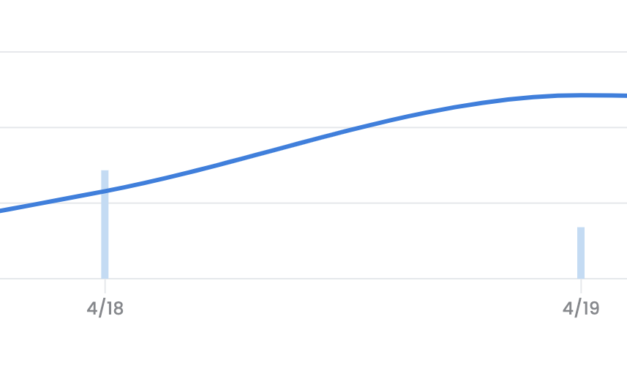
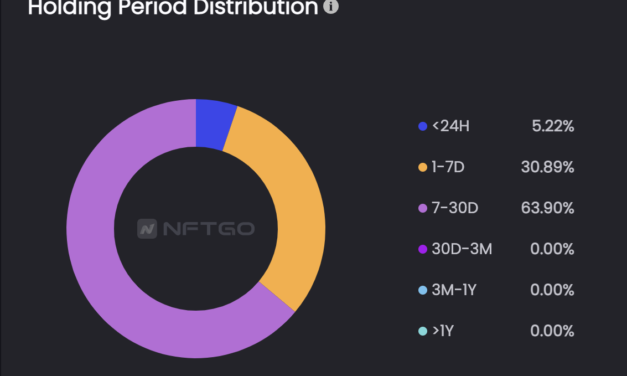
According to data from NFTgo, 60% of diamond-hand investors have held their Aku Mint Pass 60% for more than a week, while approximately 30% owners have held for at least a week. Akutar Mint Pass holding period distribution. Source: NFTgo.ioVolume for Akutar Mint Passes has increased by 26% in the last 7 days and the average sale price is up by 89%. Akutar Mint Pass 7-day avg. sale price / volume. Source: OpenSeaAkutars are not only a symbol of confidence and courage, but also of style. The collection will feature unique items and traits created by some of the most notable names in streetwear like Pharrell Williams, Billionaire Boys Club, ICECREAM, Puma and luxury streetwear expert Upscale Vandal. Roc Nation’s streetwear label Paper Planes and New York-based luxury label Who Decides War also helped design Akutars. These strategic partnerships are more than just drip for Akutars. Owners of the PFPs will be granted a range of perks and incentives in the Akuverse, along with real life access to exclusive experiences, collaborations and products.What could be unique about Akutars in relation to other NFTs is the cultural significance of Aku and how his story has impacted key players throughout the ecosystem who want to ensure the story is heard. Related: Despite the bad rap, NFTs can be a force for goodReady to launch On October 13, 2021, Visa announced its partnership with Micah Johnson and further plans to support the artist and the creator economy. In an interview with NBC, Micah Johnson expressed realizing, through his supporters, there was an “audience saying this is what we want in the world,” and they have shown support by investing in seeing the project grow. In just a year, AkuDreams amassed over $60 million in total volume sales across all ten Aku chapter NFTs and Akutar Mint Passes. Johnson has also confirmed that Aku’s story will be made into a feature film where the Aku chapters (NFT) may be reflected in scenes. As previously mentioned, 9,241 Aku Mint Passes were distributed to all respective Aku chapter holders and 5,500 will be available for the public to mint in a dutch auction on April 22. Akutar Public Sale Friday // 2 PM EST ⭐ 5,500 Available⭐️ Price TBA⭐ .1 ETH drop every 6 minutes⭐ Max Mint (3)⭐ The lowest bid sets the price for everyoneAND…⭐ .5E Discount off the final price for Akutar Pass Holders. Ex: 3 mints with 3 passes = 1.5E off— Aku :: Akutars (@AkuDreams) April 19, 2022

In true dutch auction fashion, the lowest bid within the auction will set the price for everyone. This means that any bid higher than the lowest bid will pay the lowest bid. Many NFT investors took to Twitter to commend the intention of an “actual” Dutch auction, implying that other projects who use the same mechanism do not execute it properly. The increasing number of NFT auctions and drops that are happening on a regular basis make it difficult to track and many go unnoticed. In hindsight, Moonbirds 2.5 Ether ($7,385) lock-in bid seems like a steal when compared to its current price. This suggests that investors give a lot of thought to the reputation and credibility of a team and their history. It’s possible that Akuverse reflects an evolution where the community resonates with the cultural significance of diversity and inclusivity, rather than simply centering around a product, brand or genre.Disclaimer. Cointelegraph does not endorse any content of product on this page. While we aim at providing you all important information that we could obtain, readers should do their own research before taking any actions related to the company and carry full responsibility for their decisions, nor this article can be considered as an investment advice.

Čítaj viac

Is the surge in OpenSea volume and blue-chip NFT sales an early sign of an NFT bull market?

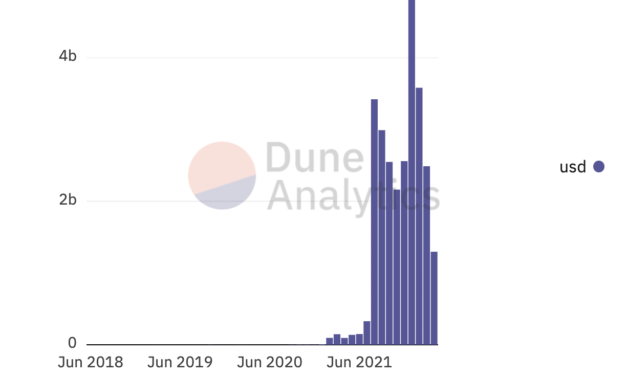
In the last two months, OpenSea began to cool down from its New Year’s bull run and many nonfungible token (NFT) pundits began to speculate about the beginning of a bear market once sales took a slight downward trend after closing out a record-breaking $5 billion in total volume sales in January. However, for the last seven days, the total sales volume has already exceeded the $1 billion mark and just a week into April, it seems the NFT markets are waking up to a resurgence of blue-chip caliber projects. Cue the “Spring Awakening.” OpenSea Monthly Volume. Source: DuneAnalytics @rchen8Traders searching for the next Bored Ape Yacht Club (BAYC) project have patiently waited for another project to come in with the same force and brand equity. Some top contenders have been emerging. Azuki Zen, revealed on Jan. 21, has amassed over $574.6 million in total volume, and RTFKT Studios and Takashi Murakami’s CloneX NFT avatar project has accumulated over $546.7 million. In the last seven days alone, CloneX has increased its total sales volume by over 180%. NFT investors are coming to understand the benefit of investing for the long-term with teams that have delivered. RTFKT Studios catalyzed the community collective quest-solving for its MNLTH NFT, airdropped to all CloneX holders and valued at $22,135. As such, those who held their MNLTH were essentially airdropped over $22,000 simply for being a CloneX holder. This further illustrates for collectors and traders the value of grail NFTs. Now that liquidity is pumping and circulating, it seems Q2 is here to blaze trails and the NFT markets appear to be ignited by more mature NFT communities and investors. What will spark the next BAYC? NFT projects are beginning to understand the value of intersecting culture, community and commerce through what BAYC cultivated, and many have explored ways to establish their own. On a spectrum from estranged collector to maxi, NFT projects that have recently launched have paid close attention to not only building close-knit communities that hold strong convictions but ones that can utilize its platform to uplift their own personal creative pursuits. RTFKT Studios has opened a platform for creators to shine via their Space Pod NFT airdrop, which allows owners to display their NFTs throughout the space. Currently valued at $4,920.86 (1.65 Ether), SpacePods are open for customization and this also allows RTFKT to scout for talent among their own community. Creators are also able to produce and sell their creations to others in the community to support and enjoy. Currently, the floor price for a CloneX is a thin 17.5 Ether ($52,237.50). By holding an average sale price over 11.5 Ether, NFT collectors and owners trust that RTFKT Studios will continue to deliver.CloneX All-time average sale price / volume. Source: OpenSeaSimilarly, Yuga Labs announced the creation of its metaverse platform, MetaRPG, that will offer purchasable digital land. This news was compounded by ApeDAO not only airdropping the BAYC NFT ecosystem owners over $1.6 billion in ApeCoin and promising that it would become a utility currency adopted in the BAYC ecosystem and MetaRPG. Percentage of eligible addresses claimed APE. Source: DuneAnalytics @hildobbySince MetaRPG is slated to be an interoperable metaverse, it will not prevent those who are not in the BAYC ecosystem from gaining exposure. Those who have been paying attention know that there is tremendous value in interoperability for mass adoption and other projects with interoperable metaverse like Arcade Land. Arcade Land 7-day average sale price / volume. Source: OpenSeaArcade Land is currently number three for total volume in the last seven days, closing in on approximately $23 million. Its average sale price has increased by 96% and whether or not that is just a pre-post reveal pump, it does suggest that communities are searching for the most viable interoperable worlds. The cheapest Arcade Land NFT is selling just under 1 Ether (3,291.15) and out of 10,000 items, there are over 5,700 unique wallet addresses. NFT investors are focusing their bids on utility, interoperability and a semblance of cultural relevance. As of late, it seems well-known artists outside of the Web3 and NFT circles are carving their space in the ecosystem and gaining the attention of art collectors and NFT collectors. There’s value in bridging IRL art to digital spaces through NFT collections and experiences RTFKT Studios set an example of how collaborating with a well-known artist can elevate the inherent value of a digital collection not only by mere association but by a mutual potential benefit. For example, CloneX partnered with Japanese contemporary artist, Takashi Murakami, whose influence is dripped into the collection on certain CloneX avatars inspired by his previous works. Takashi Murakami created an allowlist for his Murakami.Flowers NFT collection and gave all Murakami dripped CloneX avatars (roughly 2,500) a spot on the list. On March 30, Murakami Flowers hit the secondary market and surged in volume from an average sale price of 6 Ether ($17,910) to the current 9.2 Ether ($27,462). In less than two weeks, the average sale price has increased by over 61%. Murakami.Flowers All-time average sale price / volume. OpenSeaCrypto artist and Cyberbrokers creator, Josie Bellini introduced another level of detailed art that is technically innovative and layered with lore. According to NFT wallet trackers, 50% of CyberBrokers’ owners have bags that are composed of more blue chips than the average investor. CyberBrokers All-time average sales price / volume. Source: OpenSeaCyberBrokers’ average sale price has increased over 274% since its launch. In the long-term, artists whose work has been translated into digital may hold extra value for the historical relevance it may hold. Another NFT collection called “MOAR” by Spanish artist Joan Catallan has risen to the top spot in the charts for total volume on OpenSea. Currently, it is up over 320% since it hit the secondary market on April 8, and is trading at 1.11 Ether ($3,283.50). Presented by digital media company FWENCLUB, MOAR is 5,555 souls of creatures living in a mansion in the metaverse. There are over 3,700 unique wallet addresses that own a MOAR NFT and only time will tell how the community will develop. NFT announcements could make Q2 quite excitingQ2 could potentially have several liquidity pumping announcements in tow. NFT denizens have taken to Twitter to make their guesses, but there are a few impending project developments that could boost the overall morale and amount of liquidity in the market. CyberBrokers NFT will be airdropping all owners a free NFT whose value could potentially increase as the CyberBrokers gaming ecosystem continues to unfold. Similar to the ways RTFKT Studios initiates community-collective quest-solving for its MNLTH NFT, CyberBrokers announced on April 12 that all brokers will be receiving a cosmetic item for their NFT. Communities at large are almost beginning to expect their NFTs to unlock feature airdrops.BEANZ All-time avg. sale price volume. Source: OpenSeaAzuki NFT airdropped two unrevealed red BEANZ NFTs to each respective owner, which stirred up controversy on Twitter regarding what they were and what they are worth. Those who are eligible to claim will be able to do so until April 14 and the reveal is scheduled for the following day. The Azuki NFT airdrop, BEANZ, excited the market, giving Azuki’s a runup past 25 Ether ($77,879). The mysterious NFT quickly pumped over 3 Ether ($9,440.10) and BEANZ is currently at 5.45 Ether ($16,268.25) while its average sale price is up over 44% since it hit the secondary market. NFT spring appears to be blooming and collectors have refined their sensibilities and are looking to turn their initial investments into larger ones via the new mechanism of NFT airdrops.Outside of token emission, collectors are now drawn to projects that are adding value to its community by giving them free illiquid assets that quickly turn liquid. Although some NFT pundits claim airdrops dilute the collection, others are taking this opportunity to turn their liquidity into long-term investments that often compound the size of their portfolio. Pairing liquidity and collectors could make for a very fruitful Q2 for NFTs and the Web3 ecosystem. The views and opinions expressed here are solely those of the author and do not necessarily reflect the views of Cointelegraph.com. Every investment and trading move involves risk, you should conduct your own research when making a decision.

Čítaj viac
Crypto Raiders explains how blockchain gaming attracts new users to Web3

At the height of the nonfungible token (NFT) rally in 2021, Sky Mavis, the creator of Axie Infinity, rolled in like the Trojan horse and coined the term play-to-earn (P2E) for blockchain games. Axie Infinity grew in popularity after amassing a $3 billion valuation and it steadily onboarded millions into Web3. According to Axie Infinity co-founder Aleksander Larsen, roughly 50% of Axie Infinity’s daily active users (DAUs) had never had a cryptocurrency wallet until they began playing.As a result, the Web3 ecosystem perked up at the prospect of utilizing games as a method to onboard new entrants. Despite this, most blockchain platforms, protocols and games in their current state are inherently complicated and cumbersome to navigate. However, entities are emerging to lessen the burdens and barriers of interacting in the ecosystem and onboarding prior to making the plunge into Web3.Crypto Raiders is doing exactly that. On March 29, the project completed a $6 million seed funding round with the aim to further expand its team and marketing strategies. By pivoting from play-to-earn to play-to-own, Crypto Raiders is focusing less on financial incentives and more on the elements of fun gameplay. The project aims to develop an environment where gamers are not solely players but asset owners. In an effort to further understand the benefits of this narrative, Cointelegraph spoke with the creators and co-founders of CryptoRaiders Nick Kreupner, David Titarenco and Matt Powell about how they are onboarding new and traditional gamers into Web3.Cointelegraph: There seems to be controversy around the verbiage for blockchain games. How do you define and educate on “play-to-own” versus “play-to-earn?”Nick Kreupner: When we think of play-to-earn, the word “earn” has a connotation that the game is more of a job than something for fun. Play-to-own is the revolutionary act of owning the in-game assets and in this way, it becomes something more fun and social.David Titarenco: Yes, to piggyback off this, play-and-earn lends itself, at times, to subvert the fun of the game and focus more on extracting value.CT: Communities tend to benefit in keeping the value within the ecosystem, almost functioning as digital nations. It also seems many NFT projects and blockchain games are adopting governance tokens but have not executed them yet. How has Crypto Raiders approached governance? What are the biggest challenges?NK: Getting governance out the gate took us about a week after sorting the Solidity code. Deciding what a blockchain game to do is tough. There are so many opportunities for communities to vote on that are valuable without restructuring the entire game that still heavily impacts the players. For example, we opened up a vote to see what kind of potion the players wanted. We also use a governance voting protocol that enables those who hold a certain amount of the native token RAIDER or have battled a certain amount of Dungeons to vote. In this way, we know that those who are truly vested are making the decisions that ultimately, impact them the most.DT: The biggest challenge is knowing the limits. You don’t want to democratize everything too quickly because this often allows the biggest holders to benefit the most from certain proposals. We aim to be mindful of how questions are framed and make sure that at the end of the day, it’s rooted in having fun and the best for the ecosystem.CT: Traditional games and blockchain games seem to share an element of guild forming that have been of benefit to onboarding new entrants to Web3. Has Crypto Raiders begun to see guilds forming, and how has it impacted players and the growth of the game? NK: We currently have over 10,000 DAUs and over 5,000 unique wallets, so we are seeing guilds forming for different aspects of the game. Usually, they are guilds specializing in player-versus-player (PVP) or farming.DT: Yes, this becomes an element that is more social in nature than for the sole purpose of meeting a goal. Since we do not operate or intend to operate a rental/scholarship model, we push and advocate for assets to remain at a lower price to increase accessibility to the game.NK: In fact, we have a mode where players just need to submit a username and password to gain access to the game and are not on the blockchain. Essentially, we realize new players and traditionally players are a little less risk-averse and may want to experience the game before they invest in it. We hope that in playing the game, they are empowered to want to learn more about blockchain and Web3.Matt Powell: Yeah, as the game has grown, we see guilds closely forming large and strong bonds. One, in particular, FLAG, with 2,200 players strong that share resources among one another for raids. But, there’s a strong social aspect to Crypto Raiders beyond the game. On Twitter, you can find pictures of players all around the world, in different places battling with #RaidersInTheWildCT: So, with less focus on the financial elements, is there any token emission in CryptoRaiders?NK: Yes, there are two tokens: RAIDER, similar to Axie Infinity’s governance token Axie Infinity (AXS). RAIDER is the governance token of Crypto Raiders and is one that is airdropped to in-game asset owners. AURUM is in-game gold/utility, what you use to do everything in the game.CT: Besides their in-game utility, are there any benefits to holding or earning them?NK: As mentioned, AURUM is the in-game gold that players need to interact and transact with or within the game. We are also launching our own traveling item merchant, an in-game character traveling to buy the best in-game items and an auction house so that players are readily able to place their rarest items up for auction or sale. We aim to keep everything in-house and in-game since there are a lot of values that can flow through items. In launching our own marketplace, the 2.5% fee that would normally go to the secondary marketplace, like OpenSea, will now stay in the RAIDER ecosystem. Holding RAIDER also enables holders to be airdropped RAIDER Battle Passes that provide access to more cosmetic items. Related: 5 NFT-based blockchain games that could soar in 2022CT: Let’s talk about the $6 million seed round. I read that you all are allocating resources to expand the team. Can you talk more about what this means for the development of Crypto Raiders?NK: We intend to expand our team of 24 and invest in scale-up marketing and growth, gain social reach of Twitch Streamers that allows us to go to the opposite of most NFT games. In most traditional NFT games, you are sold the NFT, then sold an NFT land and it steadily becomes something where players need to keep buying to participate. We are going to make sure that everything you need on the game is in the game, rather than needing to purchase to participate and grow.Blockchain games have already begun to revolutionize and spark discourse around the paradigms between play-and earn and play-and-own. The models have served their purpose and have effectively onboarded many first-time users to cryptocurrency and Web3. As Web3 native platforms begin to decrease the barriers to their use, it increases the accessibility and inclusivity of the technology, allowing those who would turn a blind eye to lean in. The views and opinions expressed here are solely those of the author and do not necessarily reflect the views of Cointelegraph.com. Every investment and trading move involves risk, you should conduct your own research when making a decision.

Čítaj viac
Crypto and culture intersecting: Could ApeCoin be the go-to token of the Metaverse?

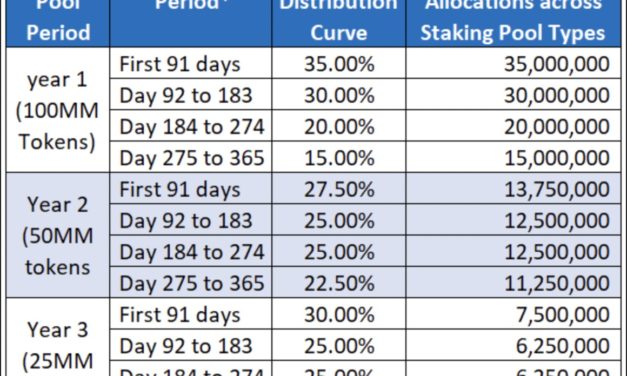
What is it with these sly, funny, but boring looking apes that continue to make headlines? Many collectors argue that it’s less about the image itself and more about the culture, social capital and wealth the community of owners have gained from Bored Ape Yacht Club (BAYC) that give the collection its value. Amassing over $1.42 billion in total volume, the community entrusted that the creators would deliver on its promise for token emission. On March 17, BAYCs utility and governance token, ApeCoin (APE) was made eligible to claim for BAYC and Mutant Ape Yacht Club (MAYC) holders. According to data, nearly 99% of eligible wallets have already already claimed their share and over 132 million tokens have been claimed valued at $1.8 billion. As expected, APE price see-sawed on both ends of the spectrum as it plummeted over 80% to a low of $6.21 on its first day of trading then it surged 90% on the second day. Out of the 1 billion tokens created, 15% were dispersed to owners, leaving many crypto natives speculating on its impact and implications within the Web3 economy. BAYC has been a center force that is highly influential in accelerating cultural change and NFT adoption. A month after being released, APE is already stirring conversation regarding governance protocols, its utility within the Metaverse, and its steady adoption as a universal form of payment in tbe NFT space.ApeDAO directs the community will and future of ApeCoinApeDAO is the decentralized autonomous organization that launched ApeCoin. As a governing body, the DAO is governed by APE as a means to field proposals from its members on what is best for the community, and these proposals are later voted on by APE holders. While there are many DAOs, ApeDAO could potentially be a catalyst for a paradigm shift between “consumer” and “owner.” APE has the potential to tap into large communities en masse given the potential for an incentivizing structure with its DAO. Despite all this opportunity, DAOs, which may appear sound on paper, are not the most straightforward layer of decentralization. More often than not, projects begin as a centralized entity, team or organization that progressively move the needle to more decentralized methods of equitable distribution. This is no easy feat and it takes an incredible amount of time, coordination and active effort from members. The biggest challenges DAOs face are that code-is-law and active coordination among members must be voted on, first. ApeDAO is not immune to the challenges most DAOs face, and is already being contested because of certain Ape Improvement Protocols (AIP). Specifically, AIP-4 and AIP-5 focus on the allocations for the staking pools (AIP-4) and the three-year duration of this initial staking period (AIP-5.) Each was written by Animoca Brands, a key investor and decentralized gaming platform. These proposals illuminate the rough terrain of navigating diverse opinions and intentions, while also narrowing the process down to a mutually beneficial consensus. The staking proposal details stated that over the course of 3 years, 17.5% of the total ApeCoin supply would be distributed and funded by the Ecosystem Fund. The staking protocol would also consist of different staking pools whose APE distributions vary depending on the asset staked. AIP- 5 Incentive Distribution. Source: ApeCoinVocal NFT denizens took to Twitter regarding the proposals as one that felt rushed and seemed to benefit the venture capitalists rather than the community. In the eyes of Animoca Brands, the intention of APE, outside of governance, is to be the preferred token of the metaverse. However, to do this, Animoca Brands advises incentivizing participation in the staking protocol whether it be via APE or a BAYC ecosystem NFT. Over 10 million APE (nearly $150 million) are being used to determine this vote and both AIPs are still up in the air. This is undoubtedly a hefty price for a proposal that was consciously created to usher in newcomers to the metaverse.ApeCoin could be a well of utility in the MetaverseAlthough APE does not equate to equity in Yuga Labs, it does provide access to the BAYC ecosystem. APE also serves as a form of payment in their upcoming release of MetaRPG, a metaverse platform. Yuga Labs raised $450 million to create and develop this new metaverse, valuing the company at $4 billion. The impending interoperable world, is slated to be fully decentralized and it will be strategically partnering with other gaming studios to bring the Otherside, Yuga Labs’ massively multiplayer online role-playing game (MMORPG) to life. Since the Otherside is not exclusive to those who hold BAYC properties, those with APE can equally participate and benefit from the play-and-earn game. Despite Yuga Labs’ not being responsible for the creation of the APE token, in a statement to CoinDesk, CEO of Yuga Labs, Nicole Muniz said that it will “adopt ApeCoin as the primary token for all new products and services,” suggesting it could be a valuable investment. Yuga Labs, specifically BAYC, has already been dubbed an NFT monopoly by thought leaders and with its recent token emission, the value of APE is tied to the health of the BAYC collection. Currently, APEs total market cap is nearly $3.4 billion and there are approximately 169 million tokens in circulation out of 1 billion total. Up over 95% from its all-time low, APE is currently trading at $12.05.APE/USDT 4-hour chart. Source: TradingViewTraders are speculating on the prospective value of the token because ApeDAO describes APE as the token that intersects culture in Web3 through games, art and entertainment. Based on the success of BAYC, culture has played a pivotal role in shepherding new entrants to NFTs and Web3. BAYC’s cultural relevance within the ecosystem has companies, entities and merchants looking to get in on a slice of the pie.Related: Fact or fiction? Did ApeCoin (APE) really drop by 80% since launch?Will merchants APE in? APE is the primary currency within all projects in the BAYC ecosystem and other entities are looking to adopt it as a form of payment. New York-based TIME magazine announced on Twitter that its online magazine subscription can be paid in APE. TIME also accepts BTC, XRP, Dogecoin and soon, APECongrats to the ApeCoin DAO on the rollout of @ApeCoin & thrilled we can announce that @TIME will be accepting $APE for digital subscriptions in the coming weeks on https://t.co/tiBU5fsE5B ⏰❤️— TIMEPiecesᵍᵐ ⏰ (@timepieces) March 20, 2022Prior to this announcement, E11EVEN Residences in Miami and Saltwater brewery announced similar intentions to accept APE as a form of payment for their respective products. BAYCs latest merch drop on March 29, was not priced in APE but rather USD but paid in APE. This left some owners experiencing the contention regarding accepting crypto as payment due to its volatility. APE is not the first and only utility / governance token being widely adopted outside of Web3. Previously, Axie Infinity’s in-game token, Smooth Love Potion, also grew in popularity in the Philippines and merchants began accepting the token to pay for services and commodities. This is amazing! Is $SLP and $AXS really being accepted as an official payment at the Philippines?#SLP #AxieInfinity #AxieScholarship https://t.co/fommQ2iKVt— Leevai (@LeevaiNFT) July 5, 2021

Aside from corporate entities APE-ing into adopting the token, creators are also looking into ways of increasing the size of their bags by accepting it for the services they could provide. APE as a key to the BAYC ecosystem is one key reason it is steadily becoming adopted and increasingly desirable. Although it’s still unclear on its potential staking mechanism and where its value can go, APE could steadily become the meme-utility token of Web3. The views and opinions expressed here are solely those of the author and do not necessarily reflect the views of Cointelegraph.com. Every investment and trading move involves risk, you should conduct your own research when making a decision.

Čítaj viac

Získaj BONUS 8 € v Bitcoinoch

nakup bitcoin z karty

Registrácia Binance

Burza Binance

Aktuálne kurzy
