

Autor Cointelegraph By Alice Huang Wijaya

Guide to real-life crypto OGs you’d meet at a party (Part 2)

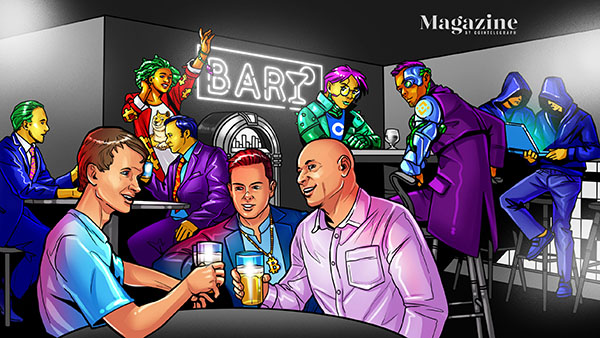
In Part 1, we detailed three of the different kinds of crypto OGs you might meet at an industry party.They were: (1) shadowy super coders and/or anon founders, (2) “reputable” and respected OG industry leaders like Vitalik Buterin and Brian Armstrong, and (3) the comeback OGs, who were trying to shake off the stink of a failed project.This time around, we meet even more categories of crypto OGs, with insight from the insiders most familiar with them. Here’s your guide to the Crypto OGs you’d meet … if you could wangle an invite to one of these parties.4. The “NeoGs” market makers and tradersThere are a select few crypto players who joined the game late, yet they rose to prominence to become behemoths in terms of net worth and impact. Usually, these are savvy market makers and traders who are often mistaken for OGs.Take, for example, Sam Bankman-Fried, the founder of FTX trading exchange and quant trading firm Alameda Research. Amid the recent crypto collapses, he gained even greater prominence as he stepped in big to provide bailouts and minimize the contagions.Sam Bankman Fried in a Youtube interview(Source: The Jax Jones and Martin Warner Show.)Noobs may mistake SBF as an OG, but he only joined the industry in 2017. Bankman-Fried made his wealth from arbitrage crypto trading, which he leveraged to build his empire.The 30-year-old is a self-made billionaire who is a regular in legacy financial media, invited to speak at all the top crypto conferences, and one of the default industry representatives weighing in on U.S. congressional hearings. His wardrobe seems to consist exclusively of FTX T-shirts. SBF has famously stated that he does not necessarily believe in the future of any cryptocurrency, yet he sees them as attractive opportunities. Bottomline, he is the type who is in it “for the money” (but only for the purposes of altruistic donation at some later stage). “I don’t think you can call those who joined in 2017 an OG,” says Darius Sit, founder of successful Singapore-based crypto trading firm QCP Capital, which he also founded that year.“That’s my definition anyway. I think OGs are hard core believers who went all-in when nobody else was paying attention to the space, so that’s certainly way before 2017.” Like SBF, Sit was also in crypto primarily to make money, and since its founding, QCP Capital has become one of the world’s larger crypto option trading firms with $1.5 billion in assets deployed back in 2021. ItsDarius Sit(Source: QCP Capital)venture arm was an early investor in many prominent projects, such as Deribit, dYdX, Algorand, Tokocrypto and Nansen.Judging from their successes, and the fact that the top three highest net worth in the cryptocurrency industry currently come from market-making businesses, one may wonder whether the winners in the industry are the savvier opportunists, instead of the holding believers. Sit insists that market making is also a concrete use case and innovation of blockchain, instead of merely a money-making endeavor. “I think Sam and I shared — and probably still share — very similar views, and maybe I can provide some nuance here. Many crypto or blockchain initiatives promise incredible things that may or may not happen. But what is very real to me and what I believe in is the crypto capital markets.”“To some extent, this is nothing new,” he continues. “It is the same market structures and practices with a different underlying: crypto assets. At the same time, it is also completely different.” “Crypto is not attached to any particular country or authority; it is a non-aligned asset class that is accessible to anyone from any jurisdiction. It is the only scalable financial ecosystem that is independent.”He adds: “In a world where geopolitics has become increasingly unstable, I think that counts for something. I enjoy being part of this developing market.”In the wake of this year’s macro sell-off and the liquidation of many Singapore-based whale trading firms and exchanges like Three Arrows Capital that sent shocks across the cryptocurrency market globally, QCP Capital has held its ground.“We were always wary of the leverage and rehypothecation in the borrowing and lending markets, and so, we never participated in a big way. I did feel quite stupid at times, especially when folks around us were making billions from the balance sheet expansion and easy leverage. In the end, the choice to just focus on trading and developing the derivatives markets might not have been the most profitable, but it was the right one,” Sit comments. At any networking party, you can find Sit having a quiet conversation outside with a couple of other people. “I don’t like crowds and prefer deep, quality conversations,” he says. Herbert Sim(Source: Herbertsim.com)5. The flashy influencers and YOLO brosLast but not least, influencers are the OGs most likely to throw a networking party in the first place, in order to convert normies into crypto investors. Even the letters “OG” conjure up images of swaggering, bling-bling-studded social media shiller types, wearing loud Bitcoin paraphernalia (cue The Bitcoin Man), driving lambos and popping champagne in the clubs, or otherwise chilling on a yacht somewhere in the Bahamas. Often derided, they’ve played a critical role in painting a dream of what is possible when one jumps onto the bandwagon of a deflationary asset class. They’ve all made life-changing amounts of money early from cryptocurrency due to astute intuition or dumb luck, and they want the whole world to know about it. Whether buying flashy Lambos or super yachts or setting up a commune on a tropical island, these people are passionate about enjoying life to the fullest. They tend to be attractive and inspirational with larger-than-life personalities, making them suitable as event promoters, marketers, content creators and social media influencers. For better or worse, they are the face of the crypto industry in the mainstream.[embedded content]“I think people like me, like Kyle Chasse, are doing the hard work daily of preaching the gospel of Bitcoin to the masses,” explains The Bitcoin Man — aka Herbert Sim, a social media influencer with hundreds of thousands of followers on Instagram and Twitter.An easily recognizable regular at conferences, Sim wears a Bitcoin necklace everywhere he goes and regularly posts on his social media about the virtue of investing in cryptocurrency.“I am very public about my identity because I have never done anything shady in the past. Plus, I am only shilling Bitcoin, and I 100% believe that it is safe and advisable for everyone to invest in Bitcoin.” “Back in the days, I remembered a bunch of us would be partying hard at a club, and we would flaunt to everyone that we got rich from Bitcoin. We would hire girls with big boobs wearing tiny T-shirts with Bitcoin logos to drink among us in the club,” Sim recalls fondly. The best of blockchain, every TuesdaySubscribe for thoughtful explorations and leisurely reads from Magazine. By subscribing you agree to our Terms of Service and Privacy PolicySim got into cryptocurrency during his college years at Oklahoma City University in the United States. He was helping out a professor researching blockchain and got deep into the cypherpunk movement. “This was as early as 2009 and 2010. In 2010, someone I can’t disclose gave me some funding — around 100 grand — to host CryptoChainUniversity, one the world’s oldest academic repositories for research and education of crypto and blockchain.” “The definition of OG is rather fluid, but I would say that the latest deadline for OGs to enter cryptocurrency should be around 2014,” said Sim. He has since worked in many different capacities in the industry, for example as the global operations director of Huobi Exchange and as the chief marketing officer of Cryptology. He also founded a U.K.-based venture capital fund trademarked “The Bitcoin Man.” In his free time, he likes to draw illustrations and write fantasy short stories inspired by the crypto industry. Horsfall at a party.(Source: Zebu Digital)“People like us, we are the life of the party; we are not jaded at all with the industry,” chips in Harry Horsfall, CEO of Zebu Digital — a Web3 launchpad accelerator and marketing agency based in London, United Kingdom. Horsfall bought his first Bitcoin in 2011 and went all in around 2013. “I am not a whale, and I am certainly not Lambo rich. I have lost my crypto throughout history, but the most important thing is to get back on it and to keep believing in the future!” gushes Horsfall enthusiastically. Before crypto, Horsfall used to run music festivals, and now he organizes a lot of Web3 parties, for example, Zebu Life, Defi Life, Avalanche Summit, Ethereum Collective, Hijack Collective and so on.“The thing about crypto parties is… they are not that great because they are predominantly male. So, we used to hire girls all the time. Now things are changing, and we are happy to see more and more girls coming into the ratio of 50:50.”6. OG is a spectrumThis guide is a rough sketch of the different types of OGs based on their roles and characteristics in the industry. But many OGs may straddle a few different categories, and others defy easy categorization.What if you invested $1 in Bitcoin back in 2010? Would you count as an OG? Victoria feeding a Bitcoin ATM machine with a $50 note back in 2014.Source: Victoria Au“No, an OG would be a person who originated the technology or utilized the technology in creating new business opportunities that addressed key pain points previously ignored or unbeknownst. I wouldn’t consider myself an OG, but an early casual believer-adopter, as I invested $50 SGD into Bitcoin back in 2014. To this date, this has become my best performing investment,” says Victoria Au, now a business director at fractionalized real estate investing platform RealVantage. Zing Yang, who first bought crypto in 2014 and became one of the board directors of Litecoin, has an identity crisis around this label. “I think I am an OG from timeline and participation, though, by my definition, I feel like an imposter, as I am not techy enough or part of the developer community who got in early since the 2009 days because of ideological reasons or enamorment with the tech,” she says.Yang has now switched careers completely to join a global food production conglomerate Cargill, where she feels like she can make a more concrete contribution with her talent and skills. Marcus Eng, the kid OG, now 25 years oldSource: Writer’s phone“Being an OG is not all kittens and rainbows,” says Marcus Eng, a rare former child OG, who got into cryptocurrency 11 years ago when he was just 14. “I stumbled into crypto in a Bitcoin talk forum. And I have had my fair share of adventures since then. I was also an early Dogecoin OG.” Now 25 years old and working as an investment lead for QCP Capital, Eng thinks that he has finally started making concrete contributions to the industry.“When I was 14, I was so young. I was just fooling around. I was a rebel, and I got in for crypto idealism. I also could not manage my fortunes well and lost a lot of it throughout the years. Now I am much more discerning and critical towards the industry and able to help others navigate this space.”Being rich overnight so early also brought him some mental health issues. “For a while, I was depressed because I lost motivation to do anything else in life besides for my own amusement,” he says.In conclusion, OG should simply mean anyone who has believed in the vision of blockchain since its early days, made contributions to the industry, and adopted and invested significantly in cryptocurrencies since 2014 latest. “Bear in mind though, there’s always someone who is going to be ‘more OG’ than you in so many different ways. It is not binary — it is a spectrum,” adds Yang.Check out Part 1 of our Guide to Real Life Crypto OG’s below.Insiders’ guide to real-life crypto OGs: Part 1

Čítaj viac

Insiders’ guide to real-life crypto OGs: Part 1

Crypto OGs — slang for Original Gangsters — have acquired almost a mythical and godly reputation in an industry populated with libertarians, anti-government rebels, innovators, get-rich-quick scammers, hackers and degen investors with rampant gambling addictions and toxic social media behavior. Who are these OGs exactly? Unlike the rich and powerful in the traditional finance and conventional tech sector, crypto OGs are often protected by a layer of decentralized anonymity in a particularly wild corner of cyberspace. Who deserves this mythical label? The year they got into crypto? Their current net worth? Their lifestyle? Their impact on the industry?How can you separate the randos and wannabes from the OGs? Without further ado, here’s our guide to spotting OGs at any networking party, written with insider tips from real-life OGs.Crypto OGs story1. The shadowy super coders and/or anon foundersThese are the OGs that look underwhelmingly and deceptively average.In New York and San Francisco, they’re the ones going around like starved college students, burying their heads under a hoodie and nodding to electronic beats from their headsets on a subway train. In Singapore, they are the ones blending in seamlessly with any given “uncles” at Kopitiams, wearing nondescript shabby shirts, slippers and Bermuda shorts.These OGs are in crypto “for the tech”; they’re long tokens, and, hence, tend to be crypto rich but cash poor.“I don’t have fiat, I really don’t,” Cyclone* tells me. (*Cyclone is not his real fake name.) He’s a shadowy super coder and anon founder who has been collaborating, developing, advising and consulting for many critical projects since he discovered Bitcoin in 2012: from Lightning Network to landmark proto DeFi platforms, to algorithmic stablecoins, such as the infamous UST. He is currently tackling cross-chain, as he sees that as the next critical development in the industry. I meet him over lunch at a humble coffee shop in Singapore, in between his trips to Europe and the United States. At the end, he fishes around for cash in his pocket to pay for a 5-Singapore-dollar meal. “Could you please cover that for me? I’ll pay back in crypto. What coins do you want?” he says.Cyclone finishing his 5-SGD meal(Source: Alice Huang Wijaya) This is from a man running a trading aggregator and exchange on Solana with billions in trading volume, moving millions of USDT and USDC regularly, and paying hundreds of thousands of dollars per month in Ethereum gas fees to run his other projects. He used to have quite a significant Twitter presence almost a decade ago and was among the earliest batch of Crypto Twitter influencers but says the fame did not help him in any way. “If anything, it only exposed me to potential scams, hacks, wrench attacks, fraud, cyber-bullying and legal action,” he explains. Ironically, anon devs trade on their reputations. Engineering and technical talent is probably the biggest bottleneck in the industry today, with a very limited number of talent who can actually execute a seemingly infinite number of random new project ideas. As a result, they’re paid extremely well, and they have the upper hand to only work for projects that ignite their passion. Cyclone explains that crypto engineers, and especially the OG talent, know each other through underground social networking on Discord, Reddit, GitHub and so on. They know who is behind what project and can verify themselves if anyone is legit.Introverted and a self-proclaimed geek, Cyclone hates networking parties. “You probably won’t find me in any of those. I don’t care and I don’t need it.” 2. The “reputable” OGsThey may not have the same underground appeal, but reputable OGs have contributed significantly to the industry since its early days.Vitalik Buterin posing with a fanSource: TwitterUnlike the anons, these OGs actually appear in your Google searches and feature heavily in traditional finance media such as Forbes, Bloomberg and Time.They joined or founded successful projects at the right time, which got bigger and more reputable over time to become legit companies or organizations with hundreds or thousands of employees. Anyone serious about cryptocurrency knows their names.These are the likes of Vitalik Buterin, the creator of Ethereum; fellow Ethereum co-founder Joseph Lubin, who went on to found ConsenSys; the Winklevoss twins, who started the Gemini exchange; and Jihan Wu, who became a crypto billionaire from his former mining company, Bitmain. These OGs are highly visible and easy to spot in a networking event, as they’re usually giving speeches and interviews.“I think OGs are the people who have stood behind blockchain and cryptocurrency since its early days and had a concrete impact on the result or outcome of a project,” says Brian (not his real name), who contributed significantly to the infrastructure security of early centralized exchanges. He’s now the chief technology officer of a well-known blockchain infrastructure company that builds services for crypto developers and manages over a hundred engineers in his global team.Brian also wants to remain anonymous to reduce his SEO footprint.“Kidnapping for ransom has been increasing among crypto OGs,” he tells me, dead serious. Getting more media attention will not aid him in any way anymore. He’s too OG for any serious industry player not to have known of him.Brian got into crypto in 2012 after being told about Bitcoin by some fellow engineers. He was skeptical, yet he bought a little bit. Since then, he’s drunk the kool-aid of the revolutionary promise of the blockchain. “Some OGs may become wealthy, successful and impactful, and they may or may not stay wealthy, successful and impactful moving forward,” he explains. “Just like everything else in life, there’s ebb and flow to our fortunes and life circumstances.” Ebbs and flows are understating it, seeing how volatile the whole industry is. Brian adds that there’s a difference between whales and OGs.“OGs are generally early and visionary, but it does not mean that all of them are rich,” he says.Adam Back from Blockstream is such an OG he got a shout-out in the Bitcoin white paper. (Source: CT)“The definition of crypto whales is more clear cut. For example, a BTC whale should be able to impact the market, and I believe the definition is to own more than 1,000 BTC. However, not all BTC whales are BTC OGs, and not all BTC OGs are BTC whales. People lost their fortunes in all manners throughout the history of cryptocurrency: exchanges collapse, hacks, scams, robberies, wrong investments…” Brian has made a life-changing windfall from cryptocurrency but still chooses to work hard each day, building the infrastructure of the industry.“I want to solve problems and impact others’ lives. I want to make meaningful changes, and I know I can.” He moved on from centralized infrastructure security because the problem was largely solved, with fewer and fewer successful hacks attacking centralized exchanges.“You can compare this with smart contract hacks that happen almost every other day in the amount of hundreds of million dollars.” Is he still drinking the kool-aid, 10 years down the road, through the ups and downs of the market?“Absolutely. Nobody can predict how things will shape up, but one thing for sure: Blockchain will open up and democratize access to assets, properties, services and data. It will not be a perfect decentralization, but it will be a more open system than what we are currently seeing.”Brian and OGs like him can be found making the rounds at parties, talking to lots of different people with different roles in the industry. “I am curious as to what others are up to and working towards. I want to know what others are building.”3. The ones making a comebackThese are the OGs who have been embroiled in the downfall of large projects, with losses of millions and sometimes even billions in value, yet pick themselves and attempt to make a comeback.“There is a difference between a failed founder and a scammer,” says Cake DeFi’s Julian Hosp, co-founder and media personality of the defunct crypto payment platform TenX. “Failed founders do their best, yet the project still fails anyway. Meanwhile, scammers and rugpullers are those who intentionally and fraudulently misrepresent their words and actions to gain investors’ trust. The former are not criminals, the latter are.” Founded in 2015, TenX’s app allowed users to store different types of blockchain assets in one place, as well as use its physical debit card to pay with crypto at retailers around the world. It raised $80 million in an ICO in 2017 and positioned itself as the first crypto credit card issuer.However, in January 2021, TenX announced its decision to discontinue its services and shut down indefinitely. New signups were disabled, and members were told to withdraw all their funds from the TenX wallet. As of the moment, despite a freeze on all activities, the company has not been wound down properly, and no one seems to know what happens to the treasury of TenX, which includes significant amounts of Bitcoin, Ether and fiat. It has not been subjected to any investigation or regulatory action, and nobody seems to have suffered any consequences.Fiat treasury/crypto treasury.(Source: Block-builders.net)There is a lot of finger-pointing and disputing over who is to blame, however. Hosp tells me that he was pushed out and bought out by his TenX co-founders — to his utter shock and disbelief — back in early 2019. “I did not know that they had been hatching to vote me out… I was presented with no other choice but to quit,” he says.Reddit sleuths found out he was selling his governance tokens just before his departure and accused him of insider trading. He denies the accusations, saying that selling the tokens was part of his regular profit-taking strategy to pay for his income taxes, and his departure from TenX was completely unforeseeable. He also claimed that the reserves of the TenX funds from the ICO were not used to buy him out and puts any and all blame for anything that happened at the feet of his co-founders Toby Hoenisch and Paul Kittiwongsunthorn. (Hoenisch, by the way, has also been accused in Laura Shin’s book The Cryptopians as the hacker of the Ethereum DAO hack in 2016, without any hard proof. Laura consulted Hosp heavily for the writings of this book.)“Towards my departure, I had seen things that troubled me…[a] lack of accountability that showed that they were not acting in the best interest of the company. Plus, now they are nowhere to be found. There is no accountability or reimbursement of investors’ money.” There are a lot of comeback OGs like Hosp in the crypto industry because it is often impossible to determine whether someone tried their best and simply failed or whether one was deliberately lying and scheming.Julian Hosp and U-Zyn Chua.Source: Cake DeFiPrior to TenX, Hosp was a medical doctor and a kite surfer, and he was also involved as a network marketer for a controversial multi-level-marketing company Lyoness, which was subsequently ruled out in many countries as a pyramid scheme. Hosp says he invested $100,000 dollars saved from his doctor’s salary into Bitcoin back in 2014 when it was just $400 apiece, and it was his life-changing investment. “I did not get rich from TenX, but from my Bitcoin investments. I have a long YouTube video explaining how I made $100 million and more from cryptocurrency.” Right now, Hosp is working and promoting his latest company, Cake DeFi, which he founded with fellow OG and former TenX engineer U-Zyn Chua with 50/50 allocation out of their own capital. Cake DeFi is CeDeFi: a semi-centralized platform allowing users to invest and earn in the DeFi space with more transparency than Celsius Network for example. “I have no fear of making a comeback because I did nothing wrong,” Hosp says. Cake DeFi’s team retreat to Dubai.Source: Cake DeFiHosp tells me that he no longer needs to go to networking parties, but in any case, OGs making a comeback like him tend to be shamelessly charming public speakers, and you would have no trouble spotting them preaching to a mesmerized audience at any party, convincing them about their latest billion-dollar vision.Part 2 is out later this week and features “NeoGs” like Sam Bankman-Fried, flashy influencers with Bitcoin bling and lambos and… everyone else who doesn’t fit a neat category.

Čítaj viac

Získaj BONUS 8 € v Bitcoinoch

nakup bitcoin z karty

Registrácia Binance

Burza Binance

Aktuálne kurzy
