Autor Cointelegraph By Aaron Wood

Stablecoin industry opposes Bank of England’s unhosted wallet ban

As the UK considers options to attract and develop the crypto industry at home, the Bank of England (BOE) has put forward several proposals for how it might regulate stablecoins to mitigate perceived financial risks.These have included a ban on custodial wallets for stablecoin holdings. The UK crypto industry, from stablecoin issuers to Bitcoin hardliners, has predictably taken issue with the ban.“This would be a serious misstep for the UK, risking long-term damage that is hard to unwind,” said Benoit Marzouk, CEO of stablecoin issuer tGBP told Cointelegraph.Ban could hamper operability and competitiveness At the heart of the BOE’s approach to stablecoins, which it recently discussed in a series of inquiries before the House of Lords, is protecting the UK banking system. The bank argues that unhindered access to stablecoins, which can offer higher yields than traditional banking products, could lead to a run on deposits, and therefore on credit availability from UK banks. In March, Bank of England Deputy Governor Sarah Breeden told the House of Lords Financial Services Regulation Committee that BOE is “open to other ways of achieving the objective” of credit availability. Breeden speaks before Parliament. Source: Parliament “But I think you would expect us as the financial stability authority to ensure that there isn’t a precipitous drop in credit to the businesses and households in the UK,” she said.One way it believes it can affect this is through banning unhosted wallets. “There is this concept of an unhosted wallet, where you haven’t got a wallet provider who is a regulated entity ensuring that AML [Anti-Money Laundering], KYC [Know Your Customer] criteria are complied with. Unhosted wallets will not be permissible in the UK. They are permissible in the US regime,” Breeden told the committee. For the crypto industry, it would be two steps backward. According to Marzouk, it would “wipe out hard-earned network effects.”“If transfers are limited to registered VASPs or custodial wallets, existing GBP stablecoins […] would become in breach of regulations with holding on self-hosted or issuers would be forced into whitelisting models and re-issuing new tokens.”Related: UK central bank is warming up to stablecoins, but says industry input is lackingJoey Garcia, chief strategy, policy, and regulatory affairs officer at Xapo Bank, told Cointelegraph that, instead of being an update to the financial system, “this ban essentially restricts any attempt to understand and mitigate the perceived risks.”“This would be interpreted as a signal of a hostile regulatory environment, discouraging developers and investment in the UK’s fintech sector.”Marzouk said that it also undermines an important use case for stablecoins, namely remittances. Under the BOE’s regime, “recipients couldn’t access funds unless fully onboarded with a regulated exchange.” Source: ORF America“A plane without wings is no longer a plane. Likewise, a stablecoin or blockchain asset that can only be transferred to a predefined list of wallets is not truly blockchain, it is effectively e-money within a closed ecosystem and then you don’t need a separate regulation.”Garcia also said that the utility of stablecoins would be diminished as they “derive much of their value from the ability to be held and transferred on a peer-to-peer basis on open networks.”“This is particularly relevant for the unbanked and underbanked around the globe, for whom self-custodial wallets and regulated on-ramps can be a primary gateway into digital financial services, and access to digital dollars or digital pounds.”Curbing such a major use case for stablecoins “kills a major strategic opportunity: Positioning the Pound Sterling, one of the strongest and most trusted currencies, as a credible alternative to USD stablecoins,” said Marzouk.Crypto industry questions feasibility of wallet banBeyond the issue of competitiveness is the feasibility of implementing an unhosted wallet ban. Susie Violet Ward, the director and co-founder of Bitcoin Policy UK, said that these rules would do little to address real illicit flows, but would rather “expand data collection, erode privacy, impose costs, and add friction and limit access through banks and intermediaries.”Freddie New, chief policy officer at the Bitcoin Policy UK, said that the proposed policy from BOE was of “such monumental, such overweening, stupidity, that it is hard to formulate a sensible response.”New said, “let everyone in the UK simply continue to use their ‘self-hosted wallets’ (ie ‘wallets’) without paying them a second’s more attention.”It may not be as simple as that. The central bank does have some levers it can pull that would be particularly relevant for stablecoins. But even then, “this is extremely challenging to monitor, let alone enforce,” said Garcia.The BOE could focus on Virtual Asset Service Providers (VASPs). Marzouk said that the bank could limit the issuance of new stablecoins into registered VASPs like crypto exchanges. In turn, these would only allow transfers to other VASPs or custodians “through the validation of existing tools that have been created for the Travel Rule regulation.”But even this, per Marzouk, stretches the intended purpose of the Travel Rule. “The Travel Rule is designed to enable VASPs to exchange information if there’s some complaints from clients of identity theft, for example: It was not intended to restrict or prohibit self-custody.”For Garcia, it’s neither “necessary nor feasible.” The underlying technology behind crypto wallets means that anyone can create one. “As long as the internet and public blockchains exist, a direct ban on wallet creation and use is not practically enforceable.” It’s distinctly possible that the ban will not make it into the final version of the Bank of England’s regulations. The bank’s latest Consultation Paper on stablecoins, published in November, does not propose one explicitly.Any changes would have to go through the standard process, led by the Treasury under the Financial Conduct Authority’s framework as defined by the 2023 Financial Services and Markets Act. “This involves formal consultation, industry input, and iterative rulemaking before any measures can be finalised,” said Garcia. The best the industry can do to circumvent a ban is to continue engaging with policymakers, per Garcia. “As participants within the sector, we must demonstrate the benefits of this technology clearly to address the concerns and risks that have been identified, to strengthen the case for proportionate regulation.”Magazine: AI-driven hacks could kill DeFi — unless projects act now

Čítaj viac
US gov’t sues four states, RWAs cross $30 billion: Month in Charts

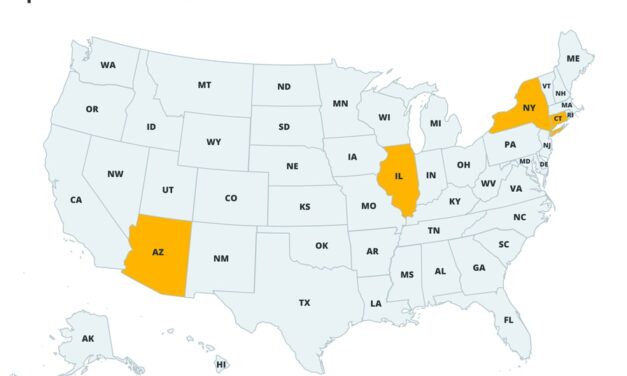
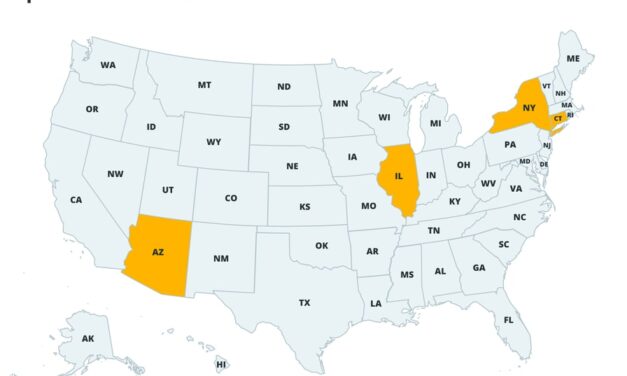
The US Commodity Futures Trading Commission (CFTC) is suing New York, Connecticut, Arizona and Illinois for applying state-level gambling laws to prediction markets. The move follows a heated legal argument between states and companies like Kalshi, as they fight over who has jurisdiction to regulate the “prediction” platforms. Other states have issued cease-and-desist letters or sued the prediction markets.Strategy bought over 56,000 Bitcoin. One of its last purchases in April was funded by a $250 million sale of the company’s common stock. In France, prosecutors have charged 88 alleged “wrench attackers” accused of attempting to extort cryptocurrencies from investors through violence.Here’s April by the numbers:US federal government sues four states for legal action on prediction marketsOn April 24, the CFTC sued the state of New York to stop it from applying state-level gambling laws to prediction markets like Kalshi and Polymarket. New York joins Connecticut, Arizona and Illinois as states targeted in federal actions asserting the CFTC’s authority over prediction markets.States around the US are attempting to rein in gambling markets, namely Kalshi and those offered by Coinbase and Robinhood. States argue that gambling laws should apply to what are essentially sportsbooks, while the prediction markets claim they offer a form of swap contracts regulated solely by the CFTC.An appellate court in New Jersey has ruled in favor of the CFTC and prediction markets’ interpretation. But a similar case in Nevada could fall in the other direction, making the issue ripe for the Supreme Court.Strategy stacks 56,325 Bitcoin while STRC sits on sidelinesStrategy, the software company-cum-Bitcoin investment vehicle run by Michael Saylor, acquired 56,325 BTC in April.The company bought 3,273 BTC (about $249 million) on Monday through common stock (MSTR) sales. According to a filing with the US Securities Exchange Commission, Strategy sold 1,451,601 Class A common shares and used the proceeds to buy Bitcoin.STRC, Strategy’s perpetual preferred stock, did not raise any capital in that filing. Strategy has become increasingly reliant on the short-duration high-yield credit product for capital raises to buy Bitcoin.After a lackluster month for Bitcoin in March, when the company’s BTC holdings were briefly in the red, Strategy is showing nearly 1% on its Bitcoin holdings as of Tuesday.Global tokenized RWAs surpass $30 billion in distributed asset valueThe total distributed asset value of tokenized real-world assets (RWAs) surpassed $30 billion for the first time in April.A Chainalysis report on the growing market said that institutions experimenting with tokenized RWAs are moving beyond their pilot programs and beginning to view onchain infrastructure as a practical solution.This increased institutional participation and liquidity have led trading patterns in RWA markets to more closely mirror traditional finance, including responses to signals such as inflation and geopolitical risk. Five wrench attacks in April, French prosecutors charge 88 suspectsThe trend of physical attacks on crypto holders continues, with five recorded incidents in April. Four happened in France, while the fifth occurred in England, according to Casa founder Jameson Lopp’s repository. The increasing popularity and publicity of crypto traders and executives has led to a surge in kidnappings and ransom attacks on prominent figures in the industry.There have reportedly been 47 attacks in France alone this year. One executive from crypto wallet firm Ledger, which is based in the country, claims that this is because of the law requiring entrepreneurs to register their names and addresses.France has cracked down on offenders. On April 24, the National Organized Crime Prosecutor’s Office announced that it charged 88 offenders across 12 federal districts. Crypto executives are spending more on personal safety, and boutique insurance firms have even begun offering kidnap and ransom policies amid skyrocketing demand. Related: Crypto execs ramp up security as wrench attacks increaseTwo US states now ban crypto kiosks, more move against Bitcoin ATMsUS states have been cracking down on crypto ATMs and kiosks amid scam and money laundering concerns. In April, Tennessee became the second state to ban them outright.On April 13, Tennessee Governor Bill Lee signed House Bill 2505, making the installation of a cryptocurrency kiosk a Class A misdemeanor.According to Coin ATM Radar, there are 560 crypto ATMs in the state. Operators and businesses hosting them will need to shut them down by July 1, or face up to 11 months and 29 days in prison and a $2,500 fine.Indiana banned crypto ATMs last month. A number of other states have introduced strict licensing requirements and regulations. Vermont has a moratorium on crypto kiosks, and many cities have issued municipal bans on the devices. The American Association of Retired People has particularly supported and lobbied for stricter controls, citing the kiosks proliferation in scams targeting senior citizens. Cointelegraph is committed to independent, transparent journalism. This news article is produced in accordance with Cointelegraph’s Editorial Policy and aims to provide accurate and timely information. Readers are encouraged to verify information independently.

Čítaj viac

US gov’t sues four states, RWAs cross $30 billion: Month in Charts

The US Commodity Futures Trading Commission (CFTC) is suing New York, Connecticut, Arizona and Illinois for applying state-level gambling laws to prediction markets. The move follows a heated legal argument between states and companies like Kalshi, as they fight over who has jurisdiction to regulate the “prediction” platforms. Other states have issued cease-and-desist letters or sued the prediction markets.Strategy bought over 56,000 Bitcoin. One of its last purchases in April was funded by a $250 million sale of the company’s common stock. In France, prosecutors have charged 88 alleged “wrench attackers” accused of attempting to extort cryptocurrencies from investors through violence.Here’s April by the numbers:US federal government sues four states for legal action on prediction marketsOn April 24, the CFTC sued the state of New York to stop it from applying state-level gambling laws to prediction markets like Kalshi and Polymarket. New York joins Connecticut, Arizona and Illinois as states targeted in federal actions asserting the CFTC’s authority over prediction markets.States around the US are attempting to rein in gambling markets, namely Kalshi and those offered by Coinbase and Robinhood. States argue that gambling laws should apply to what are essentially sportsbooks, while the prediction markets claim they offer a form of swap contracts regulated solely by the CFTC.An appellate court in New Jersey has ruled in favor of the CFTC and prediction markets’ interpretation. But a similar case in Nevada could fall in the other direction, making the issue ripe for the Supreme Court.Strategy stacks 56,325 Bitcoin while STRC sits on sidelinesStrategy, the software company-cum-Bitcoin investment vehicle run by Michael Saylor, acquired 56,325 BTC in April.The company bought 3,273 BTC (about $249 million) on Monday through common stock (MSTR) sales. According to a filing with the US Securities Exchange Commission, Strategy sold 1,451,601 Class A common shares and used the proceeds to buy Bitcoin.STRC, Strategy’s perpetual preferred stock, did not raise any capital in that filing. Strategy has become increasingly reliant on the short-duration high-yield credit product for capital raises to buy Bitcoin.After a lackluster month for Bitcoin in March, when the company’s BTC holdings were briefly in the red, Strategy is showing nearly 1% on its Bitcoin holdings as of Tuesday.Global tokenized RWAs surpass $30 billion in distributed asset valueThe total distributed asset value of tokenized real-world assets (RWAs) surpassed $30 billion for the first time in April.A Chainalysis report on the growing market said that institutions experimenting with tokenized RWAs are moving beyond their pilot programs and beginning to view onchain infrastructure as a practical solution.This increased institutional participation and liquidity have led trading patterns in RWA markets to more closely mirror traditional finance, including responses to signals such as inflation and geopolitical risk. Five wrench attacks in April, French prosecutors charge 88 suspectsThe trend of physical attacks on crypto holders continues, with five recorded incidents in April. Four happened in France, while the fifth occurred in England, according to Casa founder Jameson Lopp’s repository. The increasing popularity and publicity of crypto traders and executives has led to a surge in kidnappings and ransom attacks on prominent figures in the industry.There have reportedly been 47 attacks in France alone this year. One executive from crypto wallet firm Ledger, which is based in the country, claims that this is because of the law requiring entrepreneurs to register their names and addresses.France has cracked down on offenders. On April 24, the National Organized Crime Prosecutor’s Office announced that it charged 88 offenders across 12 federal districts. Crypto executives are spending more on personal safety, and boutique insurance firms have even begun offering kidnap and ransom policies amid skyrocketing demand. Related: Crypto execs ramp up security as wrench attacks increaseTwo US states now ban crypto kiosks, more move against Bitcoin ATMsUS states have been cracking down on crypto ATMs and kiosks amid scam and money laundering concerns. In April, Tennessee became the second state to ban them outright.On April 13, Tennessee Governor Bill Lee signed House Bill 2505, making the installation of a cryptocurrency kiosk a Class A misdemeanor.According to Coin ATM Radar, there are 560 crypto ATMs in the state. Operators and businesses hosting them will need to shut them down by July 1, or face up to 11 months and 29 days in prison and a $2,500 fine.Indiana banned crypto ATMs last month. A number of other states have introduced strict licensing requirements and regulations. Vermont has a moratorium on crypto kiosks, and many cities have issued municipal bans on the devices. The American Association of Retired People has particularly supported and lobbied for stricter controls, citing the kiosks proliferation in scams targeting senior citizens. Cointelegraph is committed to independent, transparent journalism. This news article is produced in accordance with Cointelegraph’s Editorial Policy and aims to provide accurate and timely information. Readers are encouraged to verify information independently.

Čítaj viac

Poland stalls on crypto law, forcing local companies to move abroad

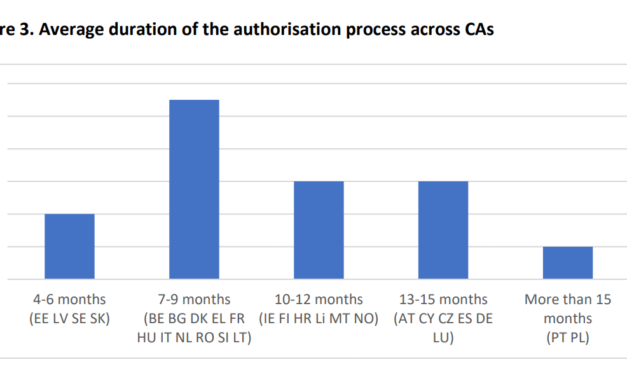
Poland’s parliament, the Sejm, has yet to pass a domestic enabling act for the EU’s regulations on cryptocurrencies. The parliament has again failed to override a presidential veto on a key crypto regulation bill. President Karol Nawrocki defended his veto, citing concerns over excessive regulation that could harm small businesses. Opponents state that the lack of framework makes the Polish market vulnerable to fraud and free-for-all for illicit actors. The political path forward is unclear.Outside the political arena, the reality is that Poland is the only EU member state left to implement the bloc’s Markets in Crypto-Assets (MiCA) regulatory framework. The deadline for the transitionary period ends on July 1.This already makes it difficult for local firms to stay competitive in Europe. But after July 1, if a solution isn’t forthcoming, it will be impossible. Some are already taking their business elsewhere and moving abroad.Crypto industry, Polish president claim bill is burdensomeIn November 2025, the Sejm passed the Crypto-Asset Market Act, which would update Polish law to comply with MiCA.Local enterprise groups were not pleased with the result. In an October letter, the Warsaw Enterprise Institute, a business-focused think tank, outlined a few of the perceived problems with the law.First was the length. Including draft secondary regulations, the total length was well over 300 pages. The Warsaw Enterprise Institute said that, while other EU member states were satisfied with just a few dozen pages, “the Polish law has several hundred articles and provides for additional regulations.”It said the act introduces “a ban on marketing activities related to basic cryptocurrencies and the possibility of blocking websites by administrative decision, without the right to appeal to a court.”“Such solutions are not justified by MiCA and put Polish companies in a worse competitive position compared to entities operating in other EU countries.”.Of further concern was the role the Polish Financial Supervision Authority (KNF) would play under the new regime. Under the law, the KNF would be the sole regulator of the entire crypto market. It would have the power to levy heavy fines as well as maintain and enforce a blacklist of “unreliable” crypto domains that Polish ISPs would have to block. Not only would the KNF be incredibly powerful, but it is already notoriously slow. According to a payment institution peer review by the European Banking Authority, the KNF’s authorization times were the slowest in Europe. In an October letter, the Warsaw Enterprise Institute claimed that the KNF has only issued two licenses for brokerage houses in the last 10 years. In the same time period, it has only issued one electronic money institution license, while Lithuania has registered over 100. Source: European Banking AuthorityRelated: EU crypto firms turn to legal support as deadline for MiCA compliance nearsOn Dec. 1, 2025, Nawrocki vetoed the law, citing bloated regulation. The government failed to override the veto, and then reintroduced the exact same bill. Nawrocki vetoed the bill for a second time in February, and on April 17, the Sejm repeated itself in failing to overrule the veto.Polish parliament struggles to find path forward for MiCAThe battle over the crypto bill shows no signs of stopping. Firstly, for Nawrocki, passing the bill after being reintroduced in the same form would have presented a political problem.Piech told Cointelegraph, “Once the president had already argued that the bill breached constitutional principles and contained excessive, disproportionate and vague provisions […] signing a near-identical version would have meant contradicting his own stated reasoning.”“In that sense, the second push looked less like compromise and more like an attempt to pressure the president into a constitutional U-turn.”Some in the crypto industry hailed the veto as Nawrocki sticking to his pro-crypto, sound regulatory principles.“The veto is not anti-regulatory, it brings common sense back into the law-making process. […] The industry did not ask for privileges. It asked for proportionality,” said Sławomir Zawadzki, co-CEO of Kanga Exchange.Different coalitions and groups have attempted to introduce their own versions. According to Piech, Finance Minister Andrzej Domański said that the government started work yesterday on solutions for a new crypto-asset bill. In December, after the first veto, the Polska 2050 political party announced “an improved draft that is a step forward from the President’s arguments, which, although far-fetched, are perhaps worth considering.”Nawrocki himself has said he would submit a draft but the speaker in the Sejm has blocked the introduction of presidential proposals. The Confederation of Liberty and Independence and the Law and Justice have filed versions, while another political coalition, the Center Club, announced it would prepare another draft. Overall, Poland’s political class is “still deeply split on crypto.”“This is no longer just a technical argument about implementing MiCA. It has become a broader fight over whether crypto should be brought into a normal legal framework, or treated as a politically suspicious sector that can be overregulated, stigmatised or used as a proxy battlefield after the Zonda Crypto controversy,” he said.Polish Prime Minister Donald Tusk, himself a member of the Civic Coalition, has accused local exchange Zonda Crypto of illicit funding and ties to Russian criminal networks. It has undergone a funding crisis, pausing withdrawals, and has reportedly lobbied against the bill. The founder of BitBay (now Zonda Crypto), Sylwester Suszek, went missing in 2022. After his disappearance, the exchange entered a funding crisis. Source: YaguarRelated: Zonda exchange says 4.5K BTC wallet inaccessible amid withdrawal crisisTusk also claimed that it “sponsors political and social events in Poland and promotes very specific political forces,” including the opposition far-right Law and Justice party, of which Nawrocki is a member.Zonda Crypto did not respond to Cointelegraph’s request for comment. Polish crypto companies look abroadFor companies in Poland, passing a new law by the end of the MiCA transitional period on July 1 may be a case of shutting the barn doors after the horses have bolted. Said Piech, “A new law may still matter institutionally, especially for banks and larger financial institutions that may want to enter crypto once there is a clear legal path. But for all existing Polish crypto firms, it is already very late.”Some domestic crypto firms are already looking abroad. Crypto exchange Kanga is considering a move to Latvia, “a country whose representatives have openly used conferences in Poland to attract crypto firms, offering a MiCA-friendly regime, faster procedures and relatively low supervisory fees,” per Piech. Robert Wojciechowski, president of the Polish Chamber of Commerce for Blockchain and New Technologies, said, “Since we founded the chamber, about 70-80 percent of companies have sailed abroad. Now my colleagues say they are talking to the Czech Republic to move their business there.”The Chancellery of the President has itself raised the alarm, stating that, “Overregulation is a guaranteed way to push companies abroad — to the Czech Republic, Lithuania or Malta — instead of creating conditions for them to operate and pay taxes in Poland.”Zonda Crypto CEO Przemysław Kral has previously told Cointelegraph, “Although we are a company with Polish roots and the largest player in the crypto industry on the Polish market, we have been operating outside Poland for years.”“We are confident that we will remain a key player on the market. However, many small Polish crypto companies will lose the opportunity to operate on the market,” he said.Now it’s a race against the clock, as July 1 draws closer. Piech doesn’t see a “realistic chance” for a bill to pass, and if it doesn’t, “domestic firms without a functioning Polish route are left at a structural disadvantage.”Magazine: Adam Back says current demand is ‘almost’ enough to send Bitcoin to $1MCointelegraph Features publishes long-form journalism, analysis, and narrative reporting produced by Cointelegraph’s in-house editorial team with subject-matter expertise. All articles are edited and reviewed by Cointelegraph editors in line with our editorial standards. Research or perspective in this article does not reflect the views of Cointelegraph as a company unless explicitly stated. Content published in Features does not constitute financial, legal, or investment advice. Readers should conduct their own research and consult qualified professionals where appropriate. Cointelegraph maintains full editorial independence. The selection, commissioning, and publication of Features and Magazine content are not influenced by advertisers, partners, or commercial relationships. This content is produced in accordance with Cointelegraph’s Editorial Policy.

Čítaj viac

Cryptocurrency trading addiction: What to look out for and how it is treated

An often overlooked aspect of the cryptocurrency market’s reputation for volatility is the effect sudden market changes can have on the mental health of traders and investors.Addiction to day trading, or pathological trading, is already well-known among stocks and commodities traders and has been extensively documented by medical professionals. There are even rehab programs devoted to treating day-trading addiction.With its possibility of “life-changing” money for those lucky or savvy enough to catch it, the crypto market has generated its fair share of trading addicts.To get a better understanding of the mechanics of cryptocurrency trading addiction and how to recognize it, Magazine sat down with Tony Marini, senior specialist therapist at Castle Craig Rehab in Scotland, and Aaron Sternlicht, co-founder of New York-based private practice Family Addiction Specialist.

What is cryptocurrency trading addiction?

Sternlicht defines cryptocurrency trading addiction as the “persistent or recurrent pathological compulsion and obsession to engage in the behavior of investing in or trading cryptocurrencies despite negative consequences to personal and/or professional areas such as financial loss, disruption to relationships, career problems, mental health issues, and other such negative consequences.”

He believes that addictive behavior goes well beyond just buying and selling tokens. When a trader’s time is fully consumed with chart analysis, market research, data review, fundamental analysis or investor sentiment, there may be a problem.

It’s all about neurotransmitters

The body makes a neurotransmitter called dopamine that the nervous system uses to deliver messages between nerve cells. Sternlicht says that when the price of crypto goes up and someone completes a successful trade, they receive a rush of dopamine, bringing about a feeling of pleasure. 

“The volatility of cryptocurrency coupled with the fact that it can be traded 24/7 can result in excessive and regular boosts of dopamine that make it much more addictive than trading other assets such as stocks,” Sternlicht says. Over time, those who develop an addiction to cryptocurrency trading come to depend on it to bring on excitement and feelings of pleasure.

Dopamine molecule. (Sbrools, author’s own work)

Sternlicht says some stimuli that release excessive amounts of dopamine — such as sex, drugs, video games and social media — are more likely to become addictive. He believes that due to volatile price fluctuations, successful cryptocurrency trades fall into that category.

Čítaj viac

Získaj BONUS 8 € v Bitcoinoch

nakup bitcoin z karty

Registrácia Binance

Burza Binance

Aktuálne kurzy